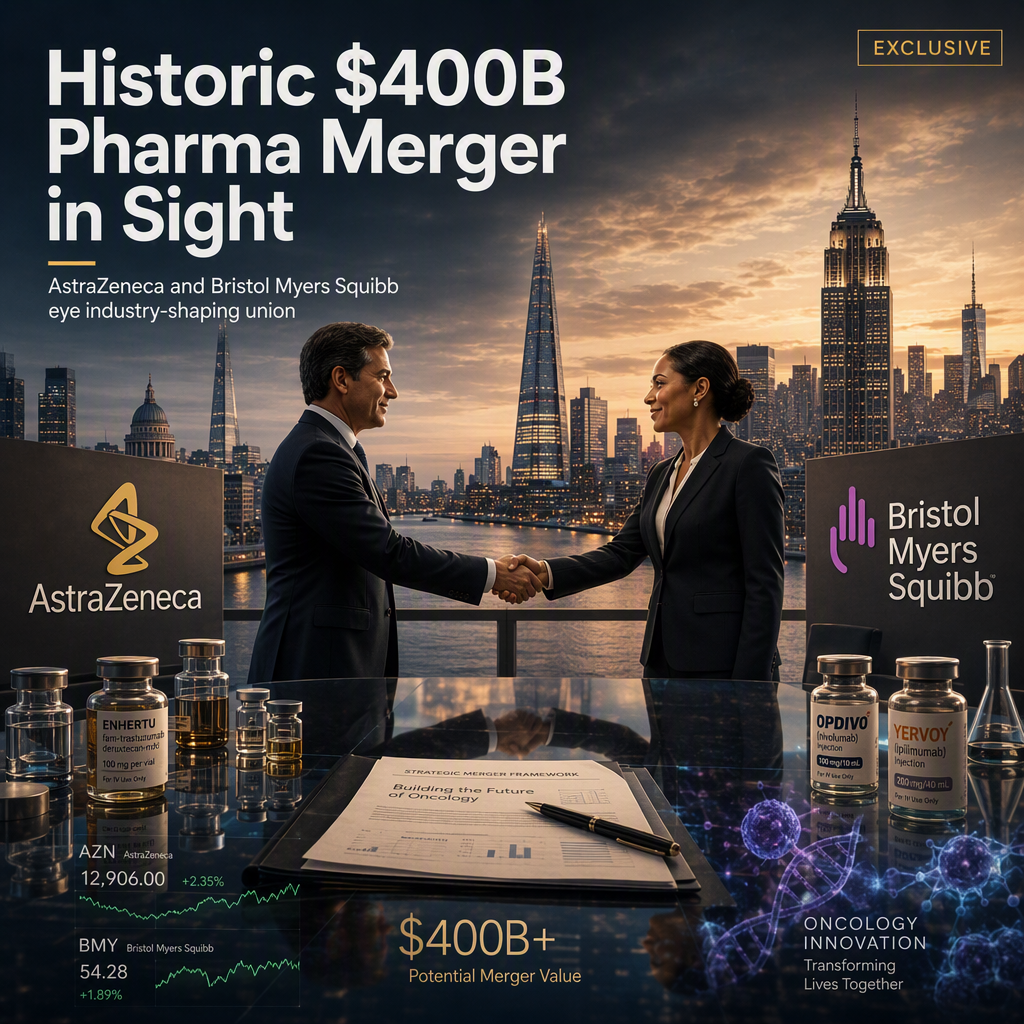
AstraZeneca is reportedly in discussions with Bristol Myers Squibb regarding a potential merger that could create a combined entity valued at approximately $400 billion, according to the Financial Times as cited by CNBC. This deal would rank among the largest in pharmaceutical industry history, marking a significant consolidation between the UK-based AstraZeneca and its US competitor Bristol Myers Squibb [1].
Bristol Myers Squibb has pursued an aggressive acquisition strategy, acquiring seven companies since October 2007. Notably, its recent purchase of Medarex in July added a key drug for metastatic melanoma, currently in Phase III trials, which may have multiple indications including lung and prostate cancer. Bristol Myers Squibb also markets Erbitux for colorectal, head and neck cancer, Ixempra for breast cancer, and Taxol for breast cancer, further strengthening its portfolio in oncology [1].
While the merger discussions have been ongoing for several months, it remains uncertain whether the deal will ultimately materialize. Both AstraZeneca and Bristol Myers Squibb have not responded to requests for comment, and the story is still developing [1].
Market implications are potentially significant given the scale of the proposed merger, which could reshape the competitive landscape in cancer treatment and pharmaceutical innovation. However, no immediate market reactions or analyst opinions were provided in the source article [1].
CONCLUSION
The potential $400 billion merger between AstraZeneca and Bristol Myers Squibb could create one of the largest pharmaceutical companies in history, with a strong focus on cancer treatments. While discussions are ongoing and the outcome remains uncertain, the deal has high market significance and could drive major industry changes if completed.