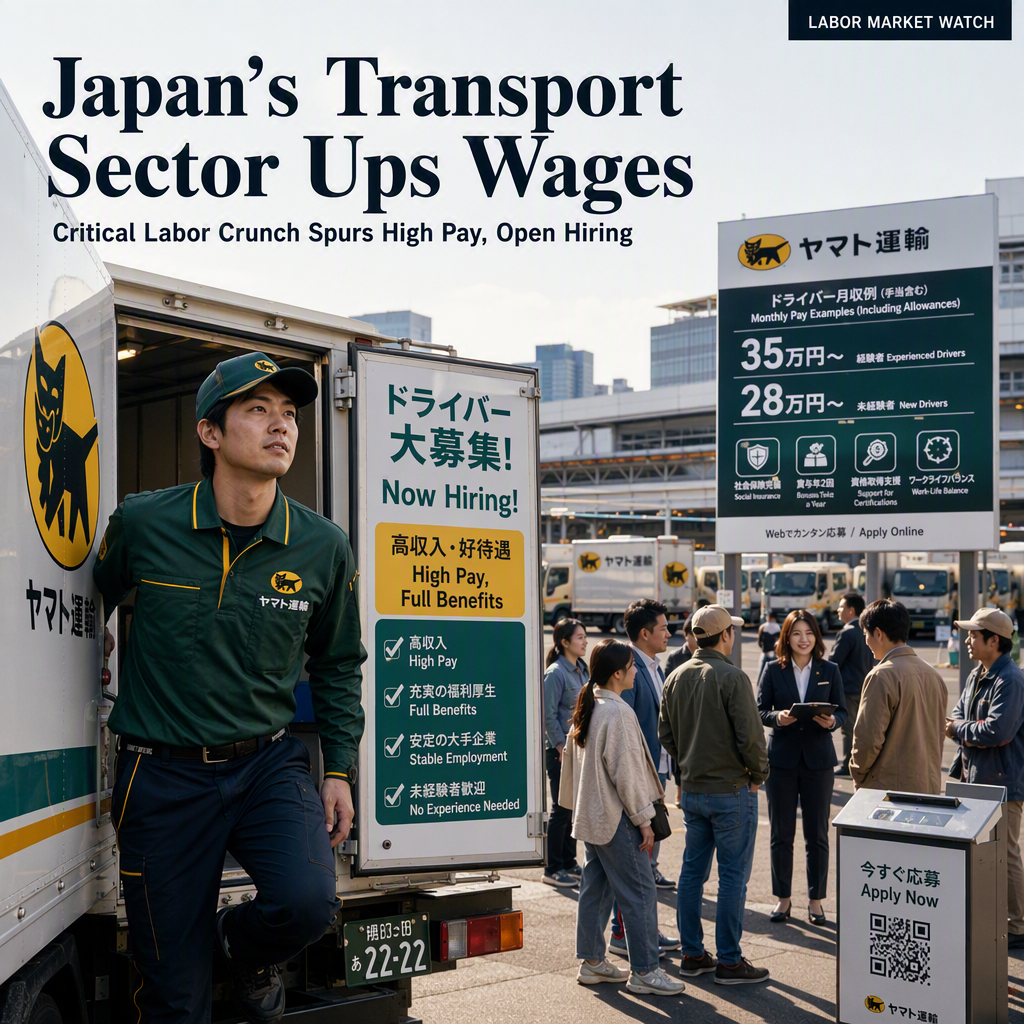
Japan's transport sector is experiencing a critical shortage of staff, leading companies such as Yamato Transport to offer high compensation and comprehensive benefits packages to attract new recruits. These incentives are extended regardless of experience, gender, or educational background, underscoring the urgency of the labor crunch in the industry [1]. Recruitment signs across the country reflect a shift in labor market dynamics, with businesses relaxing traditional hiring requirements and focusing on inclusivity to address the shrinking working-age population [1].
The shortage is particularly acute in transport, where understaffing threatens operational continuity and market competitiveness. Companies are responding by increasing pay levels and enhancing benefits, but the underlying demographic squeeze means there are fewer people available to take these jobs [1]. Market sentiment is mixed: while improved compensation suggests upward mobility and potential for increased consumer spending, persistent labor shortages may constrain economic growth and disrupt supply chains [1].
Analysts warn that unless the recruitment gap is addressed, Japan could face mounting operational risks and diminished productivity across multiple industries. Even with competitive benefits, incentives may not suffice without broader reforms in immigration policy, work-life balance, and automation [1]. Rising wage and benefit costs could impact company profitability, and the transport sector's response is seen as a bellwether for other industries. Market watchers are closely monitoring pay levels, hiring trends, and the effectiveness of recruitment campaigns [1].
Technical analysis of labor market data shows a clear downward trend in available workers, with support levels for employment numbers breaking under demographic pressure. Unless new sources of labor are found—either from automation or expanded immigration—the recruitment challenge is expected to persist [1].
CONCLUSION
Japan's transport sector is responding to a critical labor shortage by offering higher pay and enhanced benefits, but demographic pressures continue to limit the available workforce. While these measures may improve job quality and consumer spending, analysts caution that unresolved recruitment gaps could threaten operational stability and economic growth. The effectiveness of these strategies will depend on broader reforms and the labor market's ability to adapt.