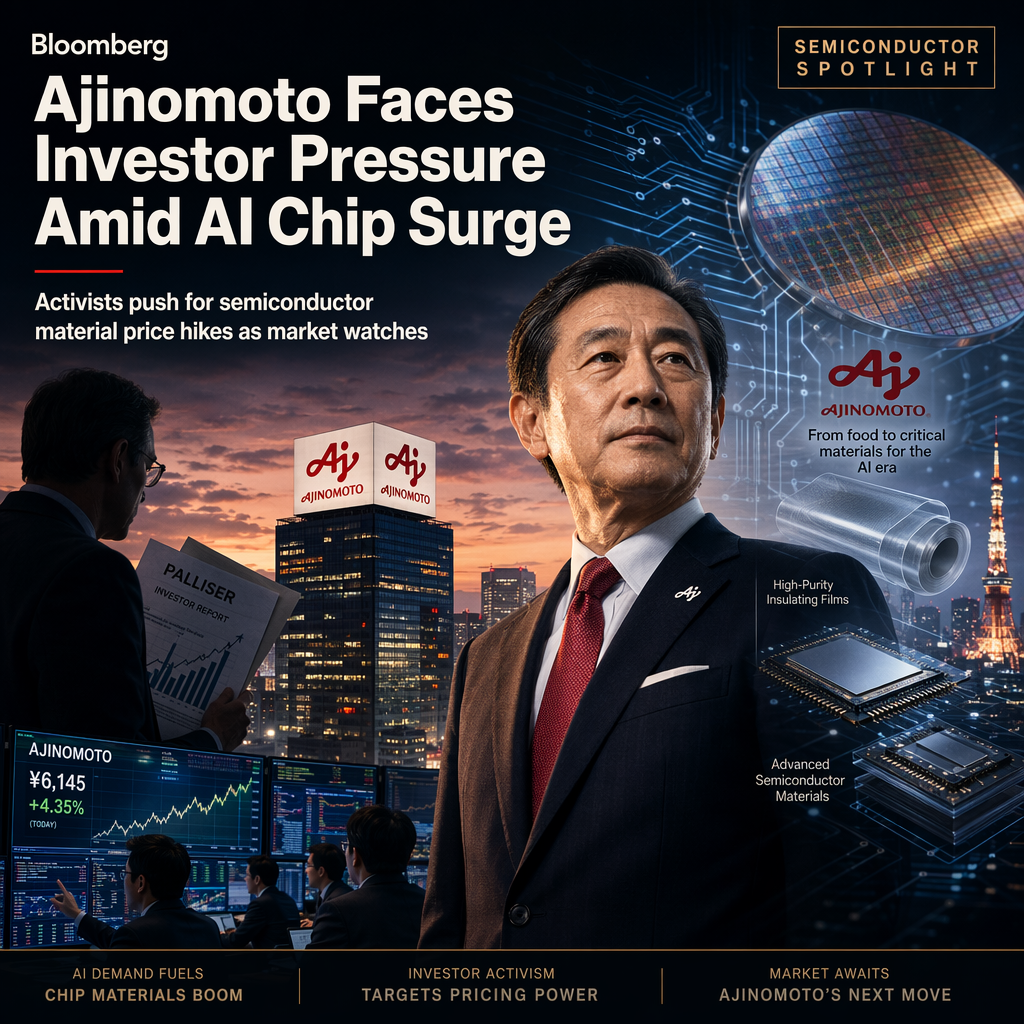
Ajinomoto, traditionally known as a Japanese food maker, is drawing heightened attention from investors as it becomes increasingly relevant in the semiconductor industry due to its supply of insulating films used in chip production [1]. The surge in artificial intelligence (AI)-related demand has positioned Ajinomoto as a critical supplier for advanced chips, prompting activist investor Palliser to urge the company to implement across-the-board price hikes for its insulating film products [1]. Palliser's proposal aims to help Ajinomoto capitalize on the growing demand driven by AI technologies [1].
Ajinomoto's management, however, has shown resistance to a broad price increase, preferring instead to selectively raise prices for certain products where demand is strongest [1]. This approach is seen as a way to sustain margins without risking customer relationships, according to a trading adviser quoted in the article [1]. Financial analysts note that Ajinomoto's positioning as a supplier to the semiconductor sector has led to increased market interest, with its stock now viewed as a chip-related play and its materials business seen as a potential catalyst for further share price appreciation [1].
Market sentiment remains positive, with traders closely monitoring potential price adjustments and contract renegotiations with chip manufacturers [1]. Technical analysts highlight support levels in Ajinomoto’s stock around recent lows, with resistance expected near previous highs if material price hikes are implemented [1]. A market analyst described Ajinomoto’s insulating films as a strategic asset in the semiconductor supply chain, especially as AI accelerates chip demand [1].
In summary, Ajinomoto’s transformation into a chip-related stock is attracting activist interest and market scrutiny, particularly as the AI wave continues to fuel semiconductor expansion [1].
CONCLUSION
Ajinomoto's growing role in the semiconductor supply chain, driven by AI demand, has attracted activist investor pressure for price hikes and increased market attention. While management is cautious about broad price increases, selective adjustments could support margins and further boost the company's chip-related profile. Market sentiment remains positive as investors watch for developments in pricing strategy and contract negotiations.