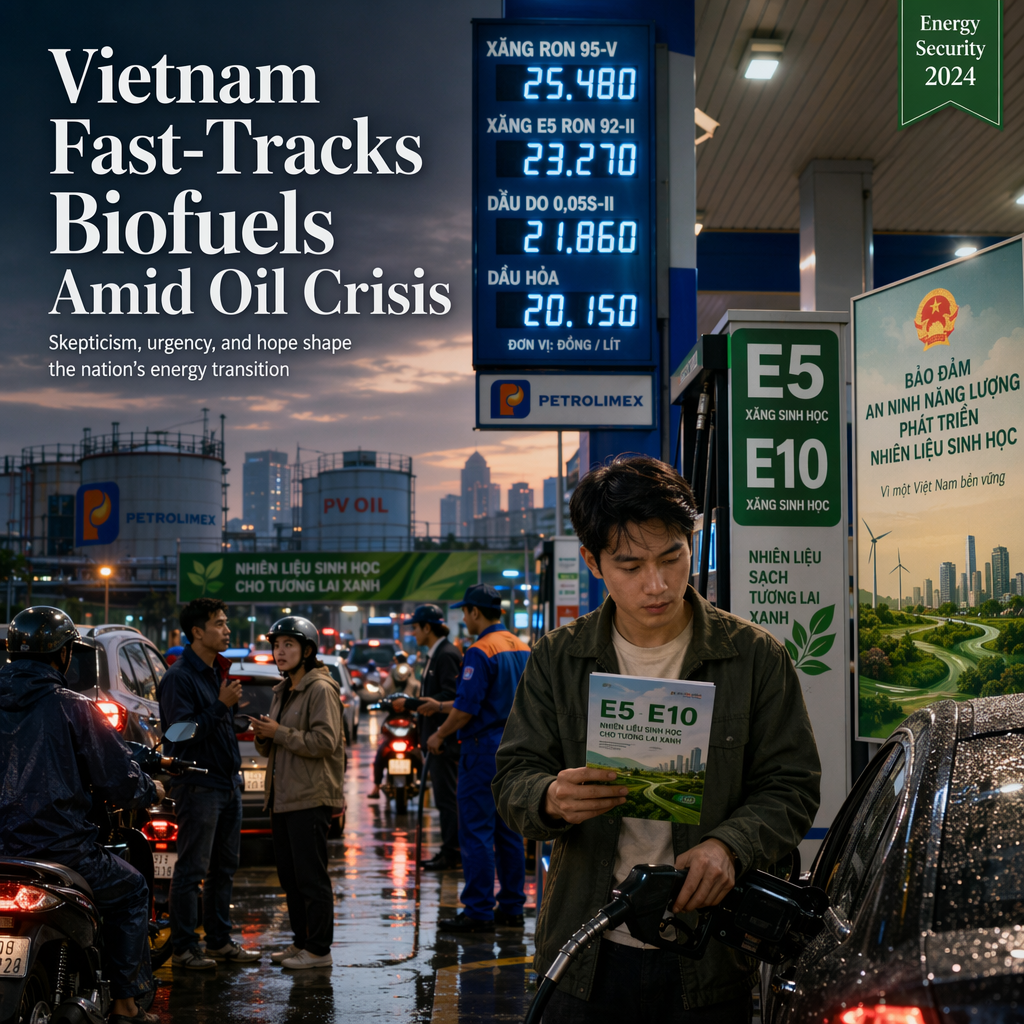
Vietnam is expediting its adoption of transport biofuels, particularly ethanol-blended gasoline, in response to heightened oil price volatility caused by the Middle East oil crisis and U.S. trade pressures [1]. On March 10, motorists in Hanoi were observed lining up at petrol stations as the government implemented measures to manage fuel demand amid growing energy concerns [1]. The government aims to reduce reliance on imported oil and protect the economy from external shocks by increasing biofuel usage [1].
Despite the government's push, there is notable skepticism among motorists and industry experts regarding the effectiveness of ethanol-blended fuels. Some drivers have expressed concerns about engine performance and fuel efficiency, while others question whether the environmental benefits justify the associated costs [1]. Nevertheless, authorities are pressing forward, introducing tax incentives and subsidies to encourage the use of ethanol-blended fuels and stimulate domestic production and investment in the sector [1].
The urgency of these policies has intensified following recent spikes in global oil prices, which have increased pressure on Vietnam's energy import bill [1]. In response, the Ministry of Industry and Trade has accelerated plans to expand the nationwide availability of E5 and E10 ethanol-blended gasoline [1]. Market analysts suggest that while the biofuel initiative could help stabilize domestic fuel prices and enhance energy security, the transition presents challenges, including the need for infrastructure upgrades, supply chain adjustments, and greater public acceptance [1].
As Vietnam continues to address these hurdles, the government remains vigilant, monitoring global oil markets and adjusting its energy strategy in line with evolving geopolitical and economic conditions [1].
CONCLUSION
Vietnam's accelerated biofuel strategy reflects its efforts to mitigate the impact of global oil price volatility and trade pressures. While the policy could enhance energy security and stabilize fuel prices, significant challenges related to consumer acceptance and infrastructure remain. The government's ongoing adjustments signal a cautious but determined approach to energy diversification.