
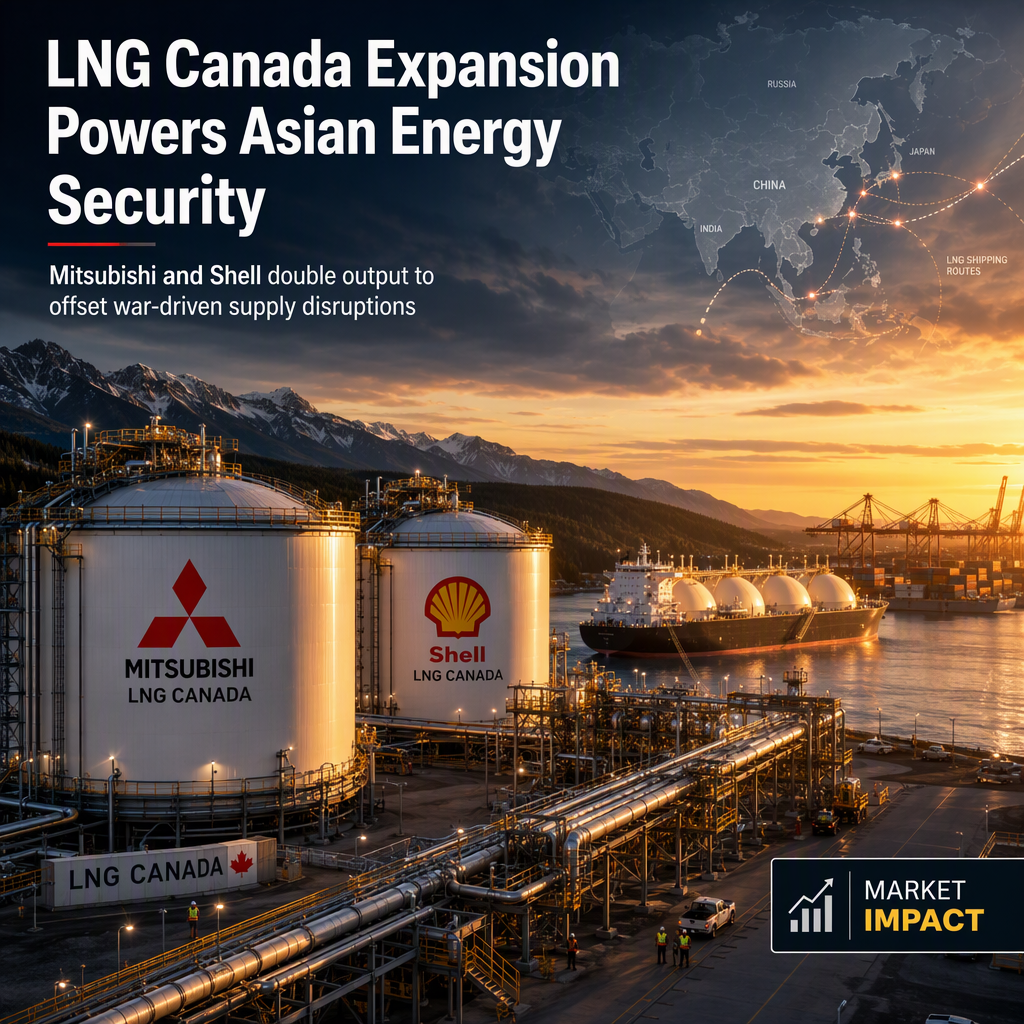
Mitsubishi Corp. and Shell, along with other joint venture partners, have announced plans to double the production capacity of a major Canadian liquefied natural gas (LNG) project, a move aimed at strengthening energy supplies for Asia as the region faces disruptions linked to the ongoing Iran war [1]. The expansion is expected to significantly increase LNG supply for Asian markets, addressing concerns about energy security amid instability and interruptions in supply chains caused by the conflict [1].
The project is seen as a strategic effort to diversify energy sources for countries heavily dependent on LNG imports, especially as Asian buyers seek reliable alternatives to Middle Eastern LNG due to heightened concerns over supply chain reliability [1]. Mitsubishi, Shell, and their partners are advancing these plans to mitigate the impact of the Iran conflict on Asian energy importers, with the production increase anticipated to enhance Asia’s energy security and provide a buffer against further market disruptions [1].
While the article does not disclose specific financial terms or capacity figures for the expansion, the commitment to doubling output underscores the confidence of the joint venture partners in the long-term demand for LNG in Asia [1]. The move is expected to have a significant impact on the global LNG market, particularly for Asian buyers seeking stability amid ongoing geopolitical tensions [1].
CONCLUSION
Mitsubishi and Shell's decision to double LNG Canada’s production capacity is a major step toward securing Asian energy supplies amid disruptions caused by the Iran war. Although exact financial and capacity details were not provided, the expansion is expected to have a high market impact, offering Asian importers greater energy security and diversification. The initiative signals strong confidence in sustained LNG demand in Asia.