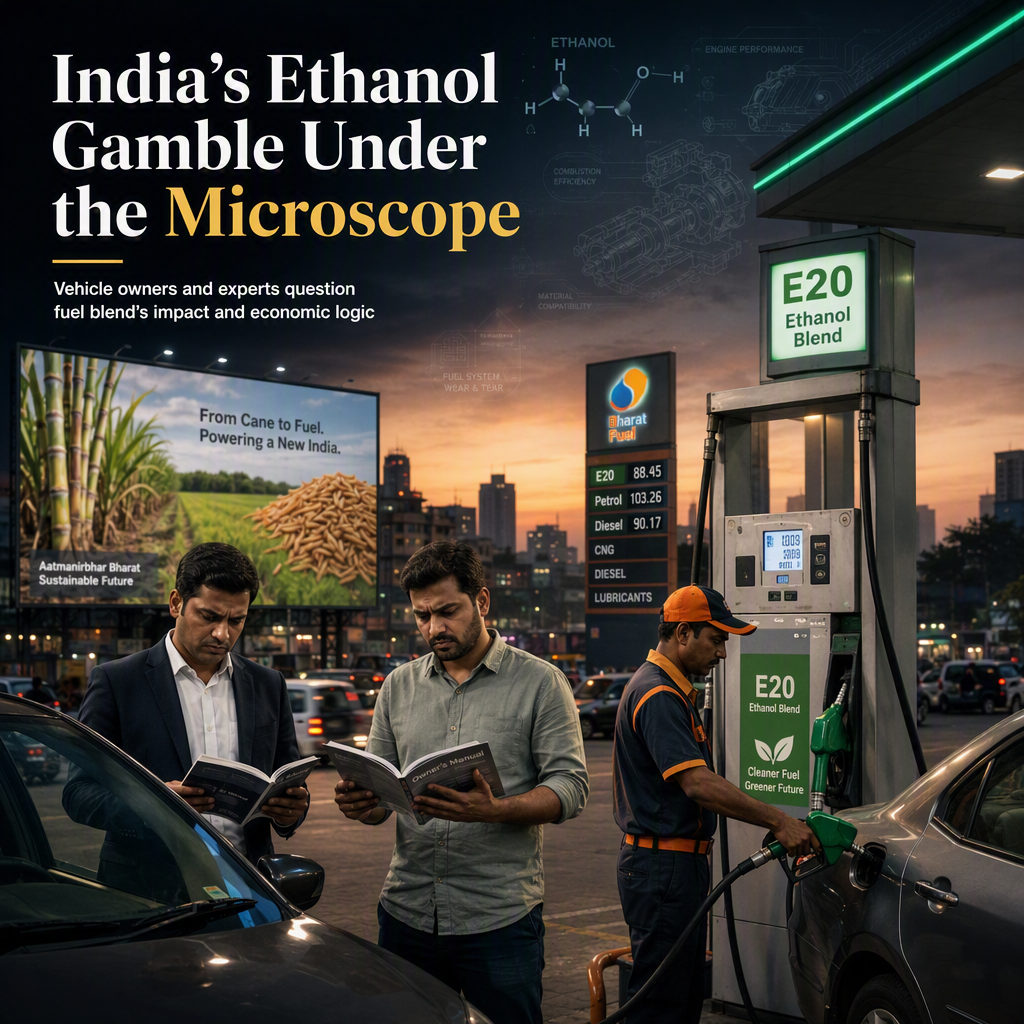
India's nationwide initiative to increase the ethanol content in fuel, specifically through the adoption of E20 biofuel, is facing scrutiny from scientists and analysts regarding its impact on fuel economy and vehicle owners. The majority of vehicles in India are not fully compatible with higher ethanol blends, raising concerns about reduced fuel efficiency, increased engine corrosion, lower mileage, and higher maintenance costs for car owners. Industry experts have emphasized that most vehicles on Indian roads were designed for lower ethanol blends, and may not perform optimally or safely with E20 fuel [1].
Analysts have also questioned the economic rationale behind the government's ethanol policy, suggesting that it may be influenced by efforts to manage rice and sugarcane surpluses, rather than being driven solely by environmental considerations. Overproduction of these crops could be a factor in the policy shift [1].
The transition to ethanol-blended fuels is part of India's broader strategy to reduce emissions and decrease reliance on imported oil. However, the move has not been without financial consequences. Fuel retailers in India have recently reported absorbing nearly $2 billion in losses as they shielded customers from energy price shocks, highlighting the complex market and policy environment surrounding the country's energy transition [1].
Despite significant government investment in deep-sea oil exploration and other energy initiatives, the debate over the benefits and drawbacks of ethanol-blended fuels continues among scientists, analysts, and industry stakeholders [1].
CONCLUSION
India's push for ethanol-blended fuels is encountering skepticism from experts over vehicle compatibility and the underlying economic motivations. The policy has resulted in notable financial losses for fuel retailers and ongoing debate about its overall benefits. The market impact is medium, with continued uncertainty about the long-term implications for consumers and the energy sector.