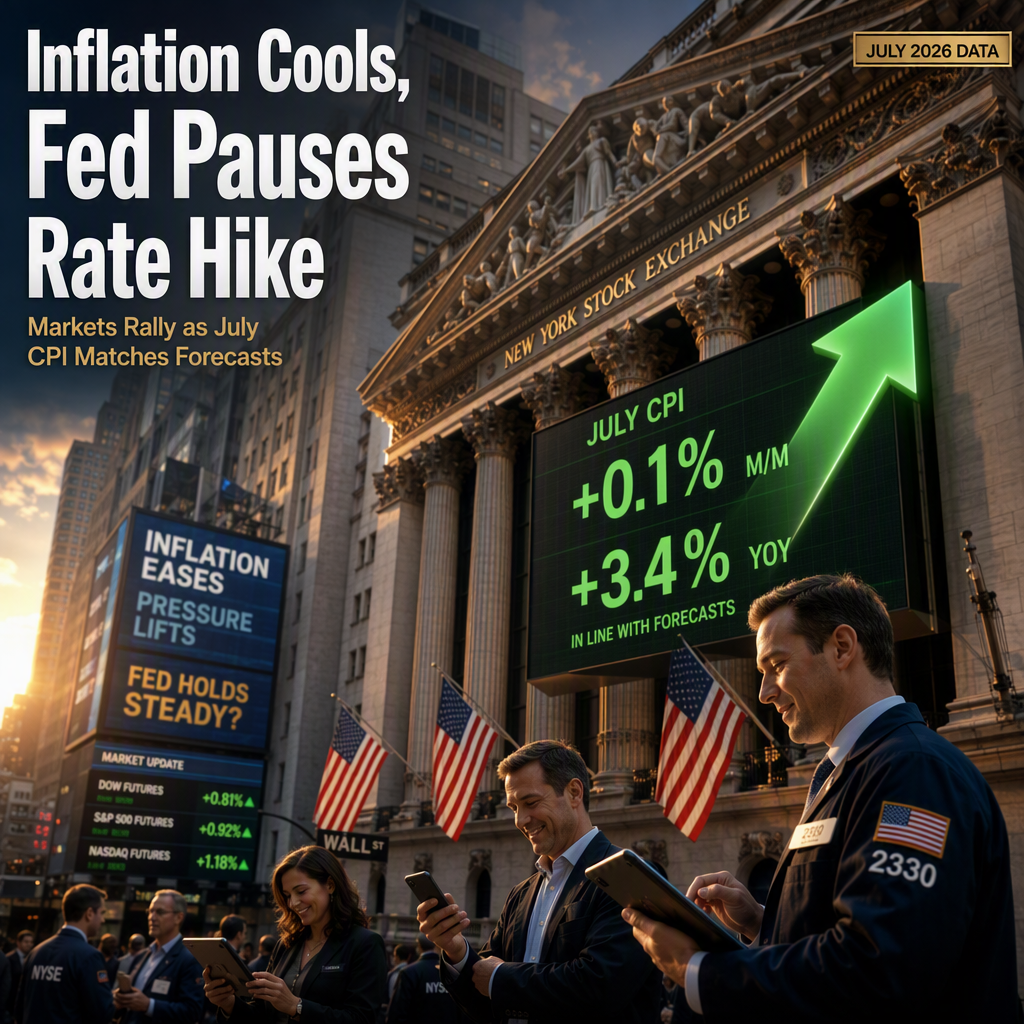
US inflation moderated in July 2026, with the Bureau of Labor Statistics reporting a 0.1% monthly increase in the consumer price index (CPI) and a 3.4% rise from a year ago, both matching economist expectations according to LSEG and Dow Jones consensus forecasts [1][2]. Core CPI, which excludes food and energy, rose 0.2% month-over-month and 2.5% year-over-year, also in line with forecasts [1][2]. The annual inflation figures were slightly cooler than June's readings, which were 3.5% for headline CPI and 2.6% for core CPI [1].
Energy prices fell by 1.5% in July after a 5.7% drop in June, though the sector still posted a 14.7% annual increase due to earlier surges, including a 10.9% jump in March following attacks against Iran [2]. Food and shelter costs both increased by 0.1% in July, with shelter accounting for about two-thirds of the headline CPI increase, according to the BLS [2]. New vehicle prices rose 0.1%, used cars and trucks increased 0.4%, medical care was up 0.4%, and airline fares jumped 2.2% [2].
The Federal Reserve is weighing its next move, with the Federal Open Market Committee (FOMC) not scheduled to meet again until September, allowing time for another round of inflation data before a decision is made [2]. At the July meeting, the FOMC voted 9-3 to keep rates steady, though dissenters favored a hike [2]. Fed Governor Hammack has stated that multiple rate hikes may be needed to tame inflation [1]. However, the latest data has eased the urgency for an immediate rate increase, with traders lowering the probability of a September hike to 42%, according to CME Group's FedWatch [2].
Market reaction was positive, as stock market futures rose and Treasury yields fell following the CPI release [2]. Ellen Zentner, chief economic strategist for Morgan Stanley Wealth Management, commented that the in-line inflation data supports the narrative that there is 'no need to hike rates' at the next meeting, barring a significant change in upcoming data [2].
Recent labor market concerns, including a net job loss in July, and volatility in the energy sector have also contributed to reduced expectations for a near-term rate hike [2].
CONCLUSION
July's inflation data showed continued moderation, aligning with expectations and easing immediate pressure on the Federal Reserve to raise interest rates. While some Fed officials still see the need for further hikes, current market sentiment and economic data suggest the central bank may hold rates steady at its next meeting unless future reports show a marked change.