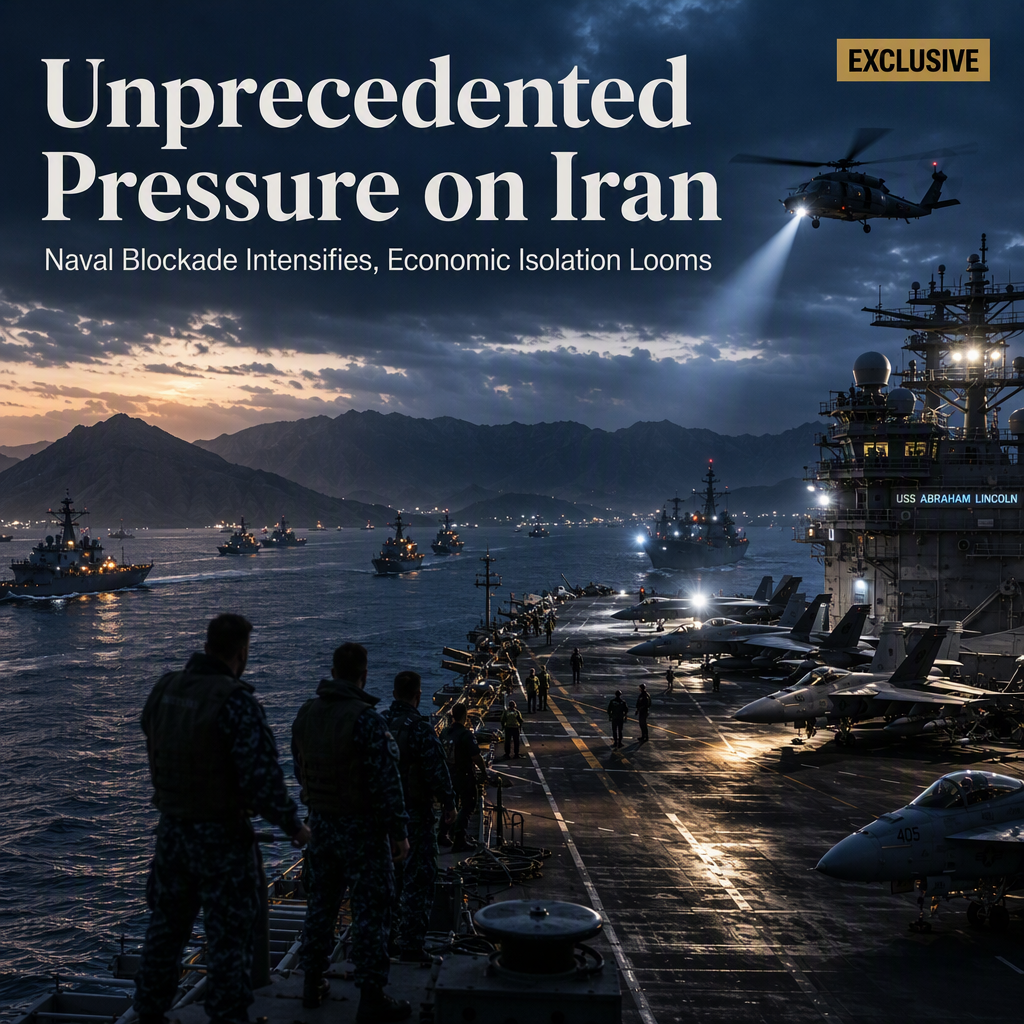
The United States is set to implement economic measures against Iran described as 'that have never been seen,' according to Treasury Secretary Scott Bessent. These actions will be paired with the ongoing military blockade in the Strait of Hormuz, which aims to prevent any goods from entering or leaving Iranian ports. Bessent stated, 'It will be a combination of economic isolation like the world has never seen before, and the continued blockade in the Strait of Hormuz that will keep anything from going in or out of the Iranian ports,' but did not provide further details on the specific measures to be enacted [1].
U.S. Defense Secretary Pete Hegseth affirmed that the U.S. Navy is prepared to maintain the blockade of Iran indefinitely, with plans to rotate ships as needed. The USS George Washington is reportedly en route to replace the USS Abraham Lincoln, which has been deployed in the Middle East for over 250 days, despite its deployment originally being scheduled to end in May. The George Washington strike group departed Vietnam on August 12, according to a Navy statement [1].
Concerns have been raised regarding the conditions aboard the USS Abraham Lincoln. Reports from military families and loved ones cite issues such as moldy showers, broken toilets, lack of hot water, limited access to fresh produce, supply shortages, and overwhelming workloads leading to fatigue and burnout among sailors and marines. Representative Mike Levin (D-Calif.) sent a letter to Defense Secretary Hegseth and Acting Secretary of the Navy Hung Cao expressing these concerns. However, Hegseth dismissed reports of poor conditions as 'completely misrepresented.' Additionally, U.S. Central Command refuted Iranian media claims of a violent clash aboard the Lincoln resulting in deaths, stating that no service members have died and reports of a brawl are false [1].
The combination of unprecedented economic isolation and sustained military pressure signals a significant escalation in U.S. policy toward Iran. The ongoing naval operations and the potential for further economic disruption in the region could have substantial implications for global markets, particularly in energy and shipping sectors, though no specific market reactions or analyst opinions were provided in the source [1].
CONCLUSION
The U.S. is escalating its stance against Iran with promises of unparalleled economic measures and an indefinite naval blockade. The situation has raised concerns about military personnel welfare and regional stability, with potential for significant market impact, especially in sectors reliant on Middle Eastern trade routes.