This week, two key US inflation reports were released in quick succession, significantly impacting market expectations for Federal Reserve policy. On Wednesday, the Consumer Price Index (CPI) for July rose 0.1%, matching forecasts, with the annual inflation rate at 3.4%. Core CPI, which excludes food and energy, slowed to 2.5% year over year, marking its lowest level since March 2021. The market reaction to the CPI was muted: the US dollar slipped 0.1%, Treasury yields edged lower, and the odds of a September rate hike remained largely unchanged, as the data confirmed existing expectations [1].
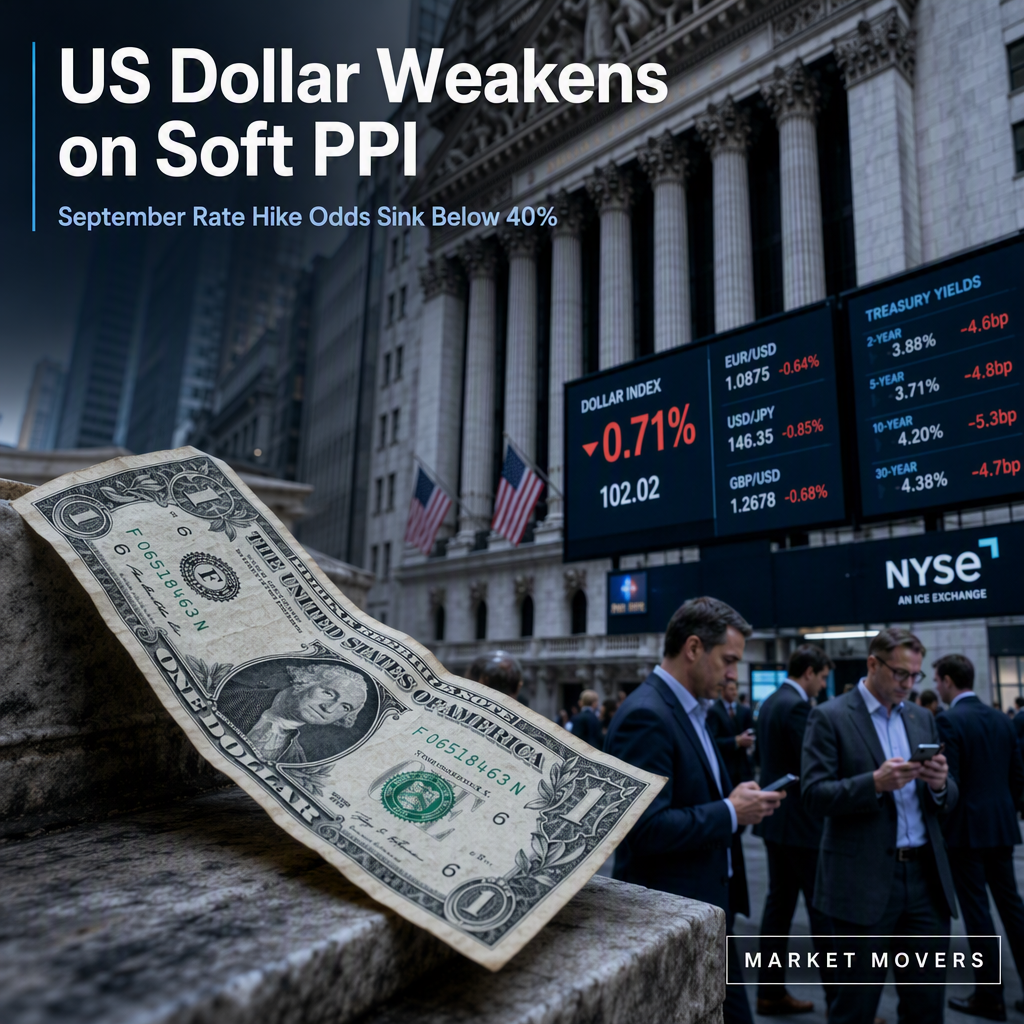
However, Thursday's Producer Price Index (PPI) report had a much stronger market impact. The annual PPI rate slowed to 4.7% in July, coming in below both the 5.0% forecast and June's 5.5% pace. Producer prices were also flat for the month. This cooler-than-expected PPI reading caused the odds of a September rate hike to drop from roughly a coin flip to below 40% by Thursday's close, and the US dollar extended its decline [1].
The PPI's outsized influence compared to the CPI is attributed to its position earlier in the inflation pipeline; changes in producer prices can take one to three months to filter through to consumer prices. As a result, the Federal Reserve closely monitors PPI for early signals about future consumer inflation trends. The softer PPI print suggests easing inflationary pressures, which in turn reduces the likelihood of imminent rate hikes [1].
Prior to the PPI release, traders had priced in about a 55% chance that the Fed would leave rates unchanged at its September 15-16 meeting. After the PPI data, the probability of a rate hike fell below 40%, reflecting a significant shift in market expectations [1].
CONCLUSION
The cooler-than-expected PPI report had a pronounced effect on market sentiment, sharply reducing the odds of a September rate hike and weakening the US dollar. While the CPI data was largely in line with forecasts and had minimal impact, the PPI's surprise to the downside signaled easing inflationary pressures and prompted traders to reassess the Federal Reserve's next move.