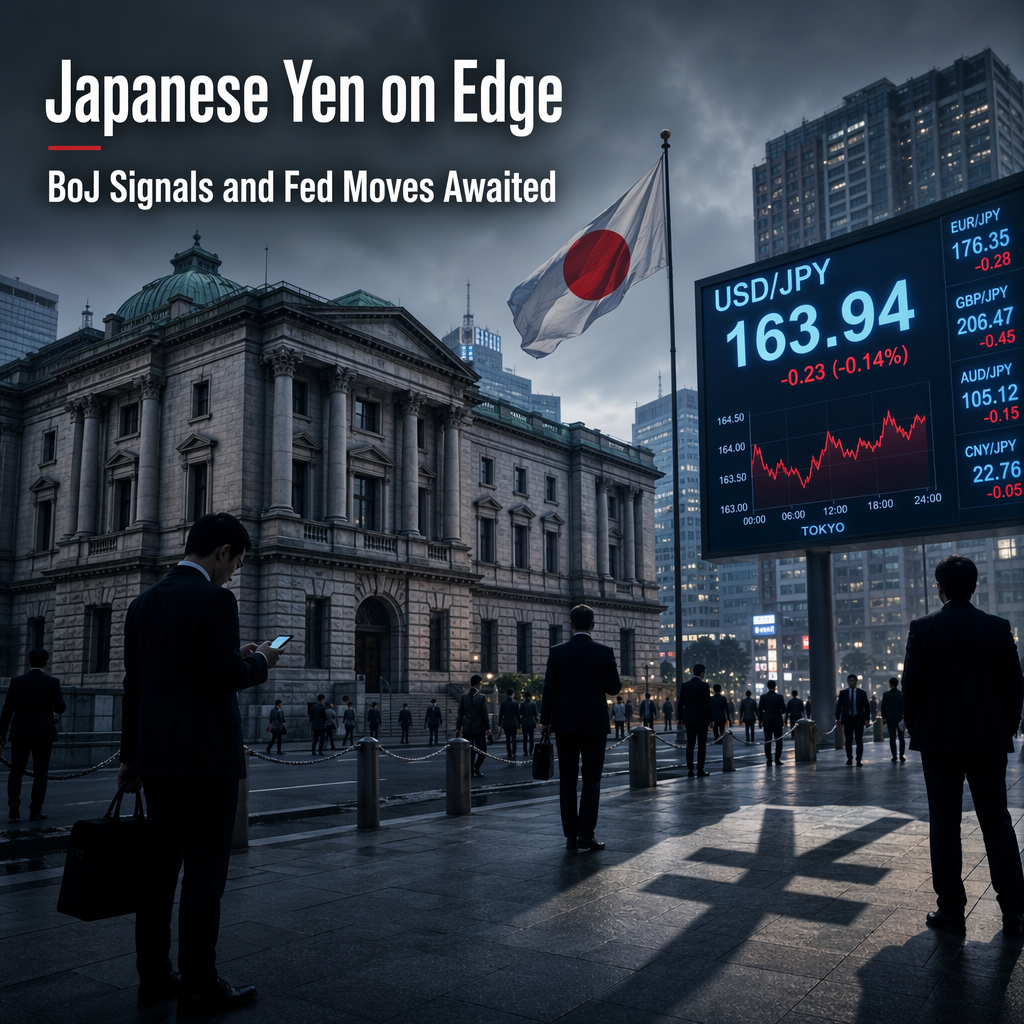
MUFG’s Lee Hardman notes that a recent drop in energy prices has provided relief for Japanese policymakers and helped slow the upward momentum of USD/JPY, which has remained just below the 164.00 level since late last week [1]. Despite this, the Japanese Yen (JPY) remains exposed to further weakness due to a lack of clear hawkish guidance from the Bank of Japan (BoJ) regarding future rate hikes [1].
Market expectations are that the BoJ will keep rates unchanged following its rate hike in June, but attention is focused on whether the central bank will signal a more aggressive tightening stance going forward [1]. Bloomberg has reported that the BoJ is open to a faster pace of rate hikes than every six months, and that yen weakness is contributing to upside inflation risks [1].
Inflation concerns are also impacting Japanese politics, with Bloomberg reporting that these worries are negatively affecting Prime Minister Takaichi’s popularity, although poll readings remain relatively high [1]. In response, the government is considering a promised sales tax cut on food to help ease inflation pressures, with a policy decision expected by early August [1].
The yen’s vulnerability is heightened by the possibility of a hawkish surprise from the Federal Reserve this week, which could further pressure the currency if the BoJ does not provide stronger tightening signals [1].
CONCLUSION
The Japanese yen’s outlook remains uncertain, hinging on upcoming guidance from the BoJ and potential surprises from the Federal Reserve. Without clearer hawkish signals from the BoJ, the yen could face further weakness, especially if the Fed adopts a more aggressive stance.