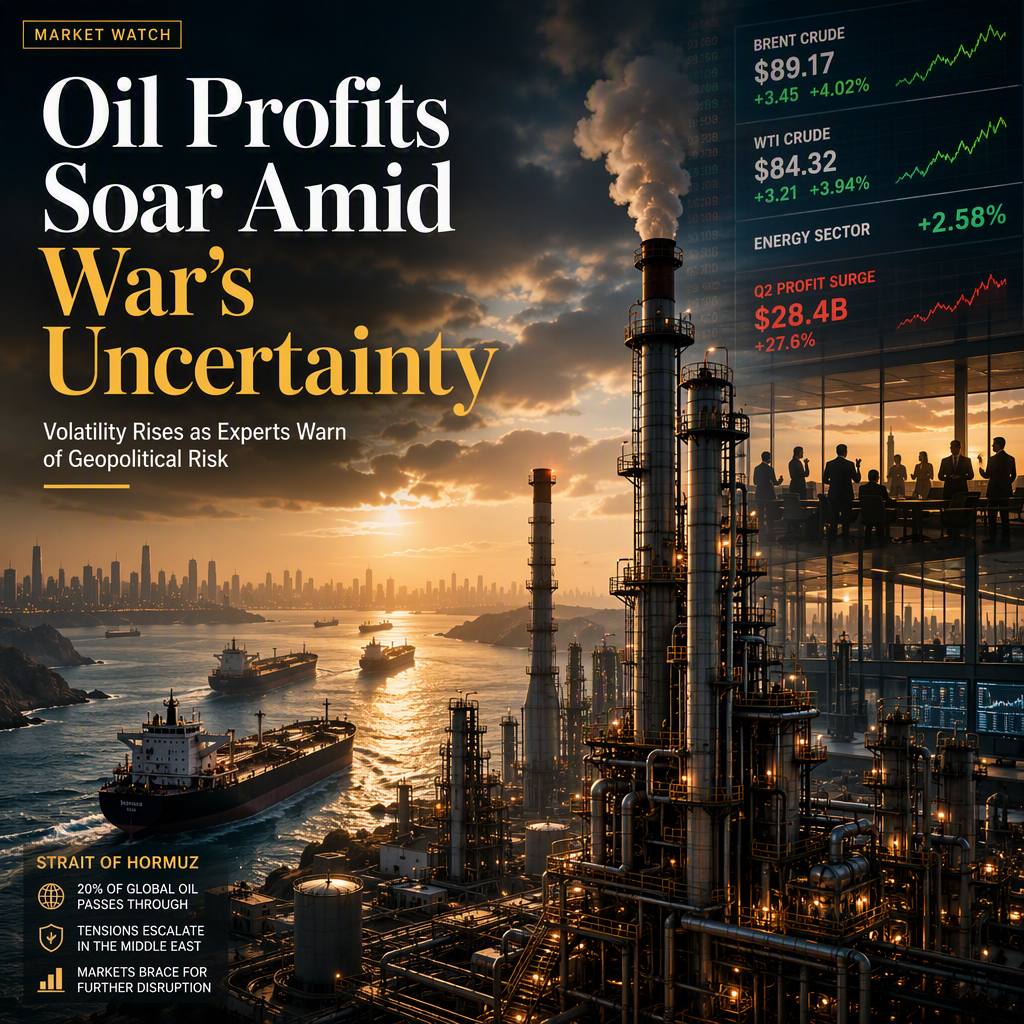
The recent U.S.-Iran war has significantly impacted the oil market, leading to soaring oil prices and substantial profits for major energy companies. ExxonMobil reported quarterly profits of $14.5 billion, doubling its year-over-year results, while Chevron's net income increased by nearly 400% over the same period. Valero Energy's earnings surged over 400% for the quarter, with the company estimating a global refining capacity shortfall of five million barrels per day and oil inventories over 100 million barrels below needed levels. Chevron's refining segment saw profits jump 500% due to rising gasoline and diesel prices [1].
From April through June, U.S. crude oil futures averaged over $92 per barrel, marking a 27% increase for the quarter. The price of oil has been highly volatile, peaking at nearly $120 per barrel since early March, dipping as low as $72, and fluctuating within that range. As of the most recent Friday, U.S. crude traded under $85 per barrel and Brent crude around $90, with prices falling more than 5% over the past week on optimism that the Middle East situation may improve [1].
The war has also driven significant inflows into oil and oil industry-related ETFs, rewarding investors who capitalized on the sector's short-term opportunities. However, investing experts caution that relying on geopolitical events for investment returns is risky. They suggest that the recent gains are more reflective of short-term speculation than long-term fundamentals, and advise long-term investors to consider other themes within the energy sector [1].
President Trump commented over the weekend that an end to the war may be in sight, referencing the 'perimeters of a deal' and the potential reopening of the Strait of Hormuz. This has contributed to the recent decline in oil prices as markets bet on an improving geopolitical outlook [1].
CONCLUSION
The U.S.-Iran war has fueled record profits for oil majors and significant gains for energy investors, but the market remains highly volatile. Experts warn that geopolitical-driven trades carry substantial risk, and recent price declines reflect hopes for a resolution. Long-term investors are advised to look beyond short-term geopolitical events when considering energy sector opportunities.