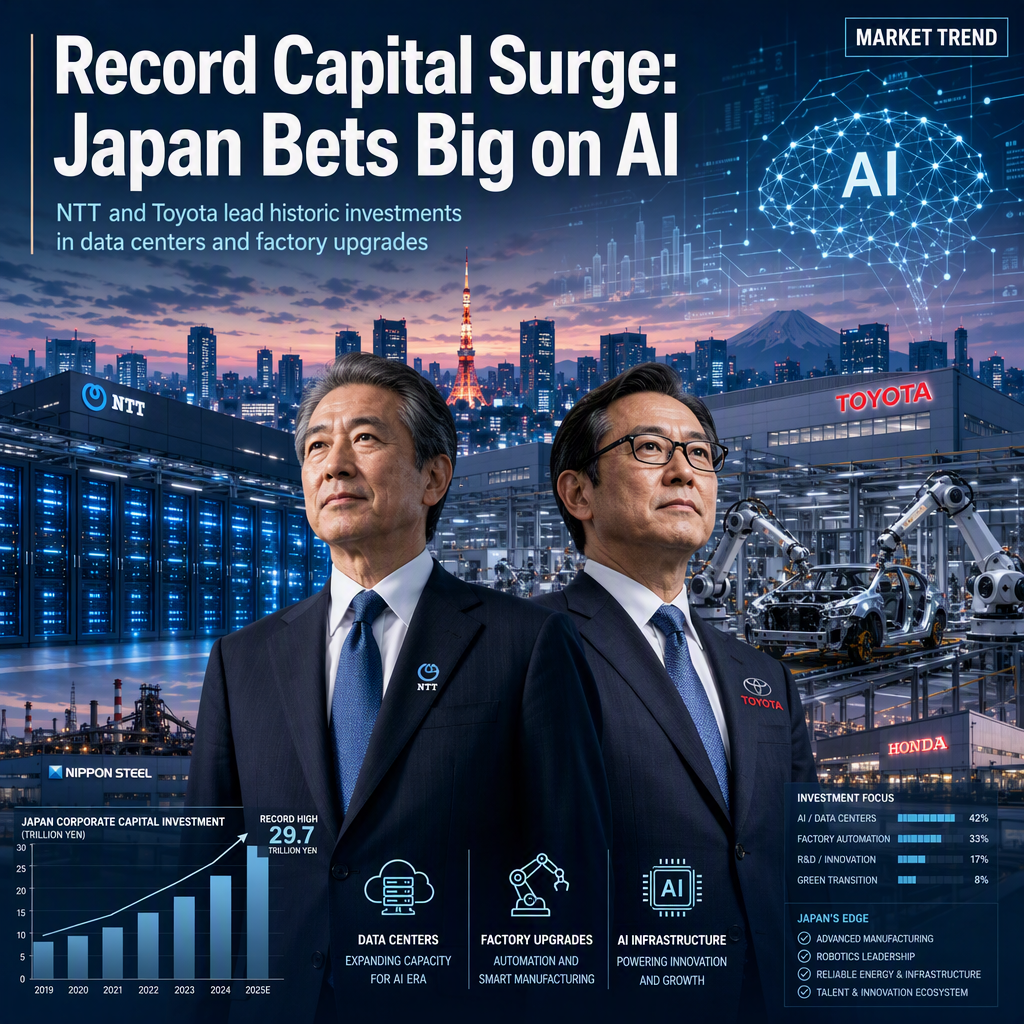
Japanese corporate capital spending is projected to reach an all-time high in the current fiscal year, with major companies such as NTT and Toyota leading the surge through significant investments in artificial intelligence infrastructure and advanced factory upgrades [1]. Other prominent firms, including Nippon Steel and Honda, are also making substantial investments to retool their production facilities, contributing to a broader wave of capital expenditure across the country [1].
A key driver of this investment boom is the expansion of data centers by the NTT Data Group, alongside similar projects by other Japanese corporations. These initiatives are aimed at enhancing capabilities in anticipation of increased AI adoption across various industries, with expectations that such investments will boost productivity and reinforce Japan’s technological competitiveness globally [1].
Market analysts are closely monitoring this surge in capital expenditure, noting that it reflects both the opportunities and risks associated with the ongoing AI boom. The focus on large-scale projects in chipmaking and power grids underscores a strategic commitment to building the infrastructure necessary for next-generation digital services [1].
This record-setting spending comes amid global trends, as Japanese companies seek to keep pace with international competitors in the development and deployment of advanced AI technologies [1].
CONCLUSION
Japanese companies are making unprecedented capital investments, particularly in AI infrastructure and factory upgrades, led by NTT and Toyota. This surge is expected to enhance productivity and global competitiveness, marking a significant market-moving trend. Analysts view the record spending as both an opportunity and a risk, reflecting Japan's strategic response to the global AI race.