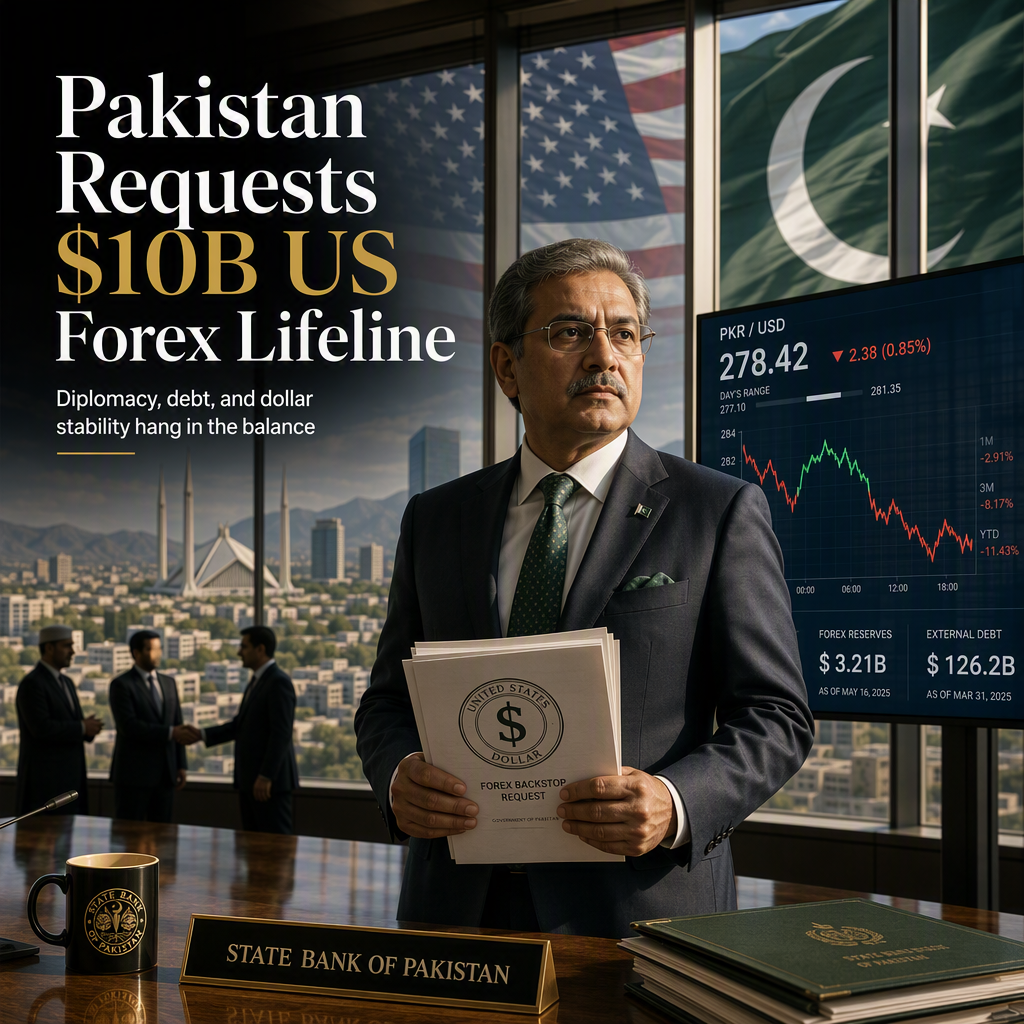
Pakistan has formally applied for a U.S. foreign currency backstop facility worth up to $10 billion, aiming to bolster its ability to withstand shocks to its foreign reserves, according to Nikkei Asia [1]. The request follows Pakistan's recent mediation efforts between the U.S. and Iran, a diplomatic initiative led by Field Marshal Asim Munir, the country's military chief [1].
The $10 billion facility is designed to act as a safeguard against potential crises that could deplete Pakistan's foreign reserves, which are currently under pressure due to high external debt repayments and sluggish export growth [1]. Financial experts cited in the article warn that while the funding could strengthen Pakistan's reserves and improve its creditworthiness and investor confidence in the short term, it may also lead to increased scrutiny from Washington, particularly regarding Pakistan's debt obligations to China [1].
A senior government official acknowledged that Pakistan's mediation role between the U.S. and Iran was instrumental in unlocking this opportunity, but also highlighted concerns about the conditions attached to the facility and the potential for enhanced U.S. oversight of Pakistan's financial dealings [1].
Market observers are closely monitoring the potential impact of the facility, if approved, on Pakistan's currency stability and bond yields. Technical analysts suggest that an influx of U.S. dollar support could temporarily strengthen the Pakistani rupee against the dollar, with resistance expected near the PKR/USD 275-280 level and support at PKR/USD 300 if external pressures persist [1]. While no trading advice has been issued by local brokerage houses, sentiment is described as cautiously optimistic that the facility could help Pakistan manage upcoming debt maturities and external shocks. Traders are advised to watch for developments regarding the facility's approval and any related policy changes that could affect currency and fixed income markets [1].
CONCLUSION
Pakistan's application for a $10 billion U.S. forex backstop marks a significant step in its efforts to stabilize foreign reserves amid economic and geopolitical challenges. While the move could boost investor confidence and currency stability in the short term, concerns remain about increased U.S. scrutiny and the conditions attached to the facility. Market participants are advised to monitor the approval process and potential policy shifts closely.