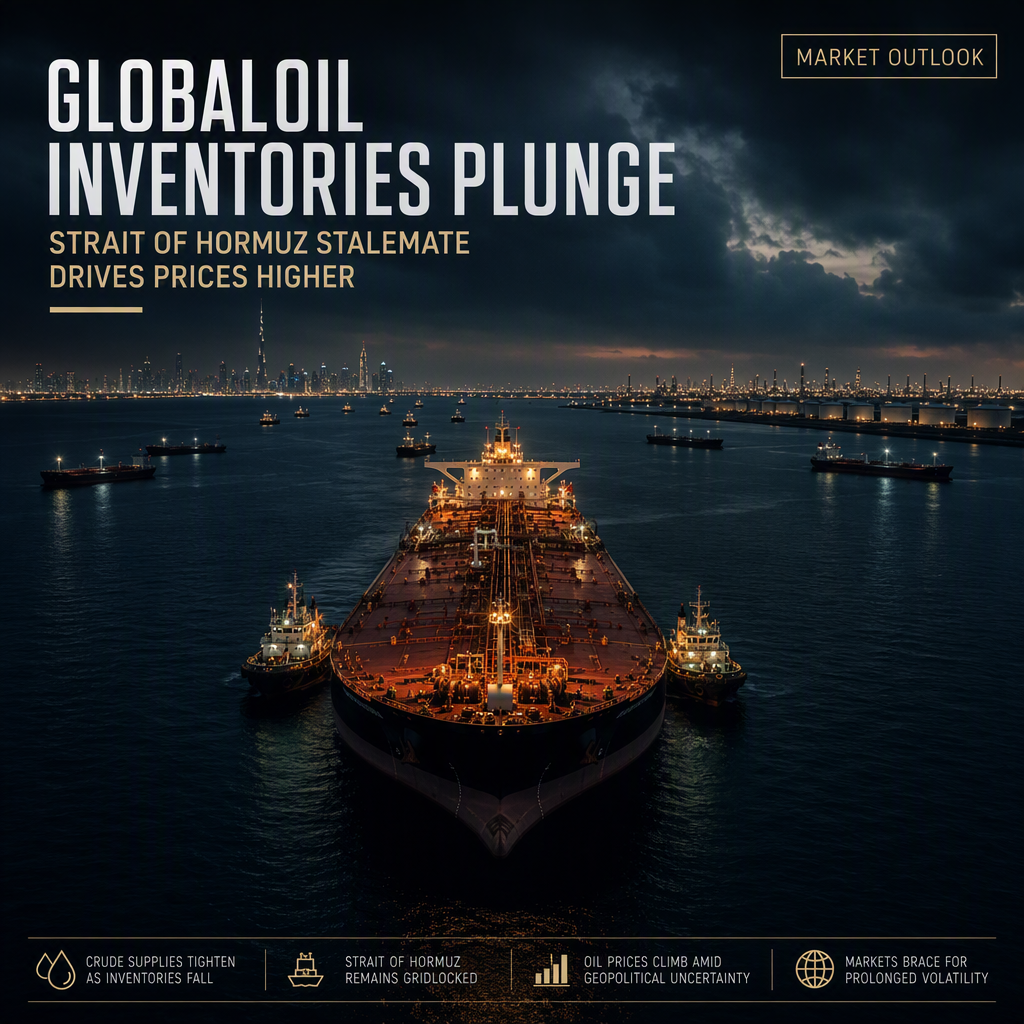
Global crude oil inventories are declining once again due to the effective shutdown of the Strait of Hormuz, a critical shipping lane for Middle Eastern oil, which has stalled shipments and driven up prices [1]. Japan's crude oil inventory has dropped by 18% since the start of the Iran war, underscoring the impact of the supply disruption on countries heavily reliant on Middle Eastern oil [1]. The United States' ability to increase production is uncertain amid ongoing market volatility, further exacerbating the global supply shortage [1].
Technical analysis shows that support levels for Brent crude have shifted higher, with resistance now projected at $95 per barrel [1]. Market sentiment is described as bullish, with traders expecting continued supply constraints and the possibility of prices surging past $100 per barrel if the situation persists [1]. A Tokyo-based commodities analyst characterized the current environment as a 'classic supply shock,' warning that without a breakthrough in the geopolitical standoff or a rapid increase in non-OPEC supply, inventories will continue to decline and prices could rise further [1].
The depletion of Japan's crude inventory by 18% since the onset of the Iran war highlights Asia's energy security vulnerabilities and has prompted calls for strategic diversification of supply sources [1]. Market participants are advised to closely monitor storage data and diplomatic developments in the Gulf, as any progress could trigger significant volatility [1]. Until then, the market is expected to remain tight, with persistent upward pressure on oil prices [1].
CONCLUSION
The ongoing stalemate in the Strait of Hormuz has led to a significant tightening of global oil inventories and rising prices, with Japan's stockpiles falling sharply and Brent crude resistance now at $95 per barrel. Market sentiment remains bullish, and unless geopolitical tensions ease or alternative supplies emerge, further price increases are likely.