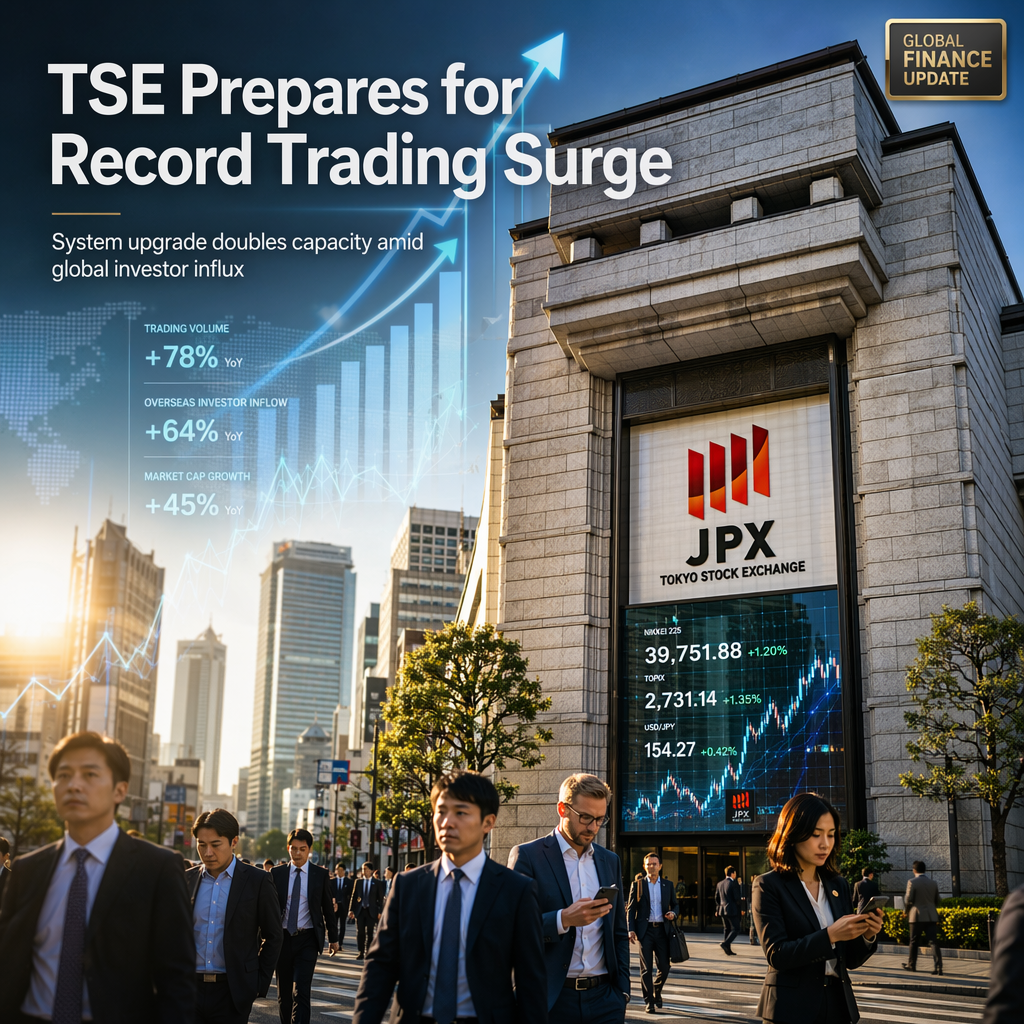
The Tokyo Stock Exchange (TSE) has announced plans to upgrade its trading system as early as November, aiming to nearly double its processing capacity in response to a significant increase in trading volume driven by overseas investors [1]. In June, transactions on the Tokyo bourse have nearly doubled year-on-year, marking the largest system update in the exchange's history and underscoring the impact of soaring overseas investor activity [1].
The upgrade will enhance the technical infrastructure of the market, allowing for increased daily trading value and improved efficiency. Market participants have noted that the surge in activity has made such an upgrade necessary to maintain stability and competitiveness, especially as Japanese equities continue to attract global attention [1]. An exchange spokesperson stated, "Our goal is to provide a robust marketplace that can handle increased demand from both domestic and overseas investors. The system upgrade will ensure smoother transactions and help support further growth in trading volumes" [1].
Market analysts believe the move will solidify Tokyo's position as a leading global financial center and may encourage even higher trading volumes in the future [1]. Technical details of the upgrade include plans to nearly double the processing capacity, addressing current bottlenecks and improving response times for large transaction flows. This is seen as particularly crucial given recent trends: in June, daily trading value on the Prime market has doubled compared to the previous year, reflecting heightened investor interest and liquidity [1].
No specific price levels, support/resistance, or technical indicators were provided in the initial announcement, but market sentiment remains positive regarding the exchange's efforts to modernize and expand its infrastructure in response to investor demand [1].
CONCLUSION
The Tokyo Stock Exchange's planned system upgrade is a direct response to a dramatic increase in trading volume, particularly from overseas investors. Market sentiment is positive, with expectations that the upgrade will enhance stability, efficiency, and Tokyo's global competitiveness.