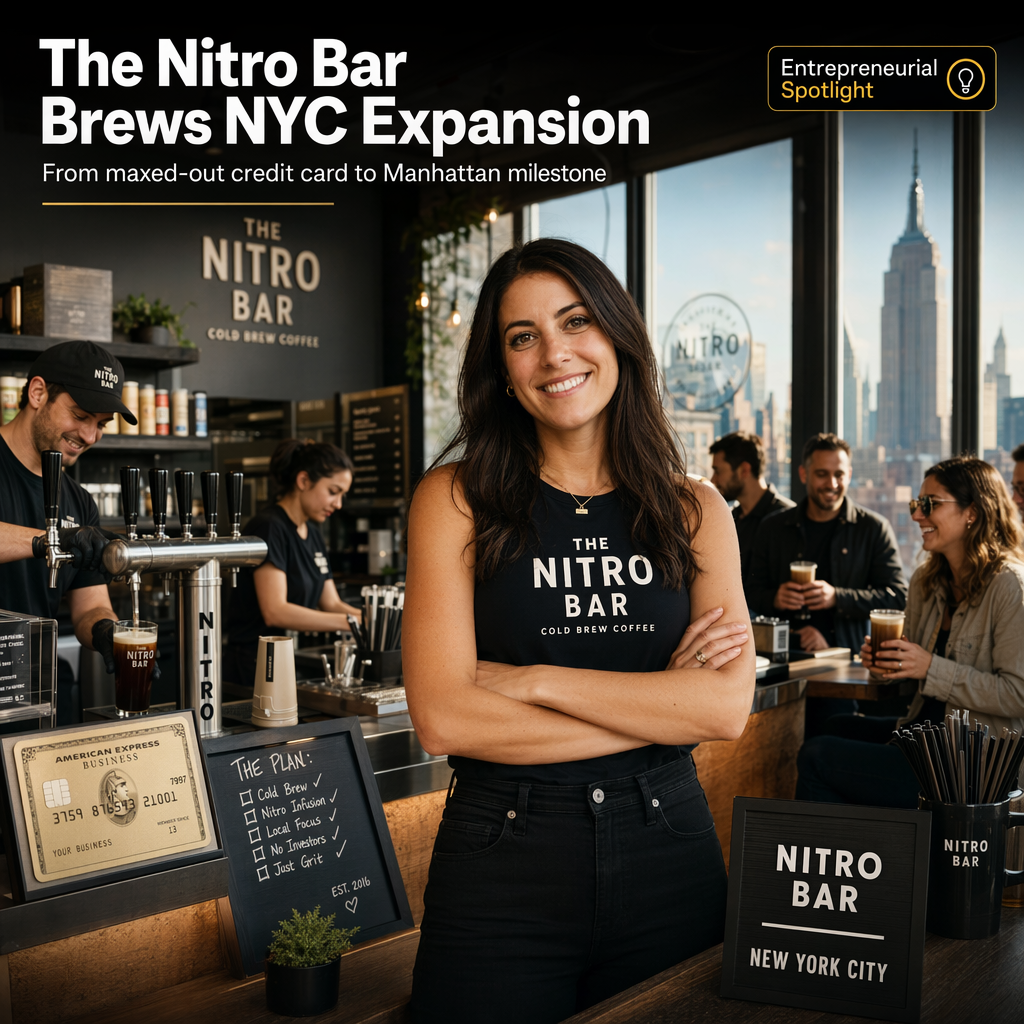
The Nitro Bar, co-founded by Audrey Finocchiaro, began as a small coffee venture funded with a maxed-out credit card, according to an interview with NBC News' Savannah Sellers [1]. Finocchiaro described the early challenges of bootstrapping the business, emphasizing the risks involved in scaling operations with limited resources and the importance of financial discipline [1]. Despite these hurdles, The Nitro Bar achieved rapid revenue growth as its brand gained popularity in the local market [1].
A key milestone for the company was its successful expansion into new locations, including New York City, which required careful financial planning and investment in infrastructure [1]. The Nitro Bar strategically reinvested profits back into the business to support further growth and operational improvements [1]. Finocchiaro highlighted the use of creative financing solutions when traditional funding was unavailable, stating, "We started with a maxed-out credit card, but we believed in our vision and were willing to take calculated risks to make it happen" [1].
The company's growth strategy was informed by market analysis, focusing on emerging trends such as the demand for cold brew and nitro-infused beverages [1]. Investments in marketing and collaborations helped increase brand visibility and attract new customers [1]. Finocchiaro advised aspiring entrepreneurs not to let limited access to capital deter them, emphasizing the value of a solid business plan and hard work [1].
While the interview did not disclose specific financial values, charts, or price levels, it underscored the importance of financial discipline, market awareness, and adaptability in building a successful business from the ground up [1].
CONCLUSION
The Nitro Bar's journey from a bootstrapped startup to a growing coffee brand with a presence in New York City demonstrates the impact of disciplined financial management and strategic market positioning. The company's experience highlights that creative financing and adaptability can drive significant growth, even when traditional funding is out of reach.