
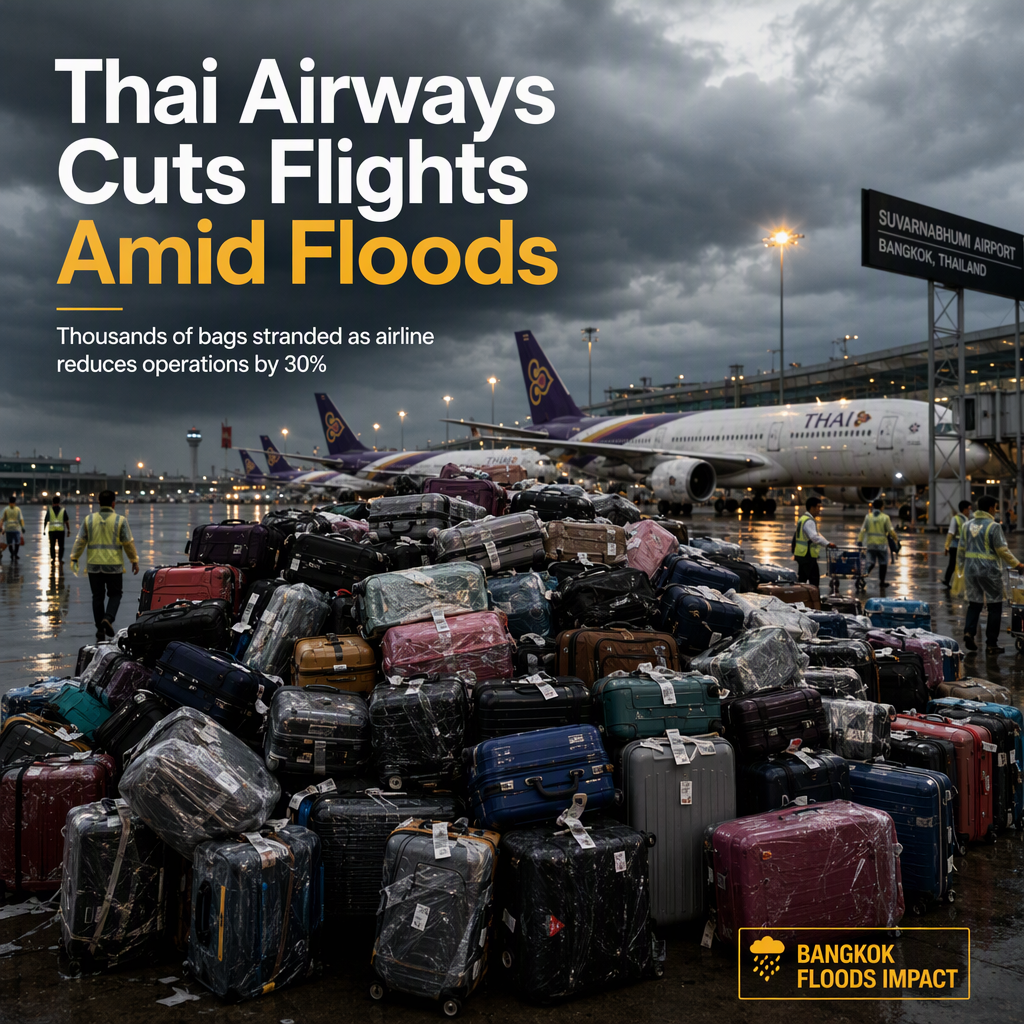
Thai Airways has announced a temporary reduction of approximately 30% in its flight operations due to severe disruptions caused by recent heavy rains and flooding across Bangkok and surrounding regions [1]. The airline revealed these plans on Tuesday, citing operational difficulties that have affected both domestic and international routes [1]. In addition to the flight cuts, Thai Airways is experiencing a shortage of baggage handlers, resulting in around 5,600 pieces of luggage left unprocessed at Bangkok's Suvarnabhumi Airport as of September 29 [1].
A photo from the airport shows a significant accumulation of stranded baggage, attributed to insufficient staff and logistical constraints [1]. The airline is prioritizing essential flights and has advised passengers to check updated schedules and allow extra time for check-in and luggage collection [1]. Thai Airways has not provided a timeline for the resumption of normal operations, noting that weather conditions remain unpredictable and further flooding is possible [1].
The company stated it is working closely with airport authorities to address the baggage backlog and minimize inconvenience to travelers [1]. While no specific financial data or market analysis was included in the article, the scale of flight reductions and operational challenges suggests a significant short-term impact on Thai Airways' revenues and customer service capabilities [1].
CONCLUSION
Thai Airways' decision to cut 30% of its flights and the resulting baggage backlog highlight the severe operational challenges posed by ongoing flooding in Bangkok. The situation is expected to have a notable short-term impact on the airline's performance, with no clear timeline for recovery as weather conditions remain uncertain.