
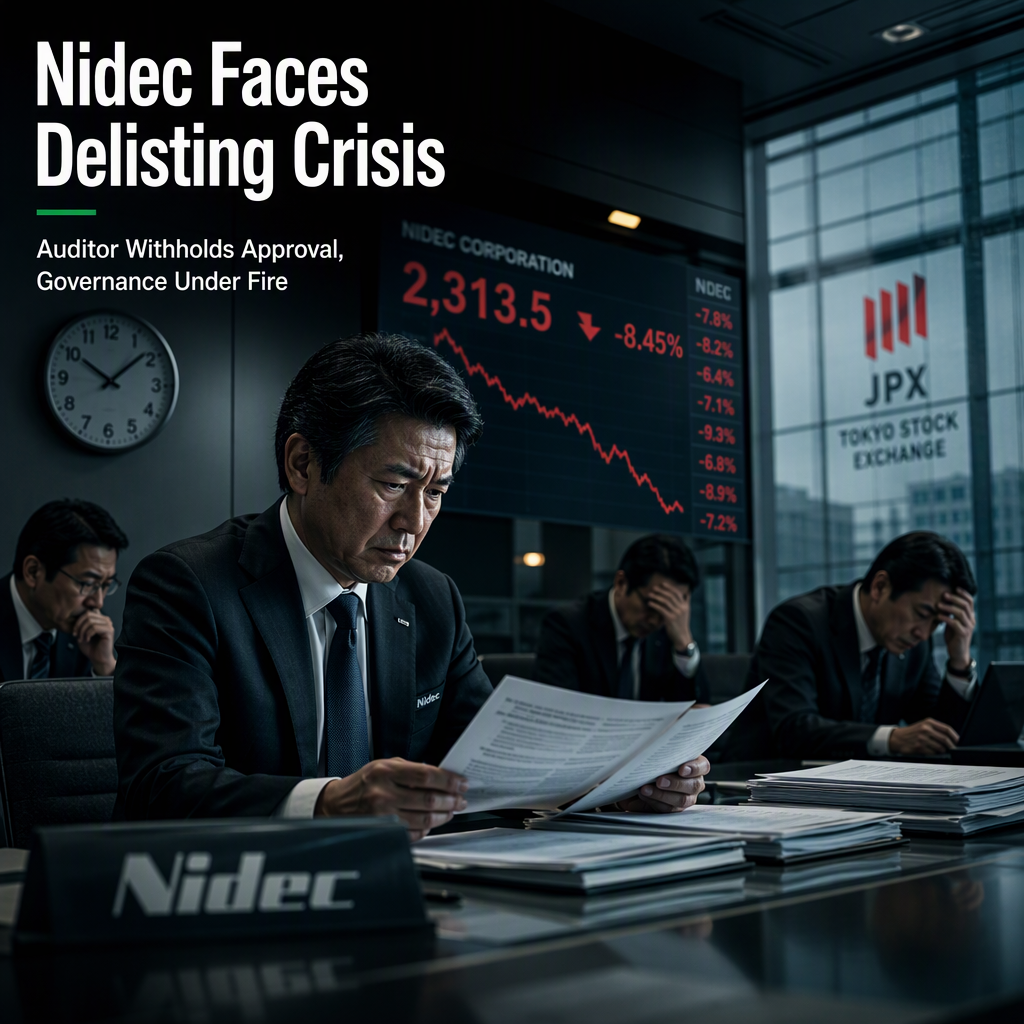
Nidec, a major motor manufacturer, is under intense scrutiny after its accounting firm declined to sign off on the accuracy of its delayed financial report, raising significant concerns about the reliability of the company's financial statements and the effectiveness of its internal controls [1]. This development follows Nidec's designation as a 'security on special alert' by the Tokyo Stock Exchange last year, further highlighting ongoing governance issues within the company [1].
The auditor's refusal to approve the earnings report has intensified pressure on Nidec to overhaul its governance structures and address calls for the removal of those responsible for making false statements [1]. The company is already grappling with a series of financial and operational setbacks, including a major write-down in its electric vehicle motor business and revelations of quality control misconduct affecting hundreds of cases [1].
Market observers emphasize the urgency for Nidec to restore investor confidence by demonstrating tangible improvements in transparency and oversight [1]. Failure to resolve these governance issues could result in the company's shares being delisted from the Tokyo Stock Exchange, which would have a significant negative impact on shareholder value [1].
Financial analysts are closely monitoring Nidec's actions as it works to finalize and disclose its delayed financial results. Any further deterioration in corporate governance or additional negative findings related to accounting or quality control could further depress the stock price and undermine market sentiment toward the company [1].
CONCLUSION
Nidec is facing a critical juncture as it races to address governance failures and regain the trust of investors and regulators. The risk of delisting from the Tokyo Stock Exchange underscores the high stakes for the company, with market sentiment remaining negative until clear improvements are demonstrated.