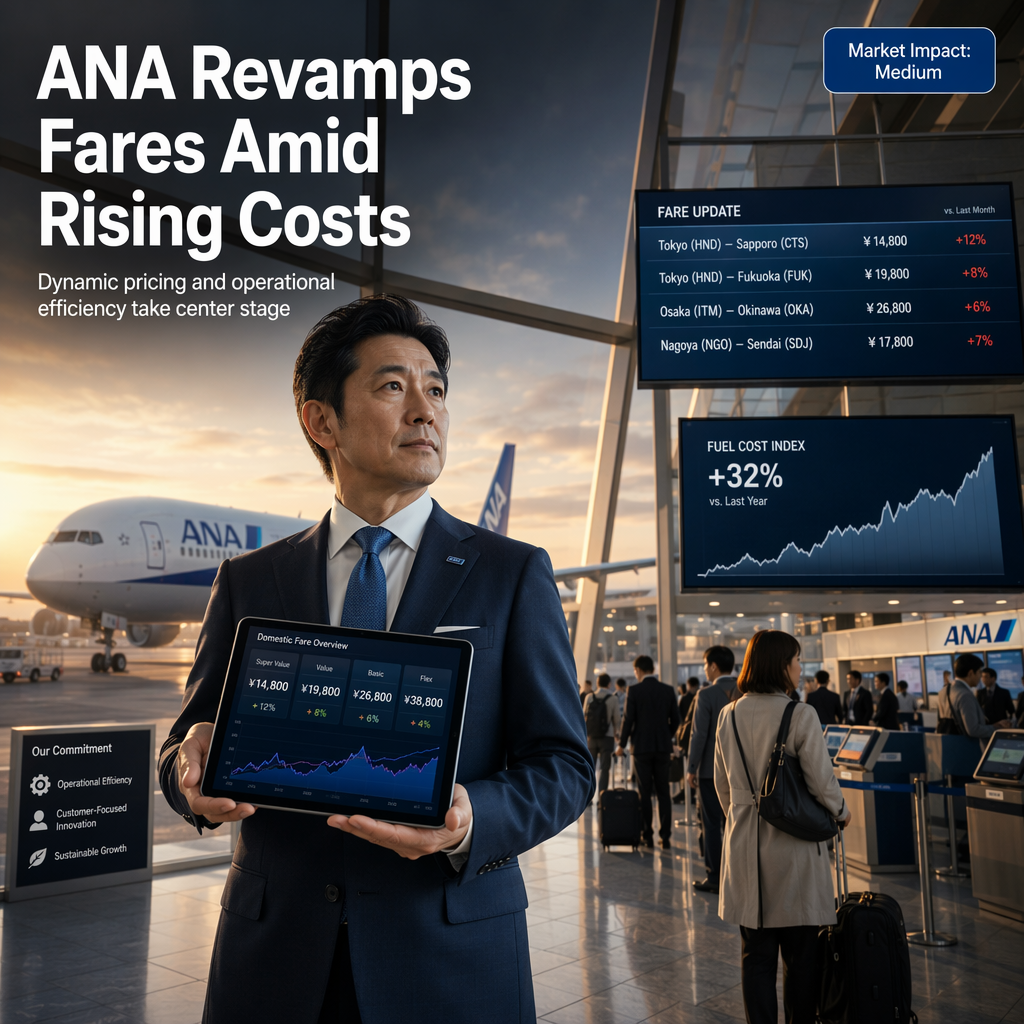
ANA Holdings is undertaking a significant overhaul of its revenue structure for domestic flights in response to escalating fuel and outsourcing costs, which have threatened the profitability of its domestic operations [1]. The company has acknowledged that, without ongoing government support, its domestic flights would currently be operating at a loss [1]. In an effort to address these challenges, ANA is revamping its ticket pricing strategy, shifting towards more flexible and dynamic fare structures designed to better absorb the impact of volatile fuel prices and increased operational expenses [1].
This strategic move represents a marked change in ANA's approach to managing its domestic business, as the company seeks to align rising expenses with new pricing mechanisms and operational efficiencies [1]. Management at ANA has emphasized the importance of government support in the short term, but has stated that the ultimate objective is to restore profitability through internal adjustments and improvements in operational efficiency [1].
No specific financial figures, dates for implementation, or analyst opinions were provided in the article. The market implications of these changes were not explicitly discussed, but the company's actions suggest a proactive response to cost pressures in the Japanese aviation sector [1].
CONCLUSION
ANA Holdings is responding to mounting cost pressures by restructuring its domestic fare system and seeking operational efficiencies. While government support remains essential for now, the company aims to achieve profitability through internal reforms. The market impact is medium, reflecting the significance of these changes for ANA's domestic business.