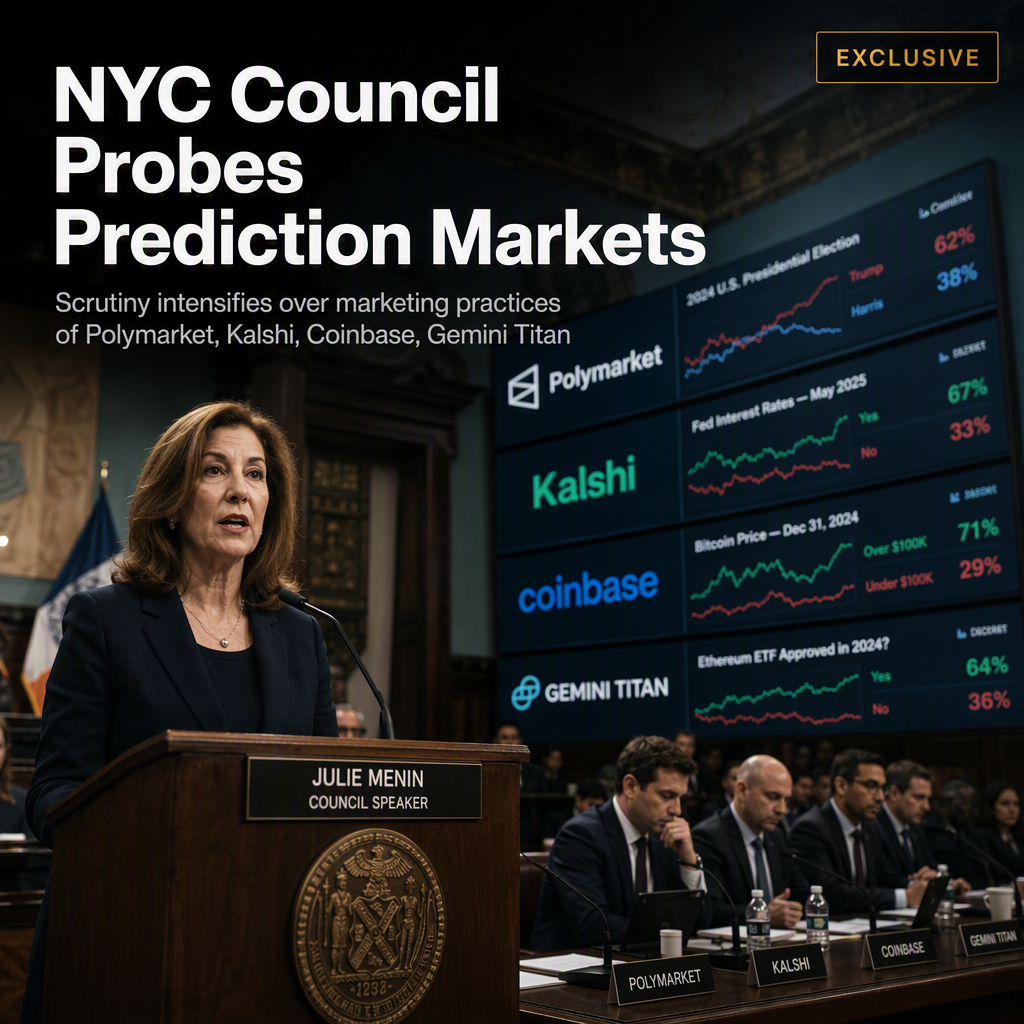
The New York City Council has initiated an investigation into the marketing strategies of prediction market platforms, focusing on allegations of 'false, deceptive, unconscionable, and objectionable marketing practices' by event contract exchanges, according to Council Speaker Julie Menin's office [1]. The probe targets four platforms: Polymarket, Kalshi, Coinbase, and Gemini Titan, with three of these—Kalshi, Polymarket, and Gemini Titan—headquartered in New York City [1]. This council investigation is distinct from ongoing lawsuits filed by New York state against Kalshi, Coinbase, and Gemini, which allege that these companies are operating illegal gambling businesses. Polymarket is not currently facing state litigation [1].
The council's inquiry was prompted in part by a Wall Street Journal investigation that accused Polymarket of misleading marketing, specifically by making it appear that partnered content creators were winning on the platform without using their own money. This reporting led to a Commodity Futures Trading Commission (CFTC) investigation into Polymarket's practices [1]. In response, Polymarket has reportedly updated and streamlined its marketing guidelines for both staff and content creators [1].
Council Speaker Menin emphasized the council's commitment to protecting New Yorkers from potentially deceptive and predatory marketing by prediction market platforms, stating, 'I intend to harness the full power of the Council to protect New Yorkers from deceptive and predatory marketing practices by prediction market platforms' [1]. The council is also considering whether legislative or policy changes are necessary, with plans to hold a hearing on the matter [1]. The memo attached to the council's letters clarified that the current inquiry is not examining whether event contract exchanges violate New York's gambling laws [1].
A Polymarket spokesperson responded, 'We look forward to engaging with The New York City Council on this matter' [1]. Meanwhile, Coinbase, which operates out of Texas, has announced plans to expand its workforce in New York to over 1,000 employees [1].
CONCLUSION
The New York City Council's investigation into prediction market platforms' marketing practices signals increased regulatory scrutiny for the sector. While the probe is separate from ongoing state litigation over alleged illegal gambling, it raises the possibility of new legislative or policy actions. Market participants should monitor developments as the council prepares for hearings and considers further steps.