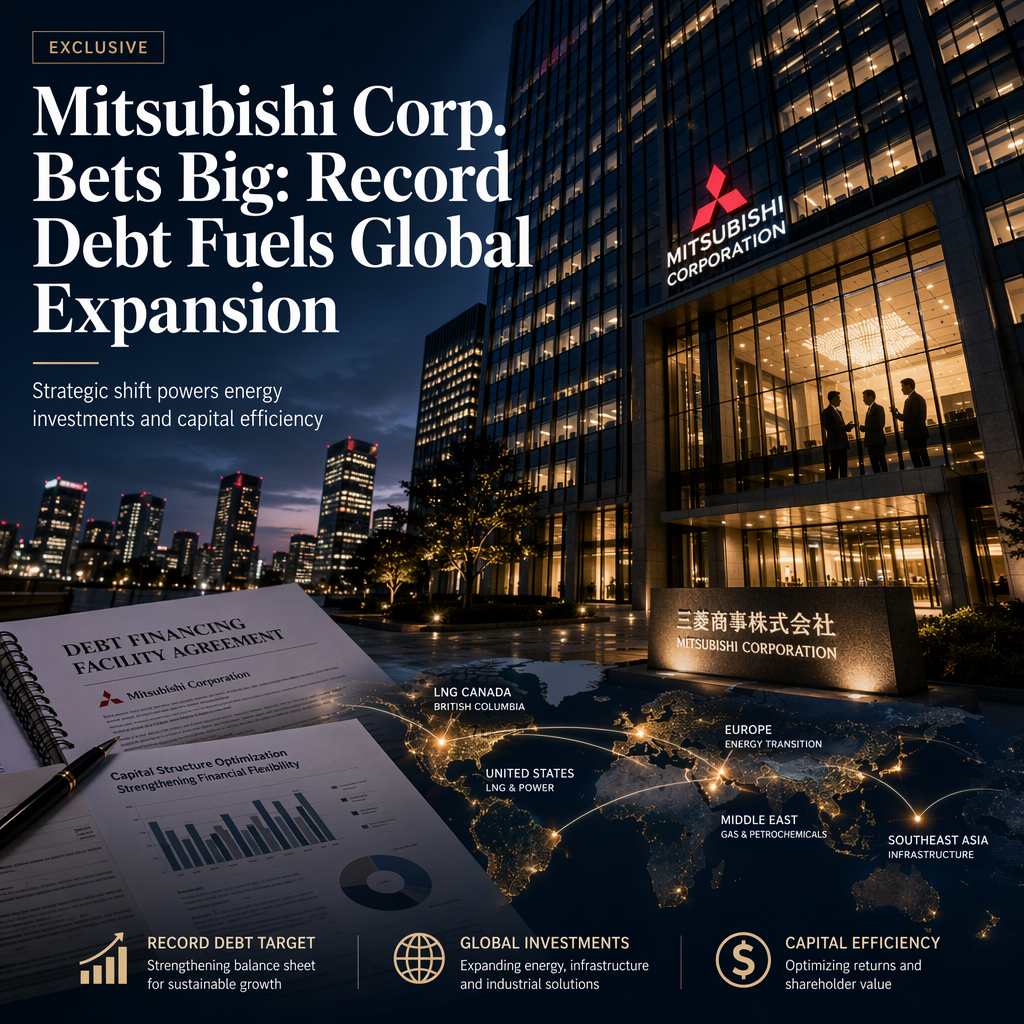
Mitsubishi Corp., a leading Japanese trading house, has initiated a strategic shift by increasingly relying on debt financing to enhance capital efficiency and secure funds for large-scale investments [1]. The company has secured record amounts of debt as part of this new approach, which is intended to allow more aggressive capital deployment into growth areas while maintaining a robust financial position [1].
A notable aspect of Mitsubishi's investment portfolio is its 15% stake in the LNG Canada project, underscoring the company's commitment to expanding its presence in the global energy sector [1]. This move towards greater leverage is seen as a response to the broader trend among Japanese trading companies, which are seeking new opportunities abroad, particularly in energy and other sectors [1].
Market observers and industry analysts are closely monitoring Mitsubishi's capital strategy, as the company's willingness to take on more debt could influence other Japanese trading houses aiming for higher capital efficiency and increased global competitiveness [1]. Mitsubishi's confidence in its cash flow and growth prospects is reflected in its decision to embrace leverage despite ongoing global uncertainties [1].
The company's approach is viewed as an effort to balance the pursuit of stable returns with the flexibility needed to capitalize on large investment opportunities [1].
CONCLUSION
Mitsubishi Corp.'s record debt financing marks a significant strategic shift towards leveraging for growth and capital efficiency. The move is being closely watched by the market and could set a precedent for other Japanese trading houses seeking to enhance their global competitiveness.