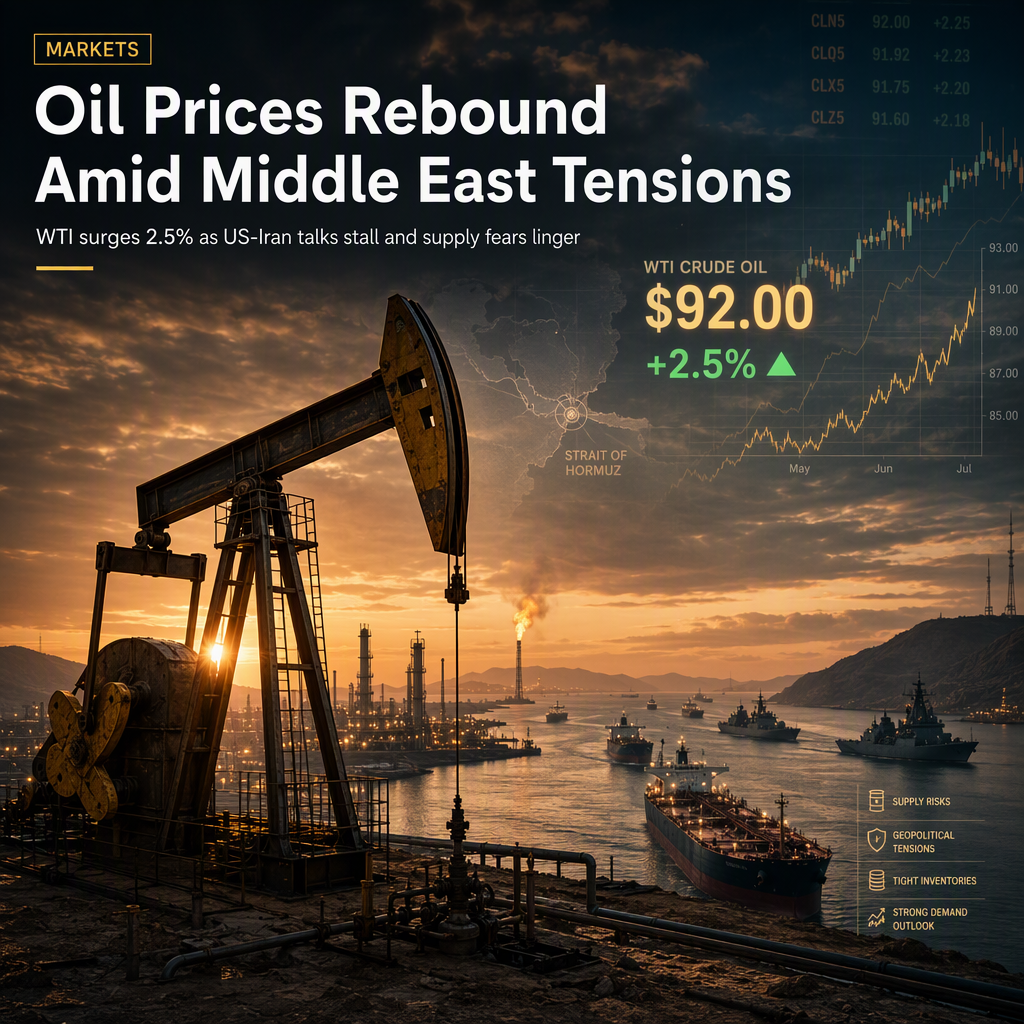
West Texas Intermediate (WTI) Oil rebounded sharply on Wednesday, breaking a five-day losing streak as traders reacted to ongoing Middle East tensions and unexpected US inventory data [1]. At the time of writing, WTI traded around $92, marking a gain of more than 2.5% for the day and recovering from an intraday low of $88.27, which was its lowest level in over two weeks [1].
The price recovery followed indirect talks between US and Iranian officials at the United Nations General Assembly in New York. US Secretary of State Marco Rubio described the meeting as 'positive, but it was not a breakthrough,' emphasizing that it was a continuation of previous discussions and mainly an exchange of ideas [1]. A senior Iranian official told Reuters that reopening the Strait of Hormuz and lifting the US blockade were discussed, but 'many differences remain between the Iranian and US positions, but diplomacy continues' [1].
Supply concerns remain elevated despite Saudi Arabia restarting its East-West pipeline, which has eased some worries. However, shipping through the Strait of Hormuz is still severely restricted, with preliminary Kpler data showing only three commodity vessels crossing on Tuesday, down from four on Monday and well below the 10-day average of about 15 crossings [1]. This ongoing disruption has made traders hesitant to push oil prices lower, even as diplomatic efforts resume [1].
On the inventory front, US crude stocks rose by 2.969 million barrels last week, according to the Energy Information Administration (EIA), defying market expectations of a 0.7 million-barrel draw and following a 0.64 million-barrel decline the previous week [1]. This unexpected build in inventories added another layer of complexity to the market outlook, as traders weigh supply disruptions against rising US stockpiles [1].
CONCLUSION
WTI Oil's rebound reflects persistent supply concerns and the lack of progress in US-Iran diplomatic talks, despite Saudi Arabia's pipeline restart. Unexpected US inventory builds have added uncertainty, keeping traders cautious. The market remains sensitive to both geopolitical developments and inventory data, with supply disruptions continuing to support oil prices.