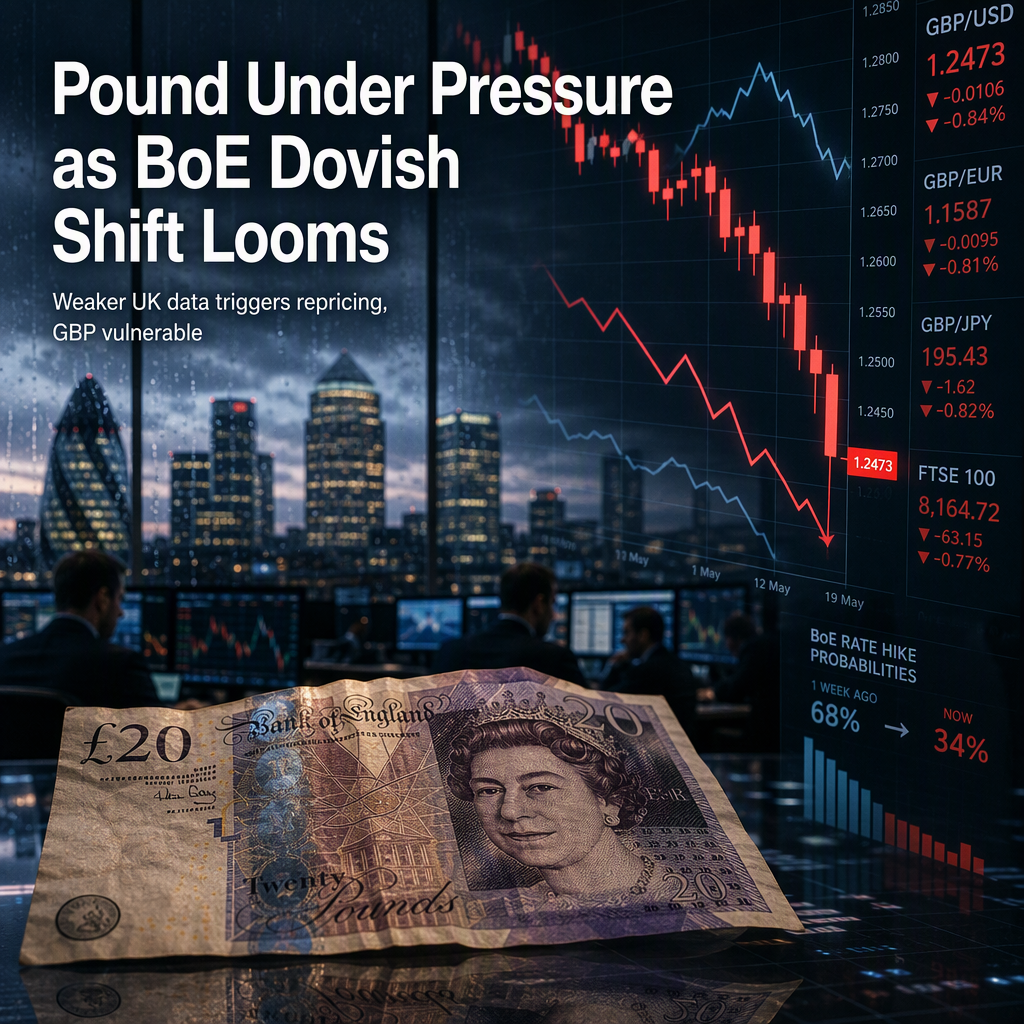
The British Pound (GBP) has come under pressure, with GBP/USD declining amid broad US Dollar strength and EUR/GBP showing slight gains following weaker-than-expected UK September Purchasing Managers' Index (PMI) data [1]. According to Elias Haddad at Brown Brothers Harriman, the composite PMI dropped to a three-month low of 51.7, below the consensus estimate of 52.0 and down from 52.5 in August [1]. The report highlighted slowing growth in the services sector, improved manufacturing activity, and intensifying inflationary pressures [1].
Market expectations, as reflected in the swaps curve, currently imply approximately 100 basis points of Bank of England (BoE) rate hikes over the next twelve months, targeting a peak rate of 4.75% [1]. However, Haddad suggests that the BoE may not need to tighten policy as aggressively as markets anticipate, citing the UK economy's operation below capacity, the current Bank Rate of 3.75% being near the top of the BoE's estimated neutral range (2% to 4%), and the likelihood of more restrictive fiscal policy ahead [1].
This potential dovish repricing leaves the Pound vulnerable, as investors may adjust their expectations for future BoE rate hikes in response to weaker economic data and the central bank's perceived stance [1].
CONCLUSION
The British Pound remains exposed to downside risk as weaker UK PMI data and dovish Bank of England repricing weigh on sentiment. Market expectations for aggressive rate hikes may be tempered, increasing vulnerability for GBP in the near term. Investors should monitor upcoming economic releases and BoE communications for further guidance.