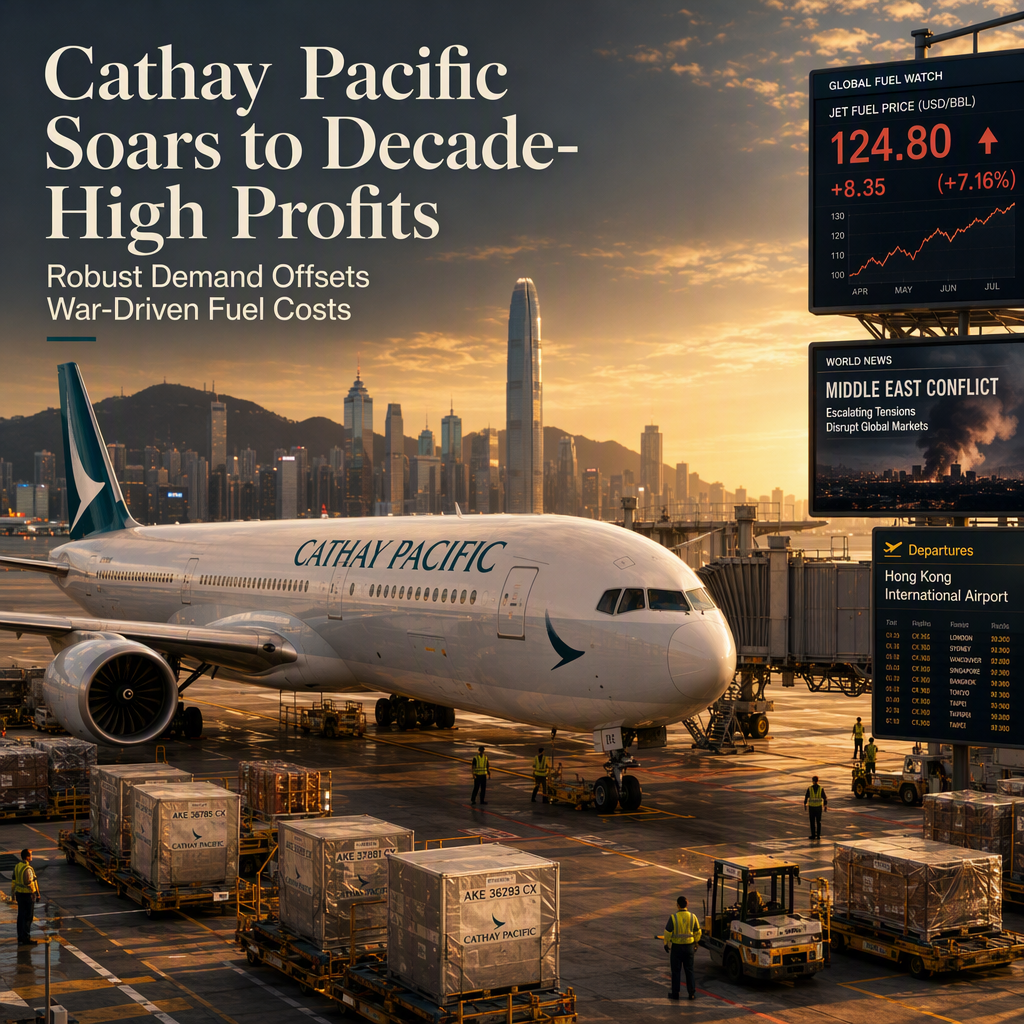
Cathay Pacific Airways reported its best first-half profit since 2010, marking its second-highest earnings for a first half in the company's history, despite facing increased fuel costs due to the ongoing war in the Middle East [1]. The Hong Kong flag carrier attributed this strong performance to robust passenger and cargo demand, which helped offset the negative impact of higher fuel prices caused by the Iran war [1].
While other Asian airlines, including China's big three, reported losses of up to $1.33 billion amid the Middle East conflict, and Japanese airlines experienced record sales but shrinking profits due to high fuel prices, Cathay Pacific managed to cushion these industry-wide challenges [1]. The company remains optimistic for the summer travel season, expecting continued strong demand in both its passenger and cargo segments [1].
Market analysts note that Cathay's earnings performance positions it strongly for the upcoming quarters, though there are warnings about the sustainability of this momentum if global conflicts persist and fuel prices remain elevated [1]. Investors are closely monitoring support levels around key earnings milestones, with potential resistance if demand softens or fuel costs rise further [1].
Overall, Cathay Pacific's resilience in the face of geopolitical and commodity headwinds is underscored by its strong demand, which has served as a cushion against rising costs. However, the market remains vigilant for signs of sustained momentum and the broader impact of ongoing conflicts on aviation sector profitability [1].
CONCLUSION
Cathay Pacific's strong first-half profit highlights its ability to navigate industry disruptions through robust demand in both passenger and cargo operations. While the airline's outlook remains optimistic for the near term, ongoing geopolitical tensions and elevated fuel prices present risks to sustained profitability. Investors and analysts will continue to monitor these factors closely.