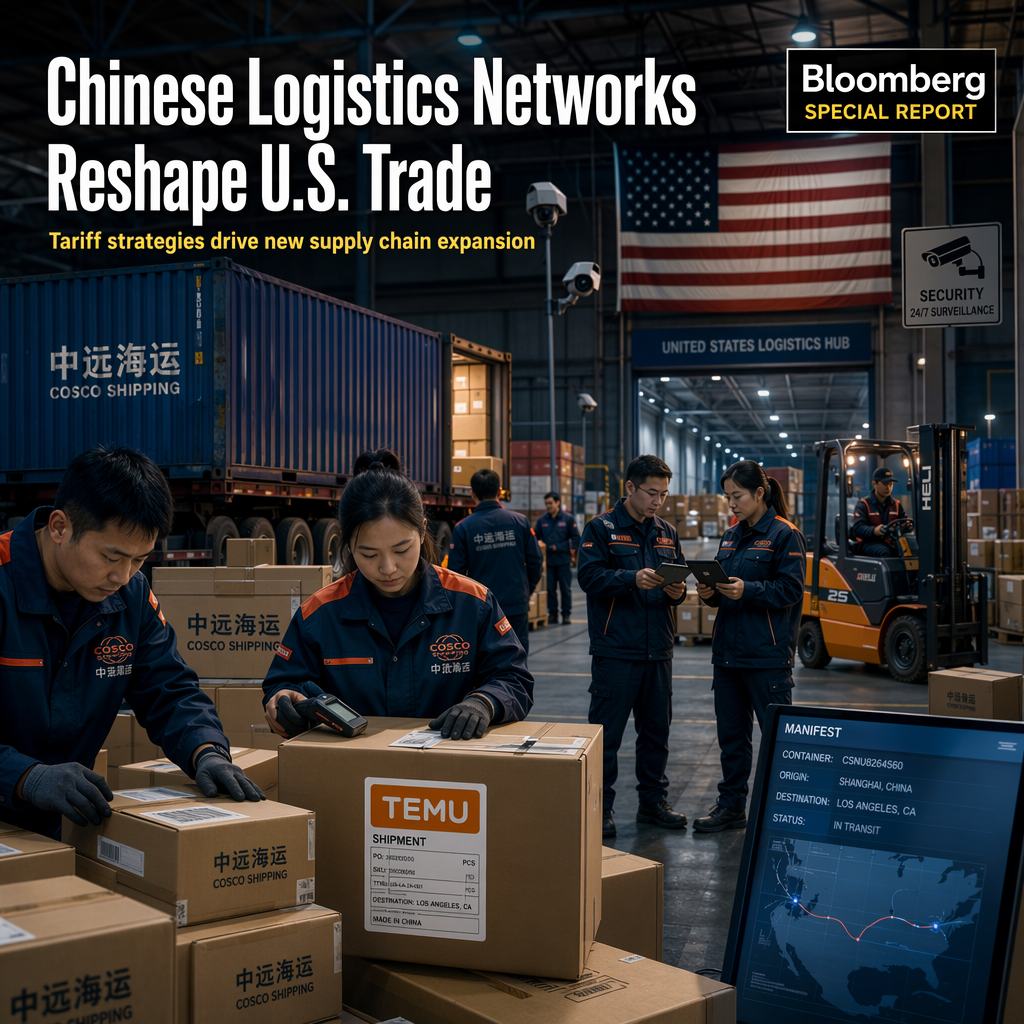
Chinese logistics specialists are rapidly expanding their operations in the United States, establishing comprehensive end-to-end distribution networks that enable Chinese merchants to cut costs and minimize tariff exposure, according to industry experts [1]. This expansion allows more products from Chinese e-commerce platforms such as Temu to reach American consumers without leaving Chinese-run logistics systems, thereby increasing efficiency and reducing tariffs for merchants [1].
The growth of these logistics networks is a direct response to escalating trade tensions and new tariffs imposed by the U.S. government. By controlling the entire supply chain—from manufacturing in China to delivery in the U.S.—Chinese companies are able to streamline operations and navigate tariff-related challenges more effectively [1]. Additionally, Chinese logistics firms are increasing their presence in U.S. warehouse operations, which is part of a broader strategy to revamp overseas sales models and reinforce China's logistics sector, posing challenges to U.S. tariff enforcement [1].
The U.S. government is considering new tariffs on 60 economies, including China, over concerns such as forced labor, further complicating the logistics landscape. The use of China-linked front companies to potentially circumvent U.S. tariffs highlights the complexity of enforcing both new and existing trade rules [1].
China's trade surplus has recently reached a record $1 trillion as exports rebound, emphasizing the importance of efficient logistics and distribution channels for Chinese merchants in the global market. Market analysts believe that the continued development of Chinese logistics networks in the U.S. could significantly impact tariff enforcement, competitive dynamics in e-commerce, and the overall structure of international trade [1].
CONCLUSION
The expansion of Chinese logistics networks in the U.S. is a strategic response to ongoing trade tensions and tariff measures. This development could reshape tariff enforcement and competitive dynamics in e-commerce, with broader implications for international trade.