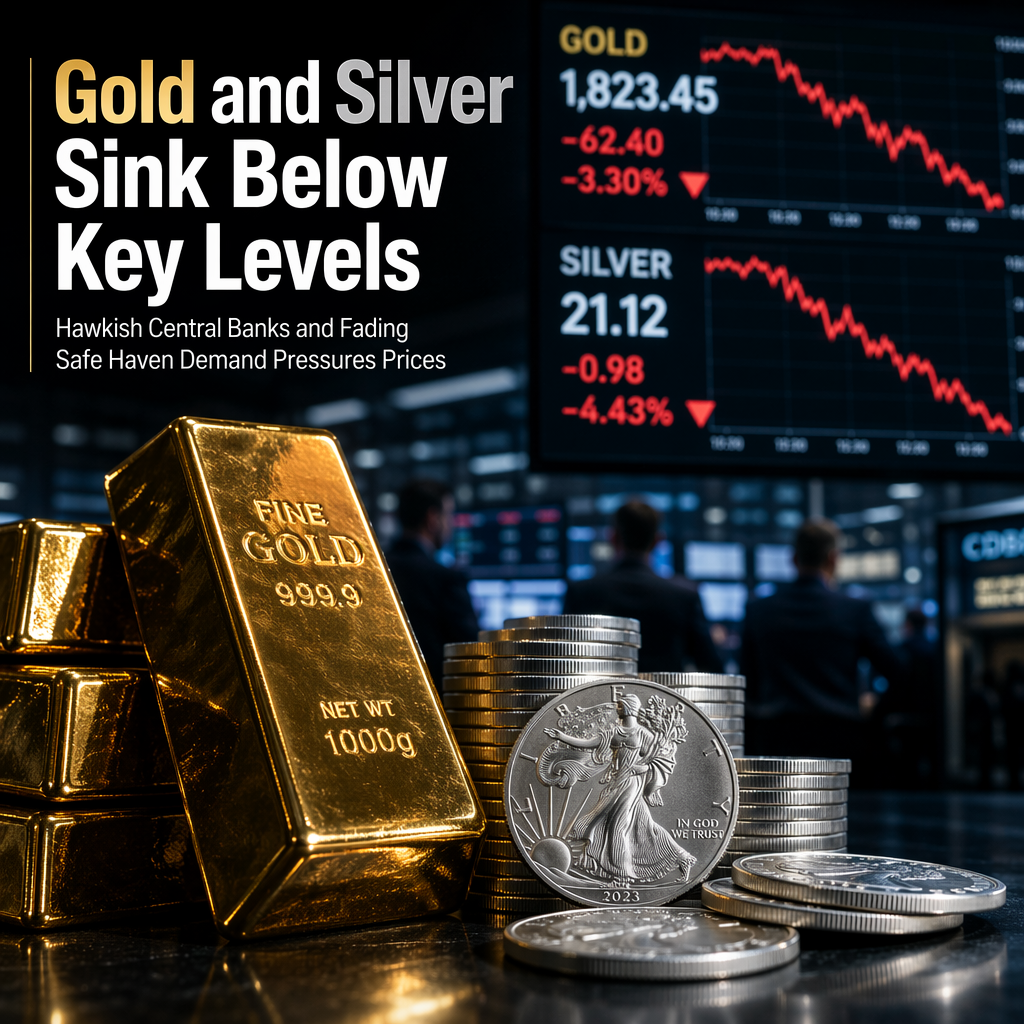
Gold and silver prices have fallen below significant psychological thresholds, with spot gold trading at approximately $3,980.79 per ounce and spot silver at $56.86 per ounce as of Thursday morning, June 25, 2026 [1]. Gold is down nearly 8% year-to-date, while silver has shed more than 20% over the same period [1]. The metals, which saw record rallies in 2025—gold up 66% and silver up 135%—have experienced increased volatility in 2026, including silver's largest single-day drop since the 1980s at the end of January and a diminished safe haven appeal for gold following the outbreak of the U.S.-Iran war in February [1].
The recent retreat in precious metals is attributed to a combination of factors, including hawkish central bank policies and fading inflation fears. Both the European Central Bank and the Bank of Japan raised interest rates this month in response to the energy shock from the Iran war, while the Federal Reserve is expected to hike rates by September, with this move now fully priced in by markets according to the CME's FedWatch tool [1]. Macquarie strategists noted that the end of the Middle East conflict, a more hawkish Fed under new Chair Kevin Warsh, and the prospect of higher interest rates and a stronger U.S. dollar have all contributed to the decline in gold's safe haven status and prices [1].
Looking ahead, Macquarie analysts suggest that the fallout from the Middle East conflict is expected to weigh on global growth into the third quarter. They anticipate that an eventual upturn in global growth and a monetary policy easing cycle could lead to further declines in gold prices as investors shift funds out of precious metals [1]. However, they also note that a major macroeconomic event could reignite investor interest in the sector [1].
Investor behavior has shifted, with profit-taking and a pivot towards equities observed, reducing demand for gold and silver. Macquarie highlights that while this creates space for investors to re-enter the precious metals market, a significant catalyst would be required to drive renewed buying [1].
CONCLUSION
Gold and silver have lost momentum after last year's record rallies, pressured by hawkish central banks, fading safe haven demand, and shifting investor preferences. With further rate hikes anticipated and no immediate macro catalyst in sight, analysts expect continued weakness in precious metals unless a major event reignites interest.