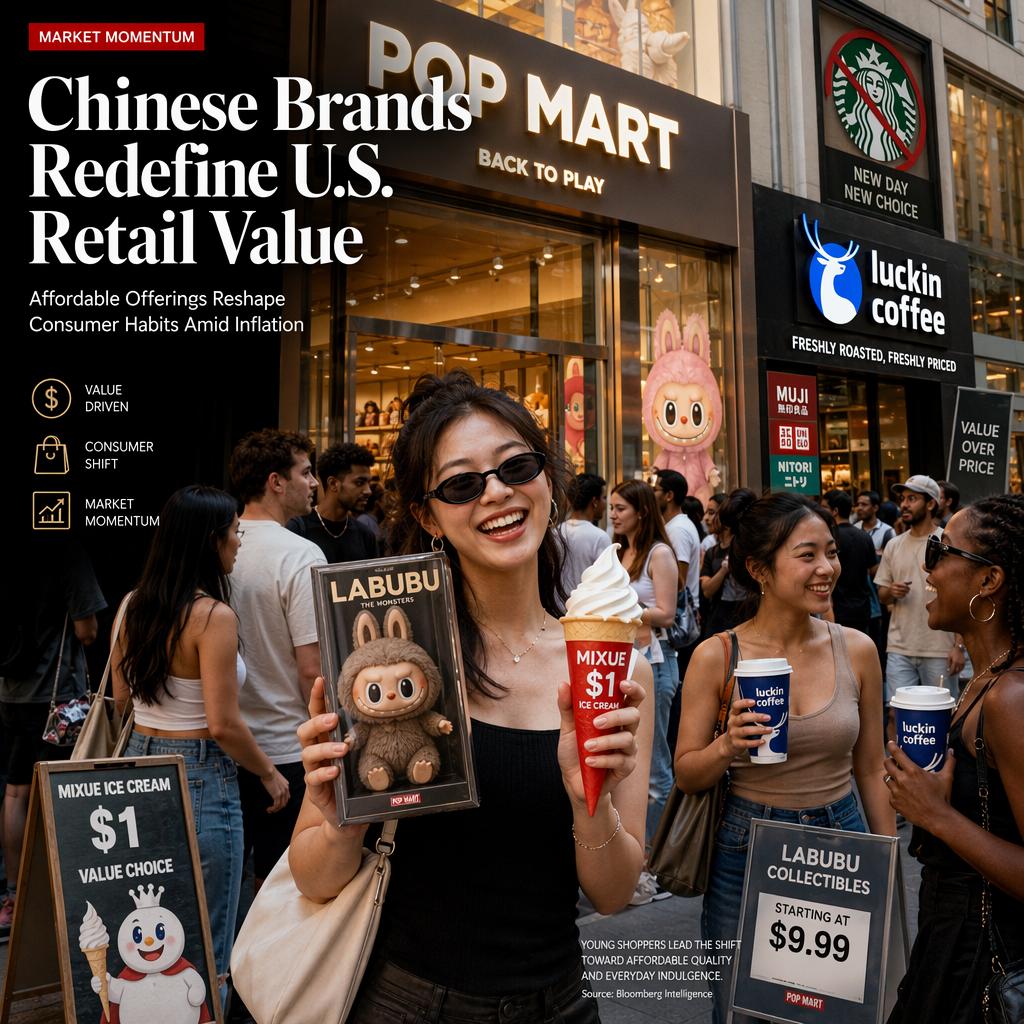
Chinese brands are increasingly capturing the attention of young, price-sensitive consumers in the United States as inflation drives demand for affordable alternatives, even in sectors traditionally dominated by Japanese companies such as sushi and character merchandise [1]. Pop Mart, renowned for its Labubu character collectibles, is preparing to open a flagship store in New York City, aiming to leverage the popularity of low-cost merchandise among young shoppers seeking value amid rising prices [1]. Luckin Coffee is expanding its footprint in New York, notably taking over locations previously occupied by Starbucks. Luckin has achieved rapid growth, reaching 30,000 stores in just eight years, surpassing Starbucks in store expansion. Its strategy centers on offering lower-priced beverages, catering to consumers affected by inflation [1]. Mixue, a Chinese ice cream chain, is entering the U.S. market with its signature $1 cone, despite higher operating costs in America. Mixue has also launched Snow King merchandise, inspired by Pop Mart’s Labubu, targeting value-seeking consumers in a market where inflation has made everyday treats more expensive [1]. The expansion of these Chinese brands is reshaping consumer preferences and challenging established Japanese competitors, particularly among younger demographics. While no specific trading advice or technical analysis is provided, the article indicates strong momentum for Chinese brands in the U.S. retail landscape, driven by their price competitiveness and adaptability to shifting consumer habits amid persistent inflation [1].
CONCLUSION
Chinese brands such as Pop Mart, Luckin Coffee, and Mixue are successfully expanding in the U.S. by offering affordable products that appeal to young, inflation-conscious consumers. Their growth is challenging established players and reshaping market dynamics. The market takeaway is positive for these brands, as their price-driven strategies align well with current consumer trends.