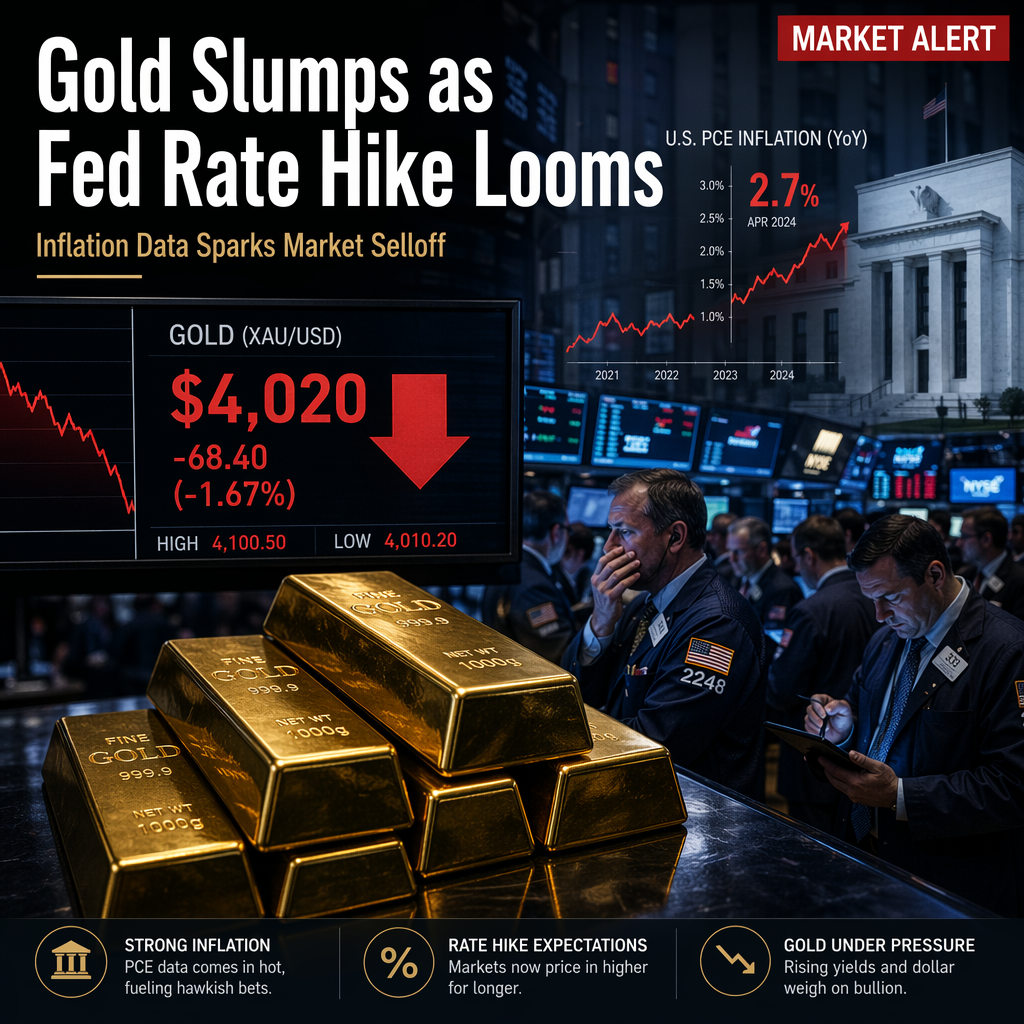
Gold prices (XAU/USD) declined to around $4,020 during the early Asian session on Friday, extending recent losses as traders increased bets on a potential US Federal Reserve rate hike following the latest inflation data release [1]. According to the US Bureau of Economic Analysis, the core Personal Consumption Expenditures (PCE) Price Index, which is the Fed’s primary inflation gauge, rose 3.4% year-over-year in May, up from 3.3% in April. This marks the highest annual core PCE reading since October 2023. The headline PCE inflation also climbed to 4.1% year-over-year in May from 3.8% in April, with both figures meeting market expectations [1].
The market continues to anticipate a possible Fed rate hike in September, although the odds have been slightly reduced. Gold, often used as a hedge against inflation, tends to become less attractive in a high interest rate environment because it does not yield interest [1].
Traders are also monitoring geopolitical developments, particularly in the Middle East. Bloomberg reported that a ship was hit by an unknown projectile in the Strait of Hormuz, a key waterway, just hours after several freighters turned around while attempting to cross. Renewed tensions in the region could stoke inflation concerns, which may impact gold prices further [1].
Additionally, the Michigan Consumer Sentiment Index report is due later on Friday, and speeches from Federal Reserve New York President John Williams and Minneapolis President Neel Kashkari are expected, which could provide further market direction [1].
CONCLUSION
Gold prices have come under pressure due to rising US PCE inflation and increased expectations of a Fed rate hike, making the non-yielding asset less attractive. Market participants are closely watching upcoming US economic data and geopolitical developments for further cues on gold's direction.