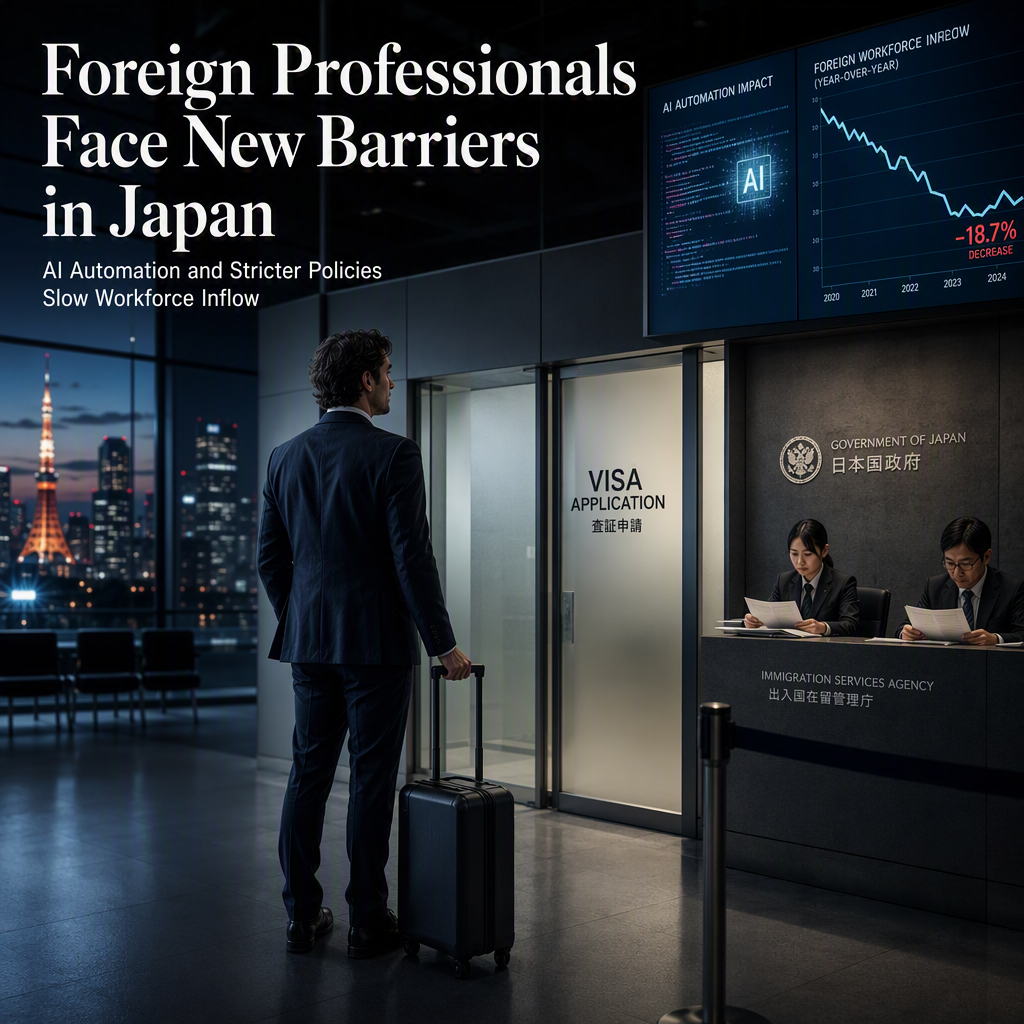
Japan has experienced a slowdown in the inflow of skilled foreign white-collar workers since last fall, a shift attributed to the growing adoption of artificial intelligence and increased government scrutiny of residency status applications [1]. The number of foreign nationals holding highly skilled professional status in Japan had more than tripled over the past decade, but this upward trend has recently reversed [1].
The spread of artificial intelligence is specifically reducing demand for IT workers and translators, sectors that have historically relied on foreign professionals [1]. Government actions, including the tightening of visa requirements and heightened oversight, have also contributed to the decline in new arrivals and renewals among skilled foreign professionals [1].
These developments indicate that the market for foreign professionals in Japan is now facing significant headwinds from both technological disruption and changing immigration policy, marking a notable departure from the previous period of rapid growth in this workforce segment [1].
CONCLUSION
The Japanese market for foreign professionals is being reshaped by both AI-driven automation and stricter immigration policies. This dual pressure is slowing the previously rapid growth in skilled foreign worker inflows, particularly in IT and translation sectors.