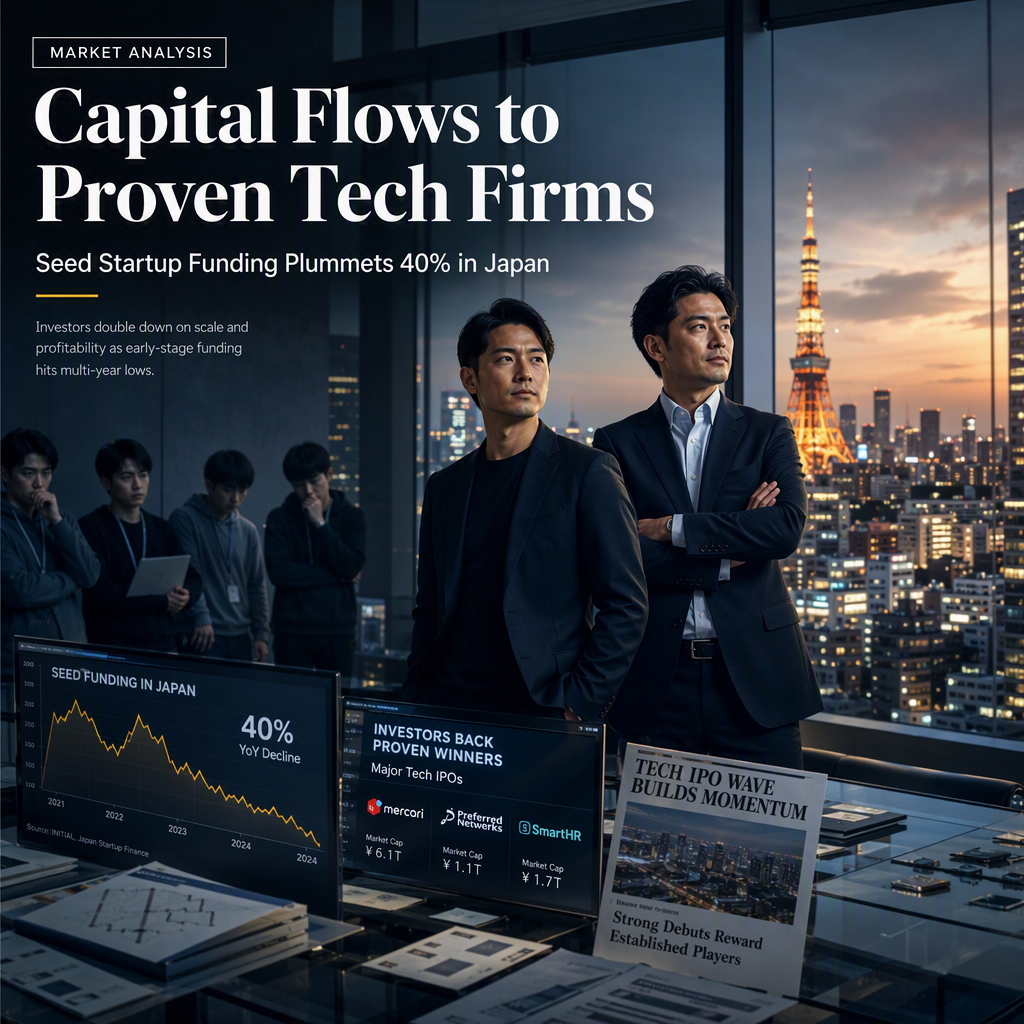
Investors in Japanese startups are increasingly concentrating their capital on a select group of technology companies with proven track records, according to recent market analysis [1]. This shift has resulted in record-breaking large-scale fundraising deals in the January-June half of the year, with autonomous driving startup Turing and artificial intelligence firm Sakana AI emerging as major beneficiaries [1].
While established tech startups are attracting significant investment, seed-stage startup funding in Japan has declined by 40% as investors become more selective [1]. The current environment favors companies with robust performance histories, particularly in sectors such as artificial intelligence and autonomous driving, which are perceived as more resilient amid cautious market sentiment [1].
Industry sources note that the fundraising landscape is becoming increasingly competitive, with only a handful of companies able to secure substantial capital [1]. This trend poses significant challenges for new entrants, especially those at the seed stage, who are finding it more difficult to attract investment [1].
Despite the downturn in seed-level investments, the appetite for large deals is driving market capitalization for startup IPOs to new records, signaling a shift in investor priorities within the Japanese startup ecosystem [1].
CONCLUSION
The Japanese startup funding environment is undergoing a significant transformation, with investors prioritizing established tech firms over early-stage ventures. This trend is leading to record fundraising for select companies but presents hurdles for new entrants seeking capital.