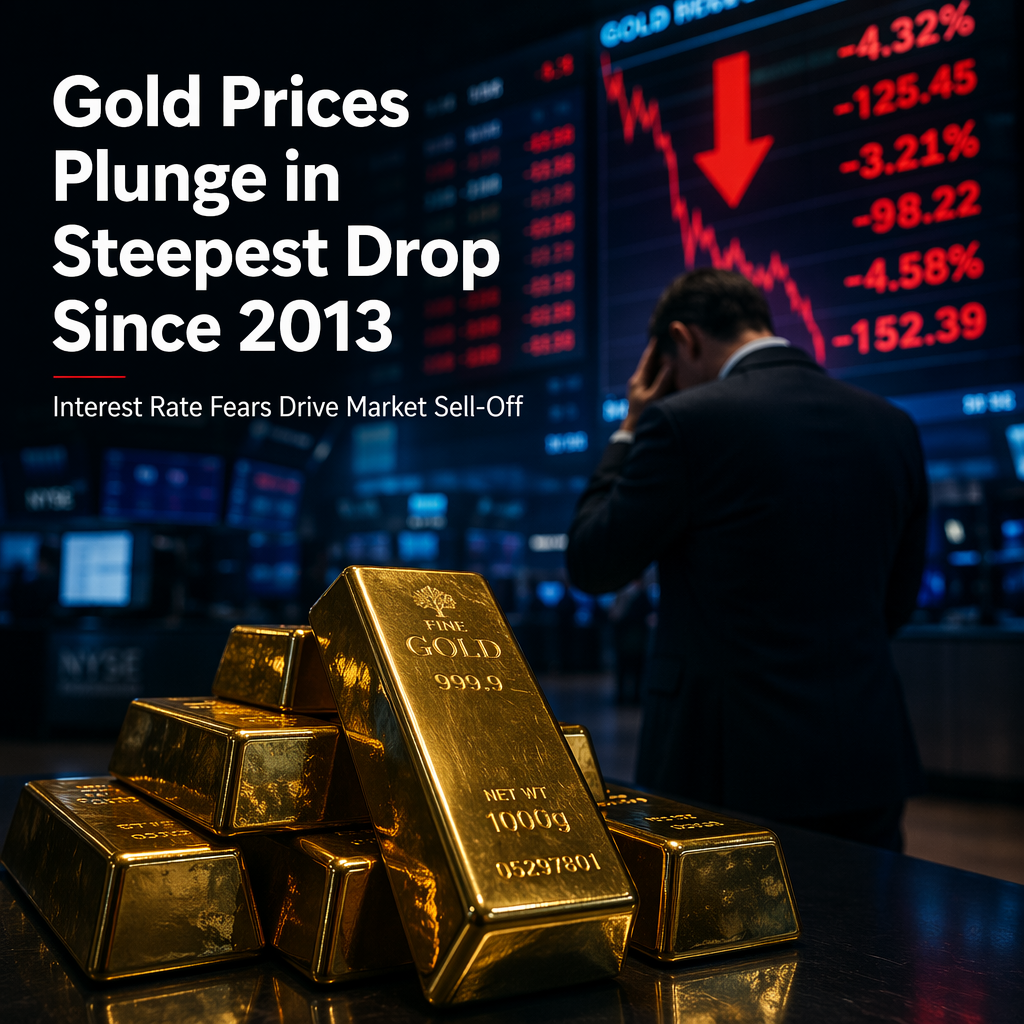
Gold prices continued their downward trajectory on Wednesday, following the metal's worst quarterly performance in 13 years for the three months ending June 30, 2026 [1]. Gold futures dropped 1.24% in early trading to $3,989.00, while spot prices fell 0.82% to $3,974.51 [1]. This decline comes after gold reached an all-time high of $5,586.20 on January 29, but has since lost about 16% in the second quarter alone, marking its steepest quarterly drop since Q2 2013 [1]. Year-to-date, gold has fallen 7.76% [1].
The sell-off in gold is attributed to investor concerns over a potentially higher interest rate environment, which has dampened the outlook for the non-yielding asset [1]. Despite the recent weakness, Amundi Investment Institute emphasized in its mid-year Global Investment Outlook that gold remains an important component in diversified portfolios, especially as traditional asset correlations break down [1]. Amundi cited factors such as a challenging monetary policy backdrop, high public debt levels, and central banks' ongoing diversification away from dollar-based assets as supportive of gold demand in the second half of the year [1].
Monica Defend, head of Amundi Investment Institute, stated, "Investors face a world in which the independence of central banks is being tested, inflation is more volatile, and concentration risks are growing. The best portfolios for this new regime can withstand different scenarios: they need to be diversified across currencies, invested in real assets and gold, and explore equity sectors and structural themes with discipline" [1].
Additionally, the World Gold Council's recent annual Central Bank Gold Reserves survey indicated that more global central banks are expected to increase their gold reserves over the next year [1]. The sell-off also impacted other precious metals, with silver futures down 3.34% to $57.49 and spot silver falling 1.31% to $57.80 early Wednesday [1].
CONCLUSION
Gold prices have suffered significant declines, posting their worst quarter in over a decade due to interest rate concerns and shifting investor sentiment. However, institutional outlooks and central bank surveys suggest that gold may retain its strategic importance in diversified portfolios, with potential support for demand in the coming months.