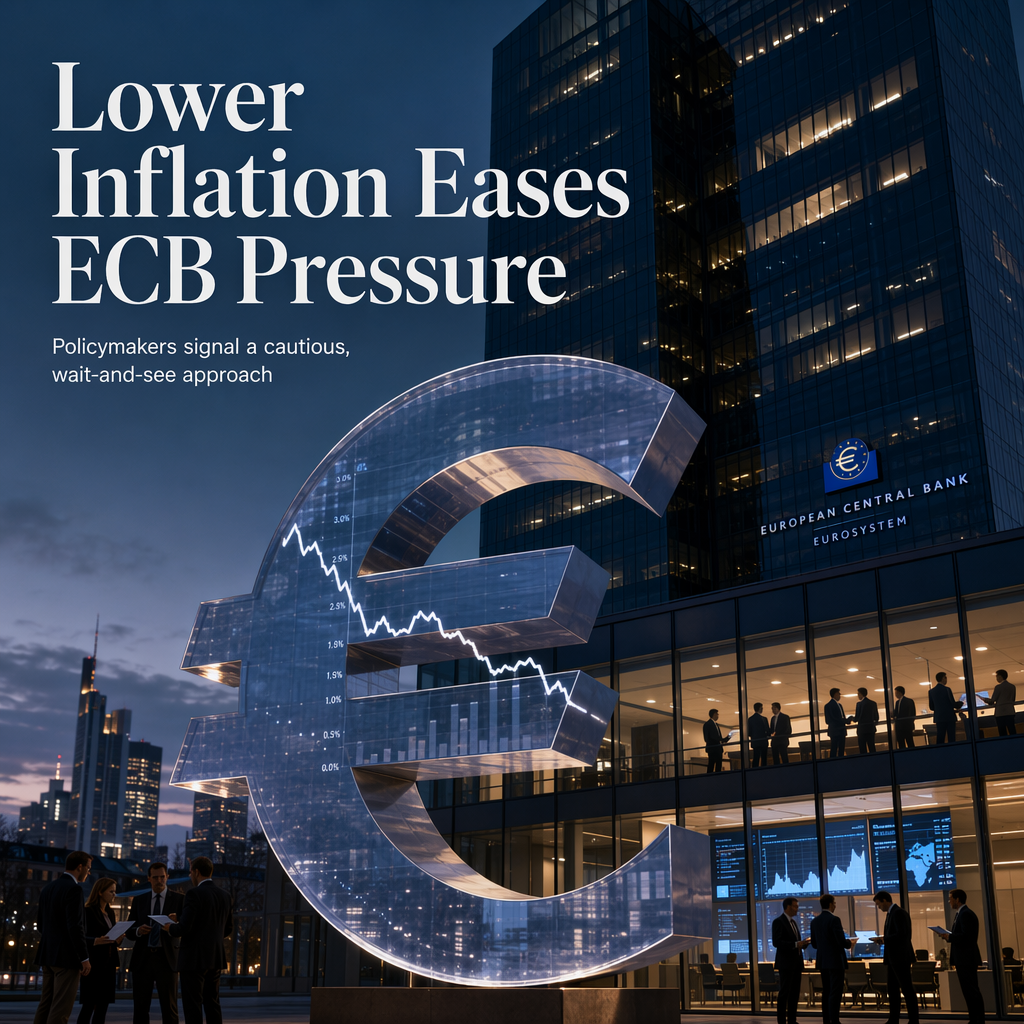
Euro-area inflation for June came in lower than expected, reducing pressure on the European Central Bank (ECB) to tighten monetary policy further, according to Nordea analysts Anders Svendsen and Tuuli Koivu [1]. The analysts noted that the downside surprise was driven by sharp declines in energy and food prices, with energy prices dropping significantly in June and another decline anticipated in July as lower oil prices filter through to consumer prices [1]. Despite this, they expect second-round effects from the Middle East conflict to keep inflation above the ECB's target for several years, maintaining a slightly upward-sloping inflation projection for the remainder of the year [1]. While market expectations for inflation have fallen in line with the drop in oil prices, Nordea forecasts inflation will remain above target into 2027, whereas ECB staff projections anticipate a return to 2% inflation by mid-next year [1].
ECB policymaker and head of Belgium's central bank, Pierre Wunsch, indicated that he is not in favor of further monetary policy tightening unless there are stronger second-round effects from inflation [2]. Wunsch stated that any inflation surprise before the July meeting is more likely to be on the downside and suggested that oil prices could fall below pre-war levels, with most oil production capacity potentially restored within a quarter if the conflict ends [2]. He emphasized that one rate hike could be sufficient if the inflation shock fades before significant second-round effects materialize, and that additional hikes would depend on more persistent and stronger second-round effects [2].
At the June policy meeting, the ECB raised its policy rates by 25 basis points, marking the first hike since September 2023 [2]. Following Wunsch's remarks, the Euro (EUR) did not react immediately, with EUR/USD trading 0.22% lower at approximately 1.1395 at press time [2].
CONCLUSION
Lower-than-expected inflation in the Euro area has eased immediate pressure on the ECB to tighten policy further, with policymakers signaling a cautious, wait-and-see approach. While some analysts expect inflation to remain above target for several years, ECB projections are more optimistic. The market reaction has been muted, reflecting uncertainty about the persistence of inflationary pressures and future ECB moves.