
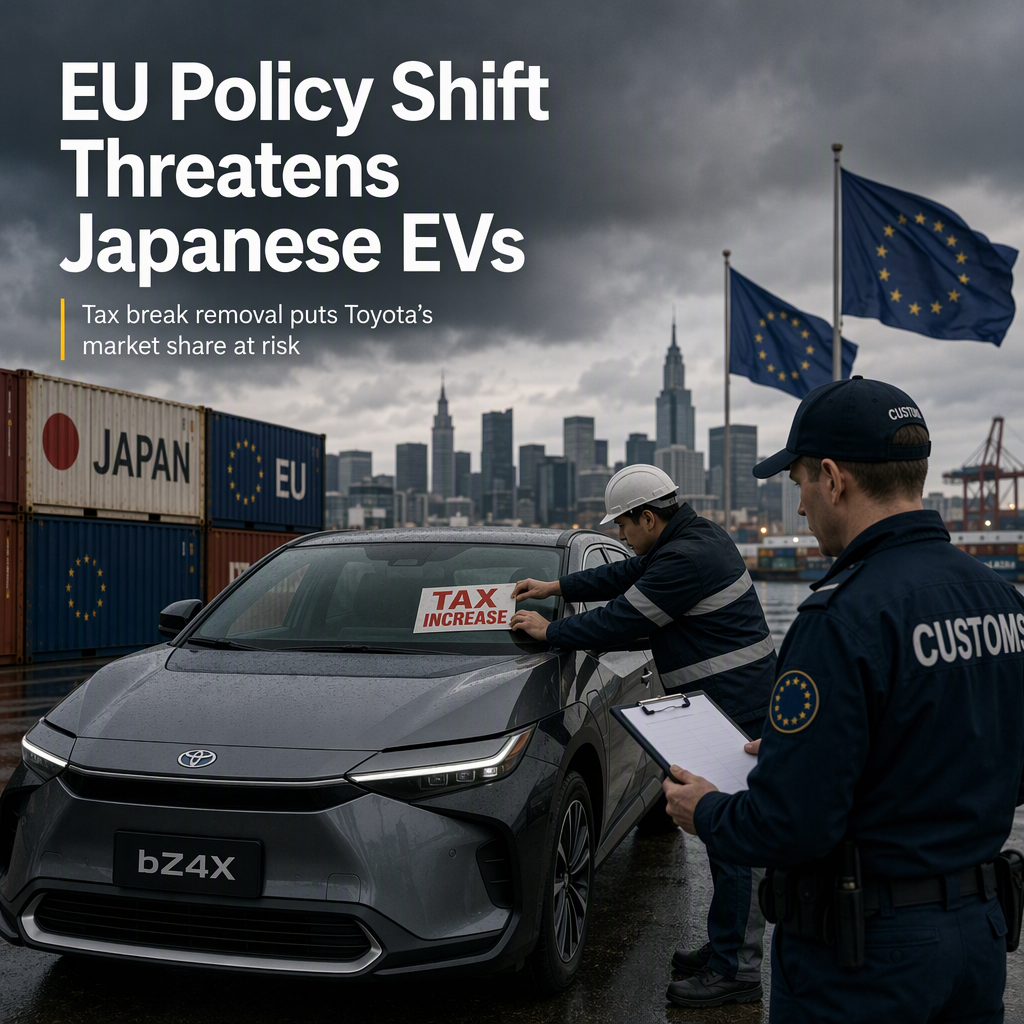
The European Union is considering new industrial legislation that would eliminate tax breaks for electric vehicles (EVs) assembled outside the bloc, posing a significant threat to Toyota Motor and other Japanese EV manufacturers [1]. Toyota currently imports almost all of its EVs sold in the EU, including the bZ4X model, making the company especially vulnerable to the proposed changes [1].
If enacted, the bill would remove financial incentives for non-EU manufactured EVs, which could result in higher retail prices for imported Japanese vehicles and reduce their competitiveness in the European market [1]. Market analysts warn that this loss of tax advantages may dampen consumer demand and lead to a decrease in market share for Japanese automakers [1].
A European auto industry analyst stated, "The policy could force Japanese automakers to rethink their supply chains and consider building production facilities within the EU. Without local manufacturing, it's likely that their sales volumes will take a hit" [1]. Toyota has not yet issued a public response regarding its strategy, but its reliance on imports underscores the potential impact of the legislation [1].
The proposed bill is still under discussion among EU member states, with a final decision expected in the coming months. Automakers and industry groups are closely monitoring the situation, as the outcome could significantly reshape the competitive landscape for electric vehicles in Europe [1].
CONCLUSION
The proposed EU legislation represents a major challenge for Toyota and other Japanese EV makers, threatening their market share and profitability in Europe. With the potential removal of tax incentives for imported EVs, these companies may need to reconsider their supply chains and manufacturing strategies to remain competitive.