
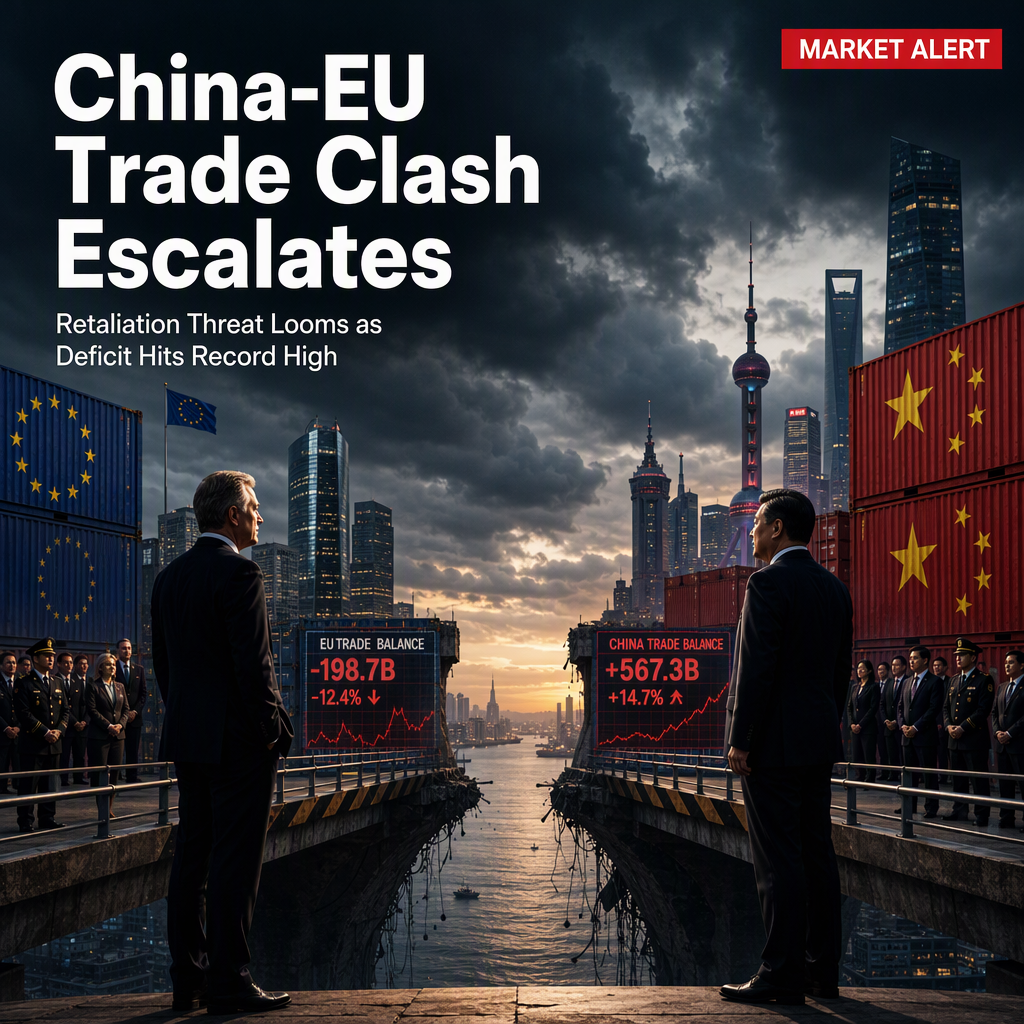
China has issued a strong warning to the European Union, threatening firm retaliation if the EU imposes new restrictions on Chinese businesses or products. This warning comes as the EU considers adopting '301'-style trade tools, similar to those used by the United States, in an effort to address its record trade deficit with China. According to China's Commerce Ministry, such measures would 'seriously undermine mutual trust' and 'disrupt' ongoing trade negotiations between the two sides, which have been taking place throughout the summer with a goal to reduce the deficit by October [1].
EU Trade Commissioner Maroš Šefčovič emphasized that Beijing must deliver 'concrete results' by October or face 'harsher measures.' Šefčovič is scheduled to visit Beijing next week to continue discussions. Meanwhile, reports indicate that Germany and France are finalizing a joint proposal urging the European Commission to accelerate the development of a mechanism that could potentially cut China off from the European market within 24 hours, mirroring the U.S. Section 301 tariff approach [1].
The EU's trade deficit with China is now the largest in the world, having recently surpassed that of the U.S., according to China Customs data. In terms of goods, ASEAN overtook the EU as China's largest trading partner in 2020, but when including services, the EU remains China's top trading partner, with combined trade totaling 880 billion euros (nearly $1 trillion) last year [1].
Market implications are significant, as the threat of rapid and sweeping trade restrictions could disrupt supply chains and impact multinational businesses operating between the EU and China. The escalating rhetoric and potential for retaliatory measures signal heightened trade tensions that could have broad economic consequences [1].
CONCLUSION
The escalating trade tensions between China and the EU, marked by threats of swift market restrictions and retaliation, signal a potential turning point in their economic relationship. With record trade deficits and high-level negotiations underway, markets are likely to remain volatile as both sides weigh their next moves. The outcome of upcoming talks and any concrete measures will be closely watched for their impact on global trade flows.