
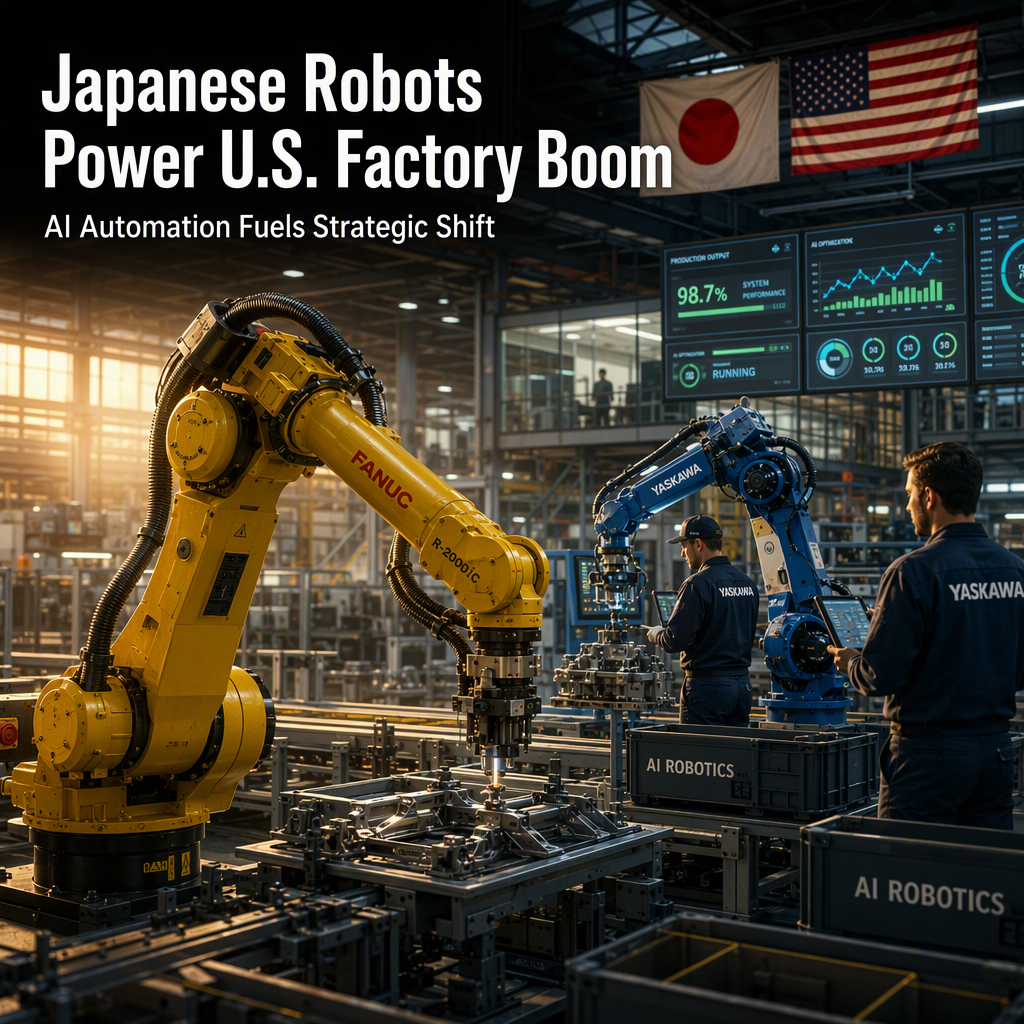
Japanese industrial robot makers Fanuc and Yaskawa are significantly increasing their investments in the United States, aiming to capitalize on the surging demand for AI-powered automation in American factories [1]. Fanuc has announced a $90 million investment in a new plant and logistics center in Michigan, marking a strategic move to expand its North American footprint and address the growing need for advanced robotics solutions [1]. This initiative is part of a broader trend among Japanese manufacturers to shift production from China to the U.S., motivated by factors such as geopolitical risks, supply chain reliability concerns, and the opportunity to collaborate with U.S. technology firms on AI-driven manufacturing solutions [1].
Yaskawa is also planning further investments and partnerships in the U.S., reflecting the industry's response to market trends and the evolving regulatory landscape, including U.S. restrictions on robotics-related imports from China [1]. While local production in the U.S. offers advantages in market access and logistical efficiency, some companies remain cautious due to ongoing supply chain challenges and potential disruptions in sourcing components from Asia [1].
Industry analysts predict continued growth in U.S. demand for industrial robots, driven by investments in AI and automation across sectors such as automotive, electronics, and logistics [1]. The strategic shift to U.S.-based production is expected to strengthen the competitive position of Japanese robot manufacturers in the global market, with the convergence of AI technologies and factory automation serving as a key pillar of their growth strategy [1].
CONCLUSION
Fanuc and Yaskawa's increased investments in the U.S. highlight a strategic response to rising AI-driven automation demand and shifting global supply chain dynamics. This move is anticipated to enhance their competitive edge in the global robotics market, despite ongoing supply chain uncertainties.