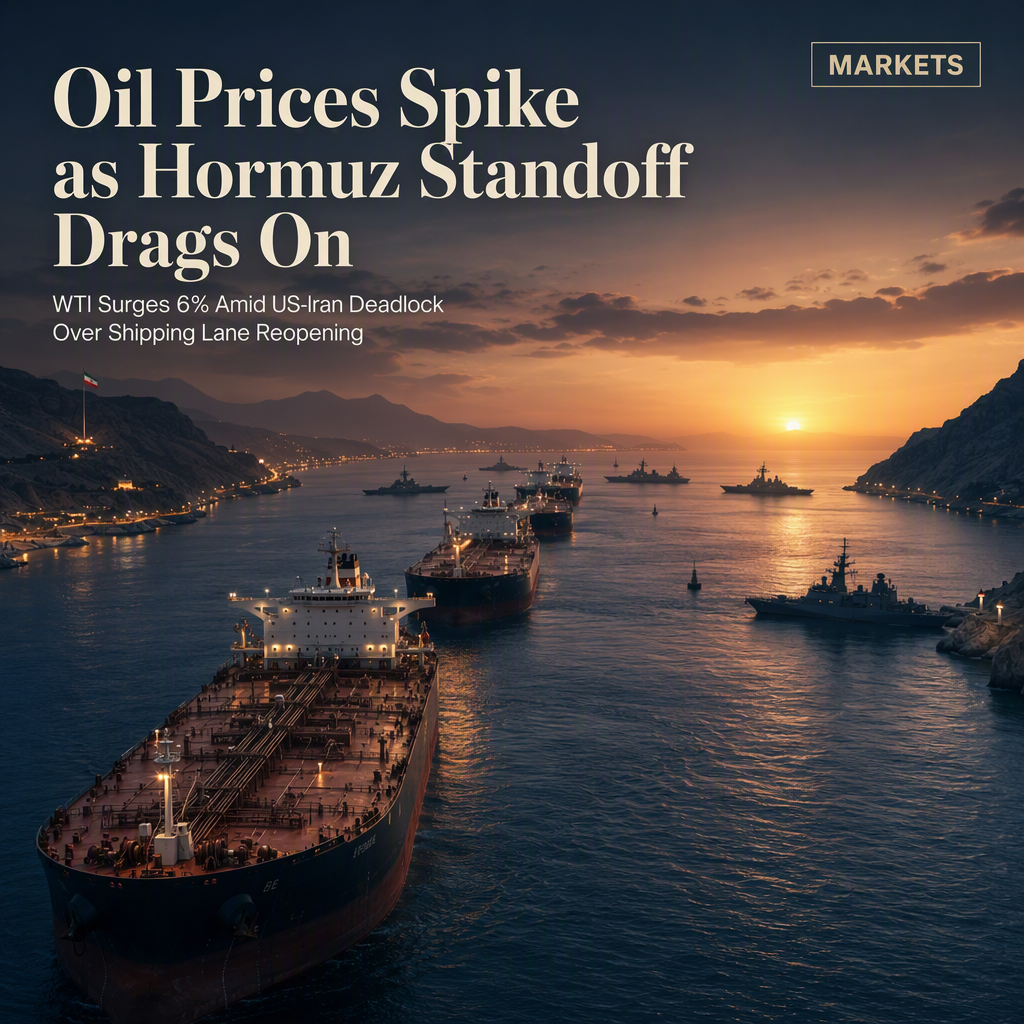
West Texas Intermediate (WTI) crude oil prices surged more than 6% on Monday, erasing the previous week’s losses, as ongoing uncertainty regarding the reopening of the Strait of Hormuz heightened supply concerns and reinforced the geopolitical risk premium in oil markets [1]. At the time of reporting, WTI was trading around $81.15 per barrel, marking a one-week high [1].
Last week, oil prices had declined following reports that Iran and Oman were close to a temporary agreement to restore shipping through the Strait of Hormuz. However, the absence of a final announcement and new details indicating Tehran’s desire for greater control over shipping routes—including the potential imposition of transit fees—reversed the downward trend [1].
Iranian Foreign Minister Abbas Araghchi stated that talks with Oman on defining new shipping lanes are in their “final stages,” but emphasized that an agreement on shipping routes alone would not be sufficient to reopen the waterway [1]. Iran is demanding that the United States lift its naval blockade and, according to Reuters, is also seeking sanctions relief, compensation for war damage, and security guarantees before agreeing to a lasting arrangement [1].
US President Donald Trump responded on Friday via Truth Social, rejecting Tehran’s demands and stating that Washington would instead seek compensation for people killed or wounded in attacks and conflicts attributed to Iran [1]. Diplomatic efforts between the US and Iran remain at a stalemate, with Tehran denying direct talks and Iranian media suggesting that negotiations may not resume until after President Trump leaves office on January 20, 2029 [1].
CONCLUSION
WTI oil prices have rebounded sharply due to persistent uncertainty over the reopening of the Strait of Hormuz and ongoing diplomatic deadlock between the US and Iran. The market remains highly sensitive to developments in the region, with supply concerns and geopolitical risks driving price volatility.