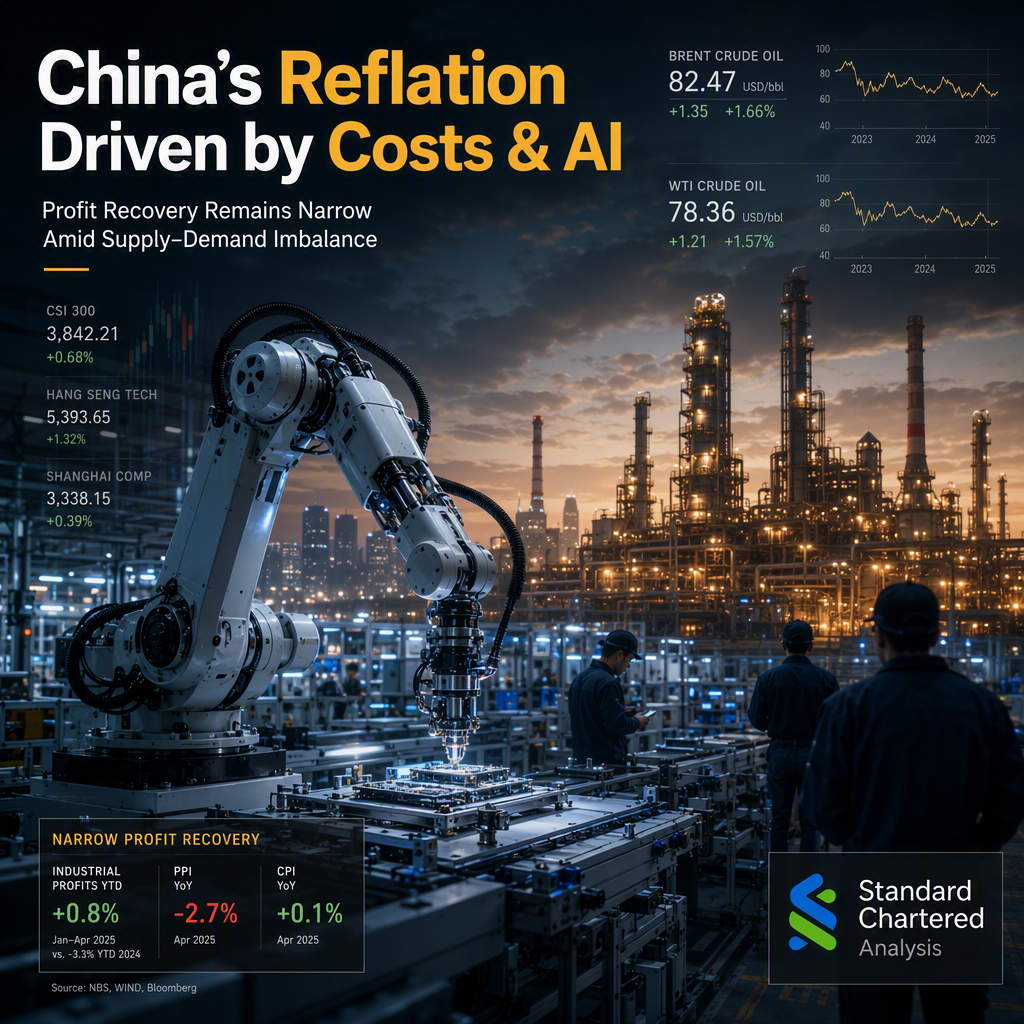
According to Standard Chartered analysts Carol Liao and Moriarty Lam, China’s recent reflation is primarily cost-driven, with the recovery in industrial profits concentrated in AI- and oil-related sectors [1]. The analysts note that while productivity gains are enhancing China’s supply capabilities, domestic demand continues to lag behind supply, resulting in a persistent supply-demand imbalance [1].
The report highlights that the current reflation is mainly attributed to higher global commodity prices rather than broad-based domestic demand growth [1]. Sectors typically associated with overcapacity have experienced only limited improvements in profitability, underscoring the narrow scope of the profit recovery [1].
Standard Chartered expects that accommodative policies, as well as a low-inflation and low-yield environment, will likely persist as China’s economic rebalancing process takes time [1]. The analysts caution that if AI adoption outpaces adjustments in the labor market, the supply-demand imbalance could endure, exerting sustained downward pressure on prices [1].
No specific market reactions or analyst forecasts regarding asset prices were mentioned in the article [1].
CONCLUSION
Standard Chartered’s analysis suggests that China’s reflation is narrowly focused and cost-driven, with persistent supply-demand imbalances. The outlook points to continued accommodative policies and a low-inflation, low-yield environment as the country’s economic rebalancing remains gradual.