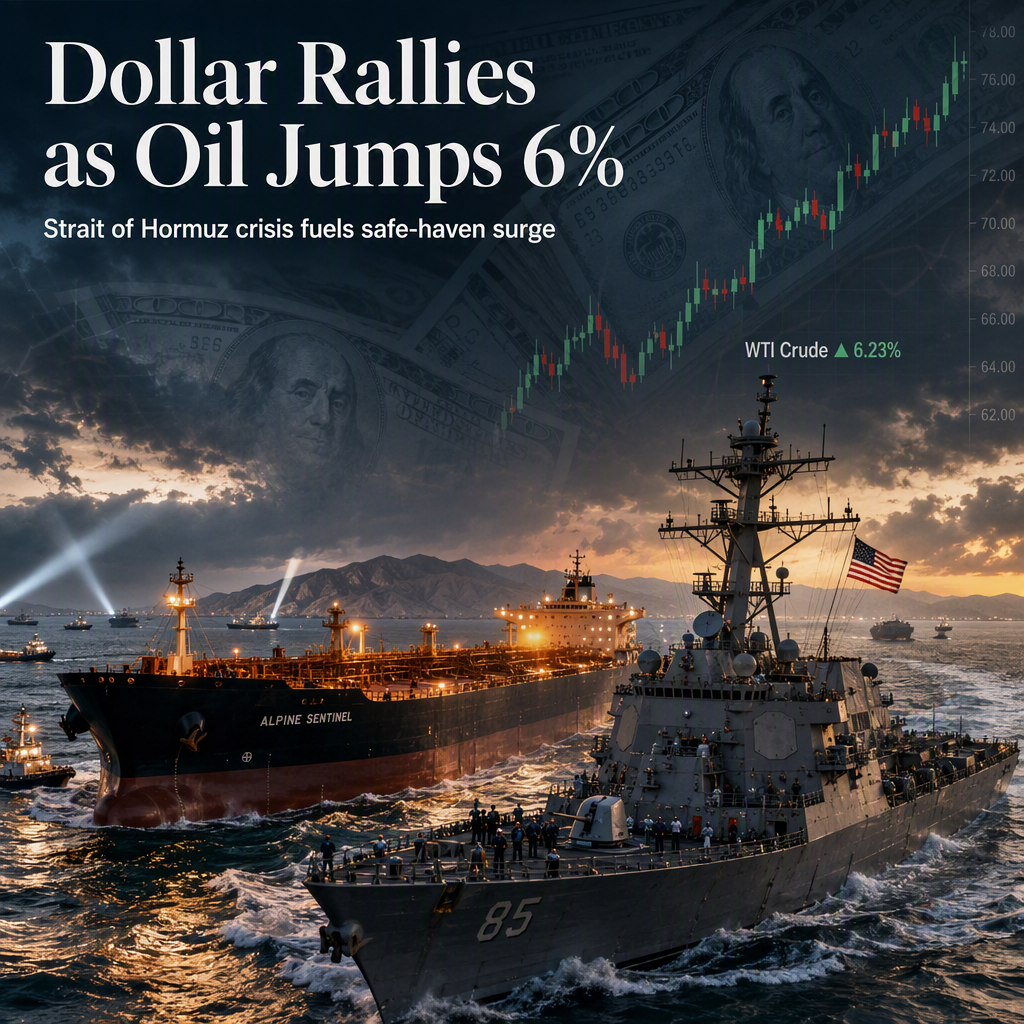
The US Dollar (USD) traded broadly firmer on Monday, with the US Dollar Index (DXY) rising approximately 0.2% and holding just above 99.80, as oil prices surged more than 6% due to the ongoing standoff at the Strait of Hormuz [1]. This move was driven by heightened safe-haven demand and concerns over energy-driven inflation risks, which also led to gains in Gold and Silver alongside the Greenback [1].
The escalation followed US President Donald Trump's rejection of Iran's compensation demands over the weekend, insisting that Tehran should be held responsible for regional damage. Iran, in turn, denied being in talks and set its own terms for reopening the Strait, leaving a deal out of reach. The US naval blockade has redirected more vessels, maintaining a risk premium in crude oil and supporting the US Dollar [1].
West Texas Intermediate (WTI) Oil jumped over 6% to trade near $81.70 per barrel, reflecting uncertainty over the reopening of the Strait of Hormuz. Gold rose about 0.9% to trade near $4,380, while Silver outperformed with a 3.5% gain to around $65.70, as traders remained cautious ahead of looming US inflation data [1].
Currency markets saw the US Dollar as the strongest against the Japanese Yen, with USD/JPY rising more than 0.9% to near the 159.30 region, extending its recovery as higher energy costs and firmer US yields weighed on the Yen. EUR/USD slipped below 1.1550, unable to maintain higher levels due to Middle East tensions supporting the Greenback. GBP/USD was the only major to gain against the Dollar, firming around 1.3500 and holding the upper end of its recent range [1].
CONCLUSION
The ongoing Strait of Hormuz standoff has driven a surge in oil prices and bolstered the US Dollar, particularly against the Japanese Yen. Market sentiment remains cautious, with safe-haven assets and energy prices reflecting persistent geopolitical risks and inflation concerns.