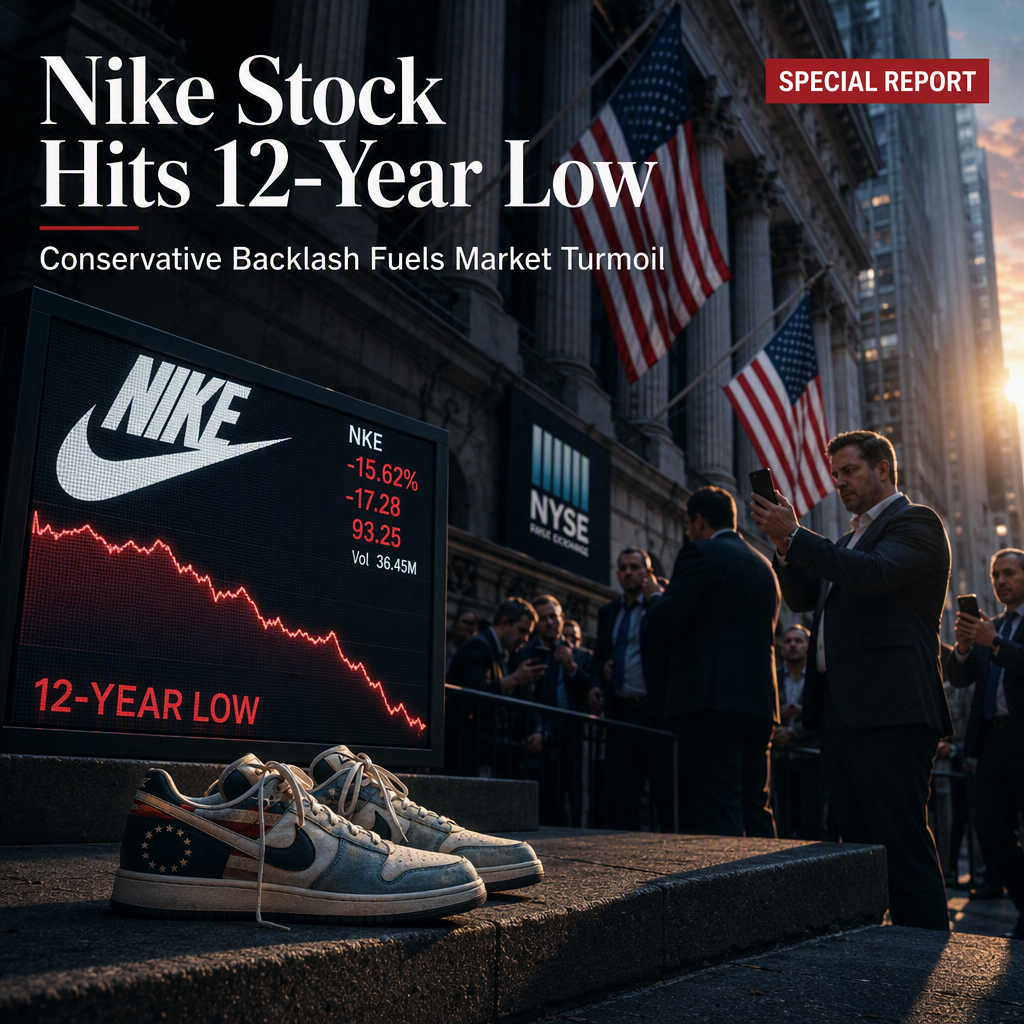
Nike's stock price has fallen to a 12-year low, marking a significant decline for the iconic American sports brand [1]. The company's share price has dropped nearly 80% since reaching its all-time high of $177.51 in 2021, erasing almost $200 billion in market value over the years [1]. This downturn has reignited criticism from conservative figures, including Sen. Ted Cruz, R-Texas, who took to social media to reiterate his boycott of Nike. Cruz cited the company's decision to cancel its Betsy Ross-themed shoe as a turning point, stating, 'Kaepernick pissed me off, but when they cancelled the Betsy Ross shoe it showed that their marketing plan was America-hate. I went out & bought brand new shoes, shorts, t-shirts. Turns out I wasn’t the only one. #GoWokeGoBroke' [1].
The controversy dates back to 2019, when Nike pulled the Betsy Ross shoe following concerns raised by former NFL quarterback Colin Kaepernick, who argued that the Revolutionary-era flag design had been adopted by White nationalist groups and was a reminder of a time when Black people were enslaved [1]. Nike stated that it removed the shoe due to concerns it could 'unintentionally offend and detract from the nation's patriotic holiday' [1]. The decision drew criticism from several conservative leaders, including then-Senate Majority Leader Mitch McConnell, who remarked, 'If we’re in a political environment where the American flag has become controversial to Americans, I think we’ve got a problem' [1].
The ongoing backlash from conservative figures and the significant loss in market value highlight the broader market implications for Nike. The company's stock performance and public image have been affected by its handling of politically sensitive issues, as evidenced by the reactions from both political leaders and segments of the consumer base [1].
CONCLUSION
Nike's stock has suffered a dramatic decline, reaching a 12-year low and losing nearly $200 billion in market value since 2021, amid ongoing criticism over its handling of the Betsy Ross shoe controversy. The backlash from conservative figures underscores the potential risks brands face when navigating politically charged decisions.