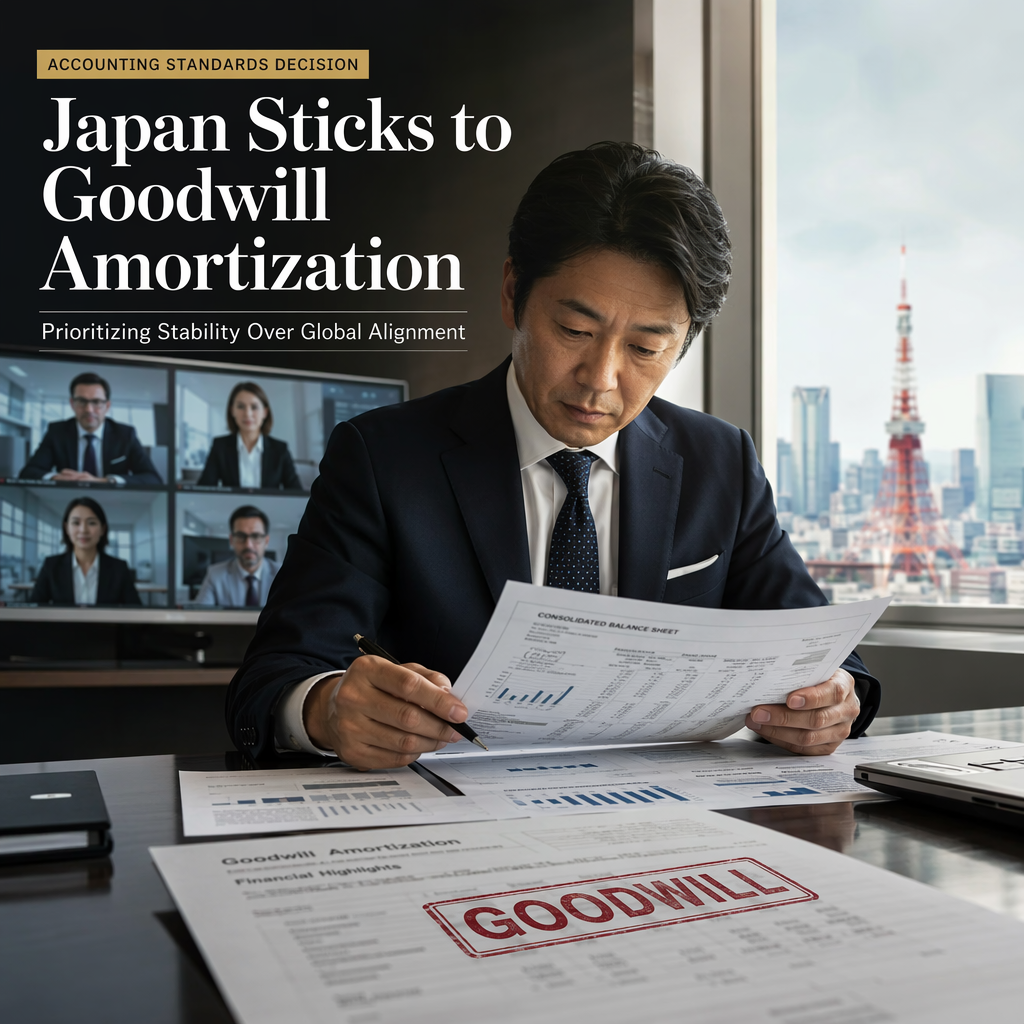
Japan's accounting standards body announced on Monday that it will maintain its current rules requiring the regular amortization of goodwill arising from mergers and acquisitions, citing concerns about the risk of heavy impairment losses during economic downturns [1]. This decision keeps Japan's approach distinct from other major economies such as the United States and Europe, which have shifted to requiring impairment testing instead of systematic amortization [1]. The Japanese standards board expressed that the retention of amortization is intended to mitigate the potential for companies to face significant impairment losses in the event of a sudden downturn, as gradual write-downs are seen as a more stable approach [1].
While the core accounting treatment will remain unchanged, the standards board indicated it may consider introducing additional disclosure requirements to facilitate international comparisons [1]. However, no specific details or timelines for these potential disclosure changes were provided [1].
The decision underscores Japan's cautious stance on accounting reforms, prioritizing stability and risk management over alignment with international practices [1]. No immediate market reactions or analyst opinions were mentioned in the article [1].
CONCLUSION
Japan's decision to retain its goodwill amortization rule highlights a preference for stability and risk mitigation over harmonization with global accounting standards. The move may impact international comparability, but no immediate market reactions were reported.