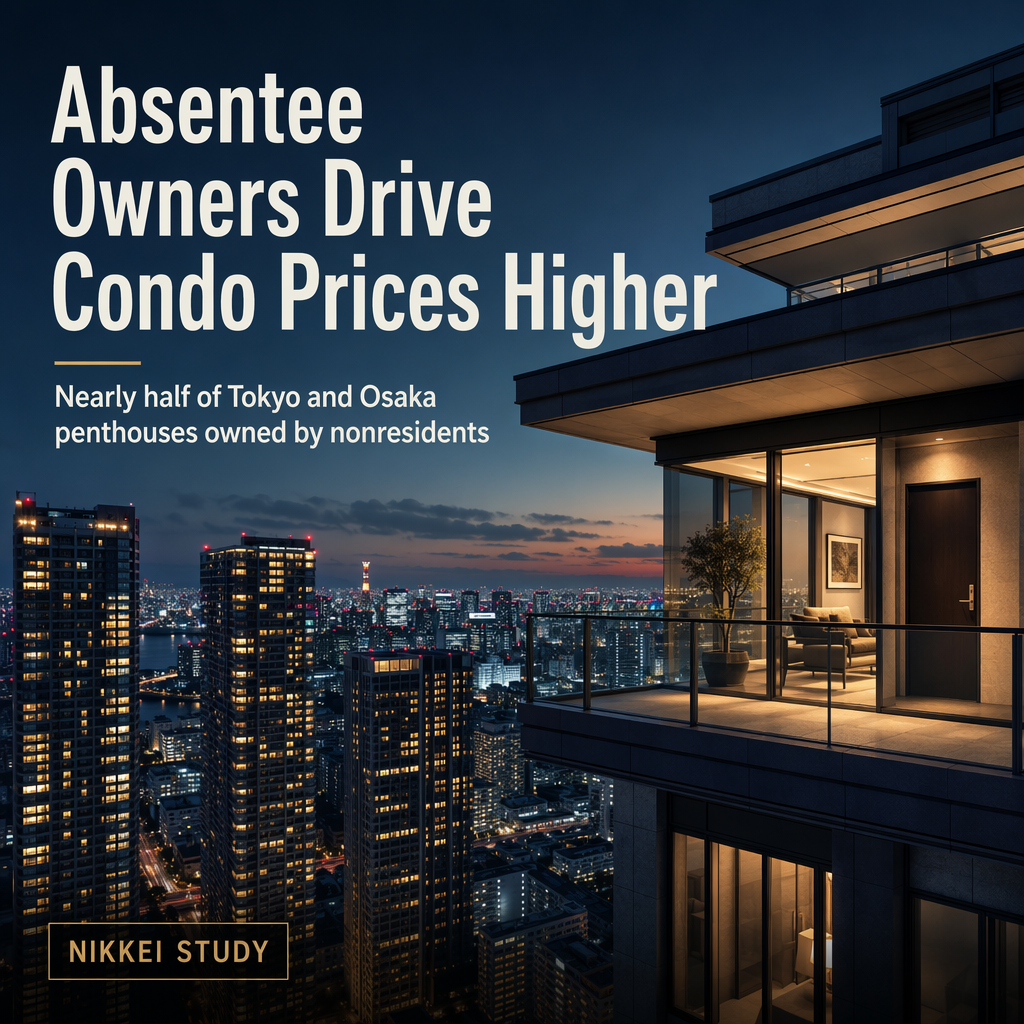
A recent Nikkei study has revealed that 48% of units on the top floors of high-rise condominiums in downtown Tokyo and Osaka are owned by individuals whose legal addresses are elsewhere, indicating a significant presence of absentee owners in these prime properties [1]. The study highlights that high-rise condominiums in Tokyo, in particular, are in strong demand as investment assets [1].
This trend of absentee ownership is having a notable impact on the local housing market. According to the study, the prevalence of nonresident owners is contributing to rising housing prices in both cities [1]. The reduced supply of homes available for local residents, combined with speculative demand for luxury properties, is cited as a key factor fueling this price increase [1].
No specific market reactions, analyst opinions, or forward-looking statements were provided in the article. The report focuses on the current ownership patterns and their direct implications for housing affordability and market dynamics in Tokyo and Osaka [1].
CONCLUSION
The Nikkei study underscores a growing trend of absentee ownership in top-floor condominiums in Tokyo and Osaka, which is contributing to higher housing prices and reduced availability for local residents. This dynamic highlights ongoing challenges in the urban property market, particularly regarding affordability and speculative investment.