
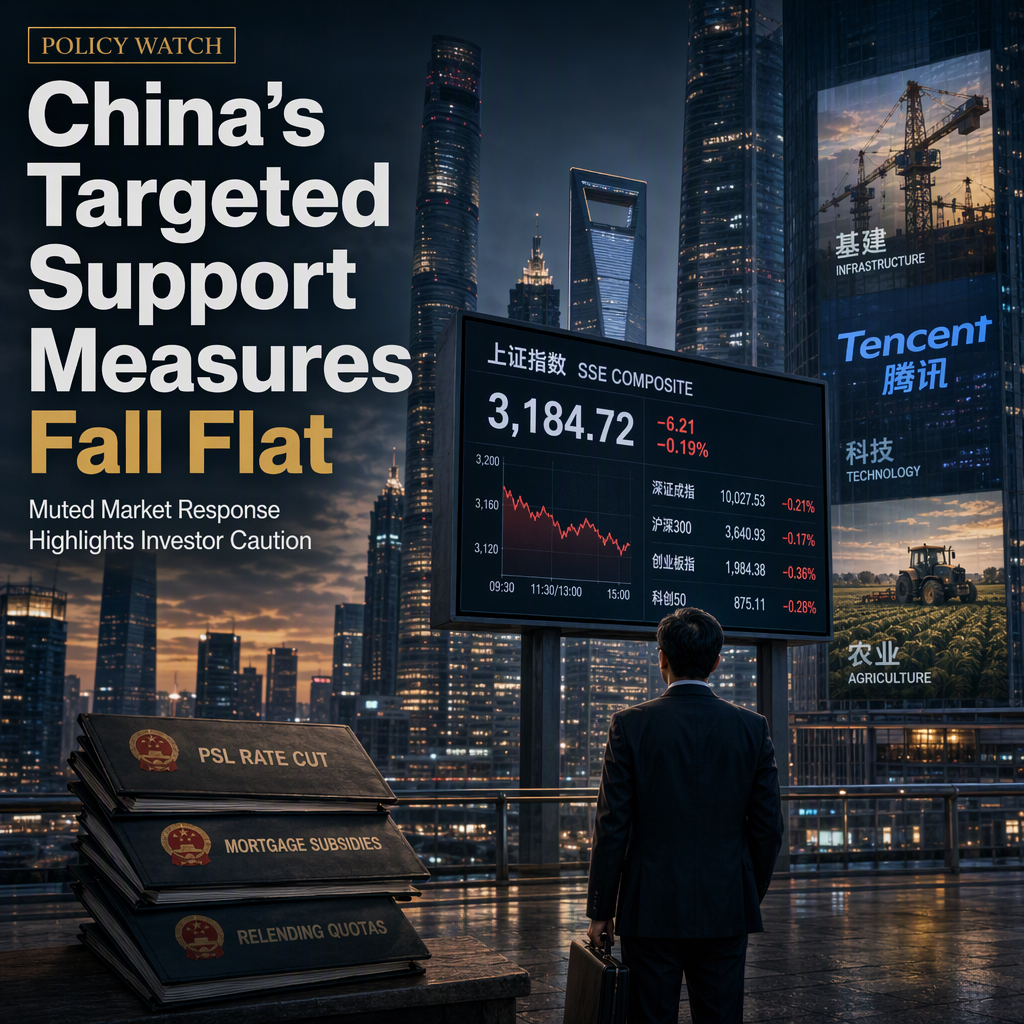
China has introduced a series of targeted support measures aimed at stabilizing key sectors such as property, infrastructure, and technology, according to Societe Generale analysts [1]. The People's Bank of China (PBoC) lowered the rate on its pledged supplementary lending facility (PSL) by 25 basis points, reducing the one-year PSL rate from 1.75% to 1.50% [1]. Additionally, relending quotas were expanded by CNY200 billion for innovation and technology sectors and by CNY500 billion for agriculture and small businesses [1]. On the housing front, authorities implemented mortgage subsidies for first-time buyers of smaller, lower-cost homes, with subsidies available for up to five years [1].
Despite these policy easing steps, equity markets showed a muted reaction, as the measures were perceived as less impactful compared to broader initiatives announced in September 2024 [1]. The incremental nature of the support, described as 'drip feed,' did not generate significant excitement among investors [1].
Societe Generale analysts highlighted that while the targeted measures are intended to bolster growth and stabilize critical sectors, their limited scope may not be sufficient to drive a strong market response [1].
CONCLUSION
China's latest targeted support measures, including rate cuts and expanded relending quotas, were met with a subdued response from equity markets. The incremental approach failed to match the impact of previous broader policy actions, suggesting investors remain cautious about the effectiveness of these steps in stimulating growth.