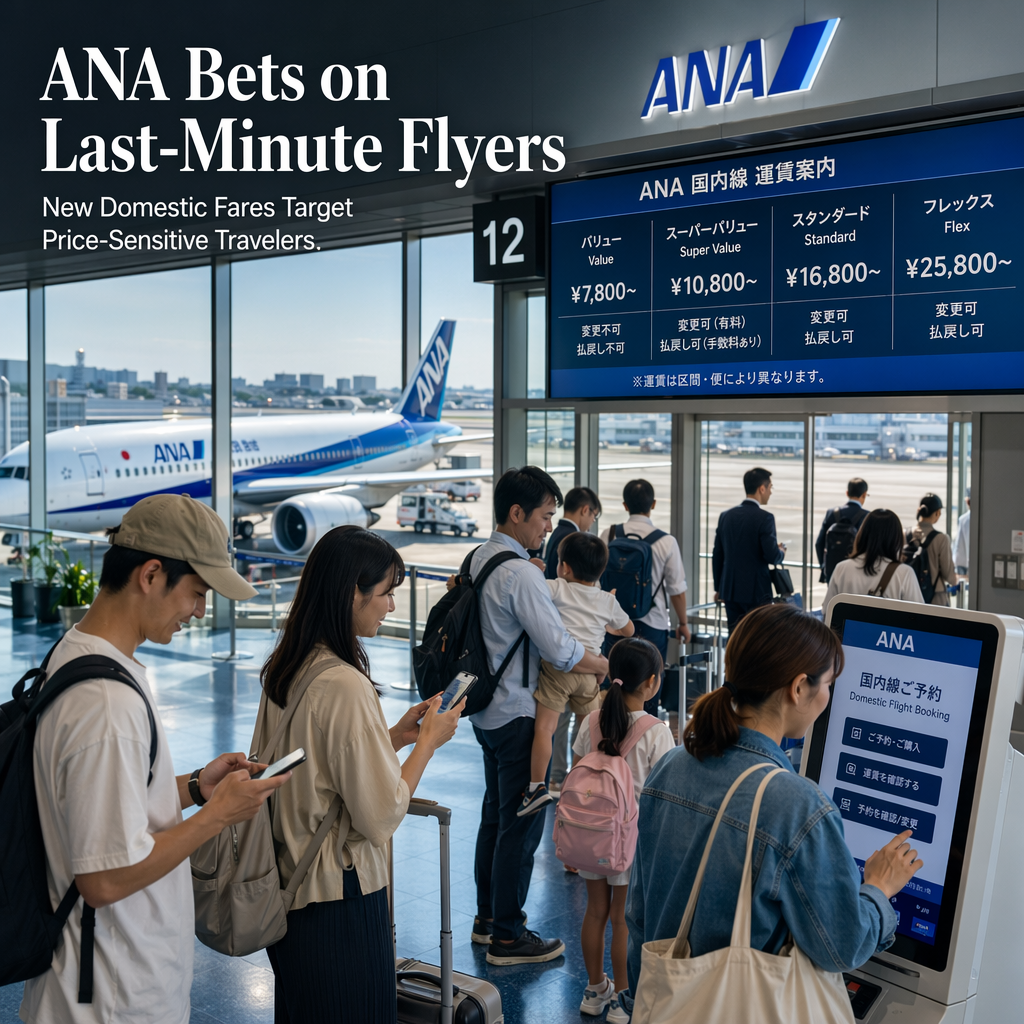
All Nippon Airways (ANA) has implemented a significant overhaul of its domestic fare structure, debuting a new system in May that allows passengers to purchase discounted, no-frills tickets up to just before departure, provided that many seats on a flight remain unsold [1]. This move is a direct response to the airline's ongoing struggles with reduced business travel demand since the onset of the COVID-19 pandemic [1].
The revamped fare system is designed to boost seat occupancy rates by appealing to more price-sensitive travelers, particularly those making last-minute bookings. ANA's strategy aims to fill seats that would otherwise go unsold, thereby improving operational efficiency and revenue per flight [1].
This shift brings ANA's domestic operations closer to the business model of budget airlines, which have traditionally dominated the market for last-minute, low-fare bookings. The airline's approach reflects a broader trend among Japanese carriers, who are adapting their offerings to meet evolving market conditions and consumer preferences in the post-pandemic era [1].
No specific financial figures, analyst opinions, or immediate market reactions were provided in the article [1].
CONCLUSION
ANA's domestic fare revamp marks a strategic pivot toward attracting price-sensitive and last-minute travelers, aligning its model more closely with budget carriers. While the move addresses ongoing challenges in business travel demand, its effectiveness in boosting occupancy and revenue remains to be seen.