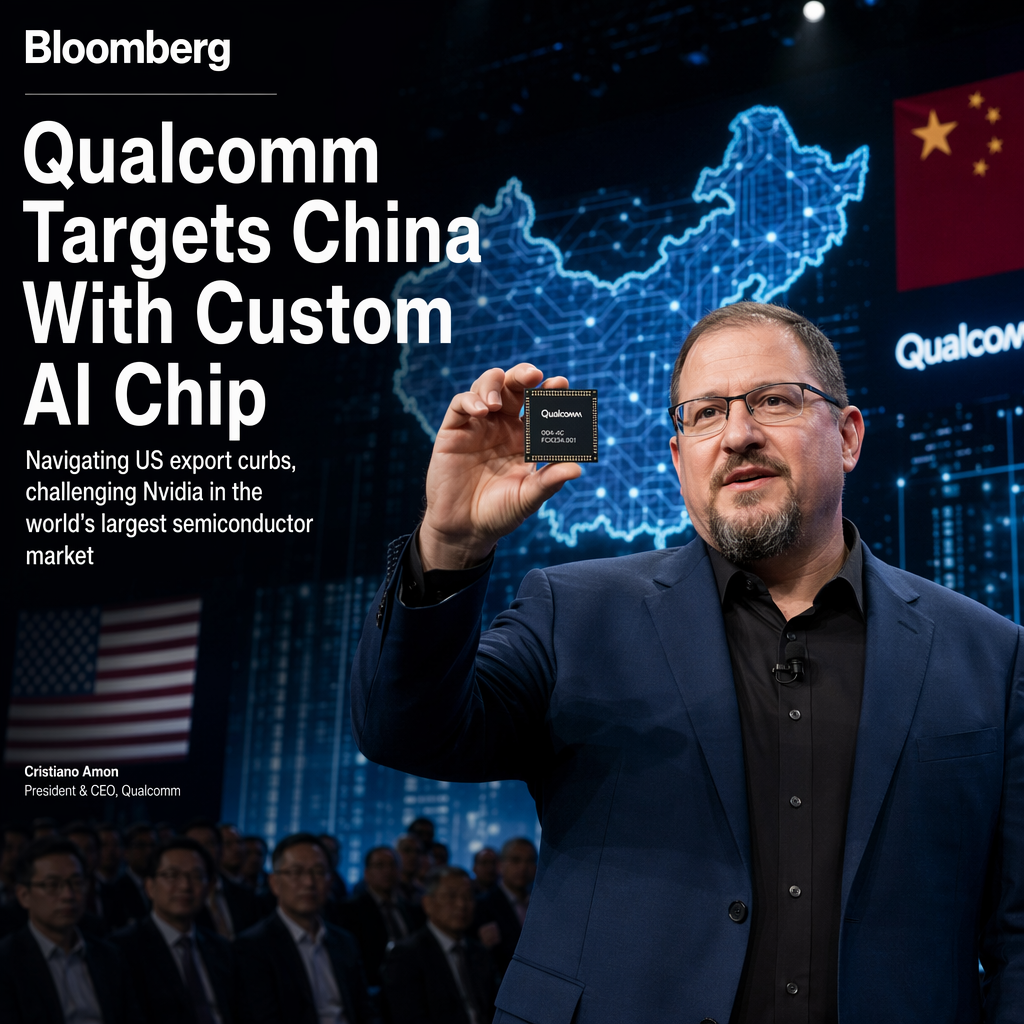
Qualcomm announced the development of a data center chip tailored specifically for the Chinese market, aiming to comply with U.S. export controls while maintaining its foothold in the world's largest semiconductor market [1]. The announcement was made by CEO Cristiano Amon at an event in New York on June 24, 2026 [1]. This move positions Qualcomm as the latest chipmaker to enter the AI processor sector, directly challenging market leader Nvidia and responding to the growing demand for generative AI applications and cloud infrastructure [1].
The new chip is designed to address the unique requirements of the Chinese tech sector under current regulatory constraints and is intended to help ease the ongoing global memory shortage impacting supply chains [1]. Amon emphasized that the product will be fully compliant with U.S. export regulations, which currently prohibit the export of the most advanced AI accelerators to China [1]. He stated, “We are committed to following all export regulations while continuing to support our customers” [1].
Qualcomm’s strategy mirrors similar efforts by other chipmakers who have developed modified products for China in response to tightening restrictions on advanced AI hardware exports [1]. While the announcement signals Qualcomm’s intent to compete more aggressively in the data center AI chip market, no specific financial data, price points, or technical specifications for the new chip were disclosed [1].
Market implications include increased competition for Nvidia and other established players, as Qualcomm seeks to capture a share of the surging demand for AI hardware in China despite regulatory hurdles [1]. However, the lack of disclosed financial or technical details leaves the potential market impact somewhat uncertain [1].
CONCLUSION
Qualcomm’s introduction of a China-specific data center chip marks a strategic effort to comply with U.S. export controls while addressing the needs of the Chinese market. The move intensifies competition in the AI chip sector, particularly against Nvidia, but the absence of detailed product or financial information tempers immediate market reactions.