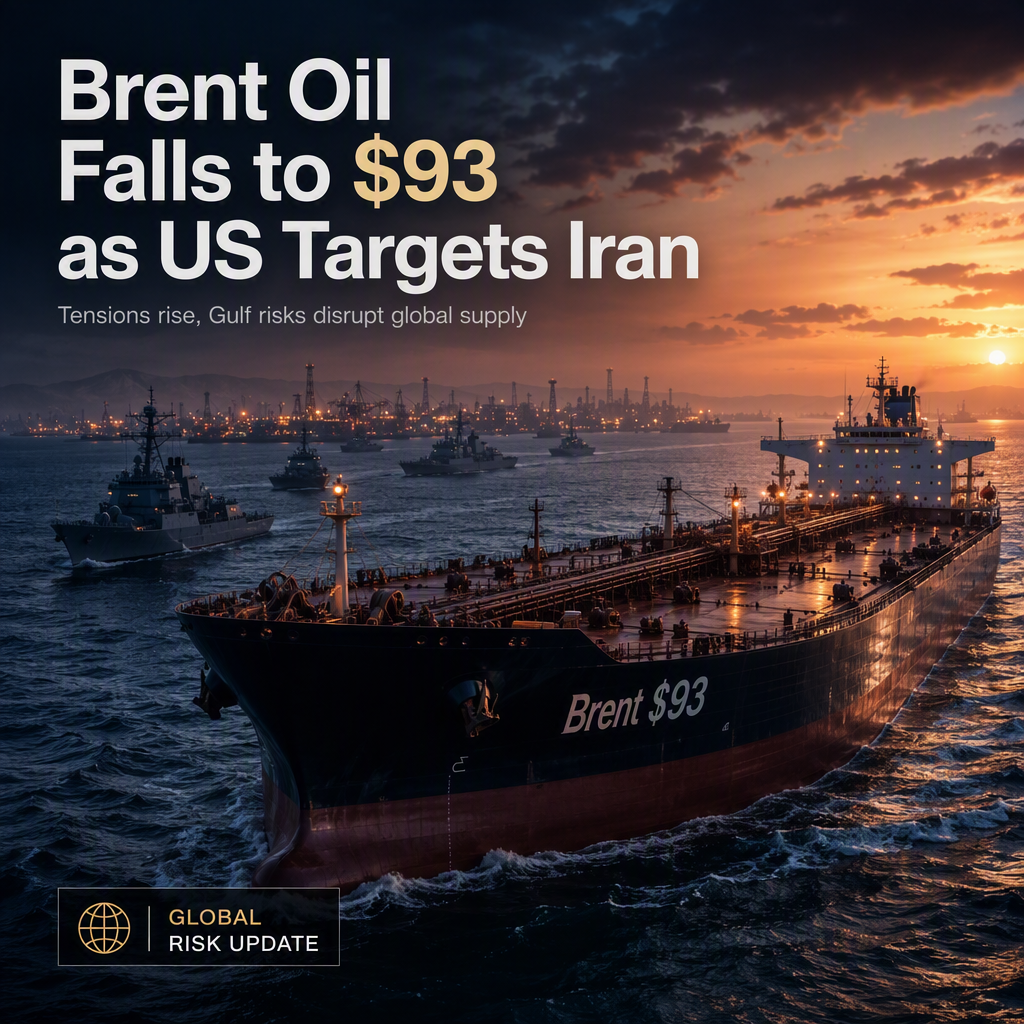
Brent crude oil prices eased to around USD93 per barrel after a sharp rally the previous week, as investors engaged in profit-taking ahead of an anticipated US announcement on tougher sanctions against Iran [1]. The Danske Research Team notes that renewed geopolitical tensions are centered on Washington's preparations for new sanctions targeting Iran's trade partners, with US Treasury Secretary Scott Bessent scheduled to hold a press conference to detail the measures [1].
Bessent described the forthcoming sanctions as the 'toughest' in history, characterizing them as an unprecedented campaign of economic isolation intended to pressure Iran and its trading partners into compliance [1]. He referred to the measures as an 'Economic D-Day' [1]. In response, Iran has warned that no oil will flow from the Gulf if the 'economic war' continues, highlighting the risk of significant disruption to global oil supplies [1].
Although direct military strikes have subsided in recent weeks, the lack of meaningful negotiations suggests that the prospects for any diplomatic resolution remain slim in the short term [1]. Danske Bank emphasizes that these developments represent significant downside risks for global growth and commodity markets [1].
The report also notes that, alongside the oil story around the Strait of Hormuz, other forces shaping equity markets include the durability of the AI capex buildout, concerns about dollar debasement, and exceptionally strong macroeconomic data [1].
CONCLUSION
The anticipation of the US imposing its toughest sanctions yet on Iran has heightened market tensions, with Brent crude prices retreating to $93 per barrel amid profit-taking. The risk of disrupted oil flows from the Gulf and the absence of diplomatic progress underscore significant downside risks for global growth and commodity markets.