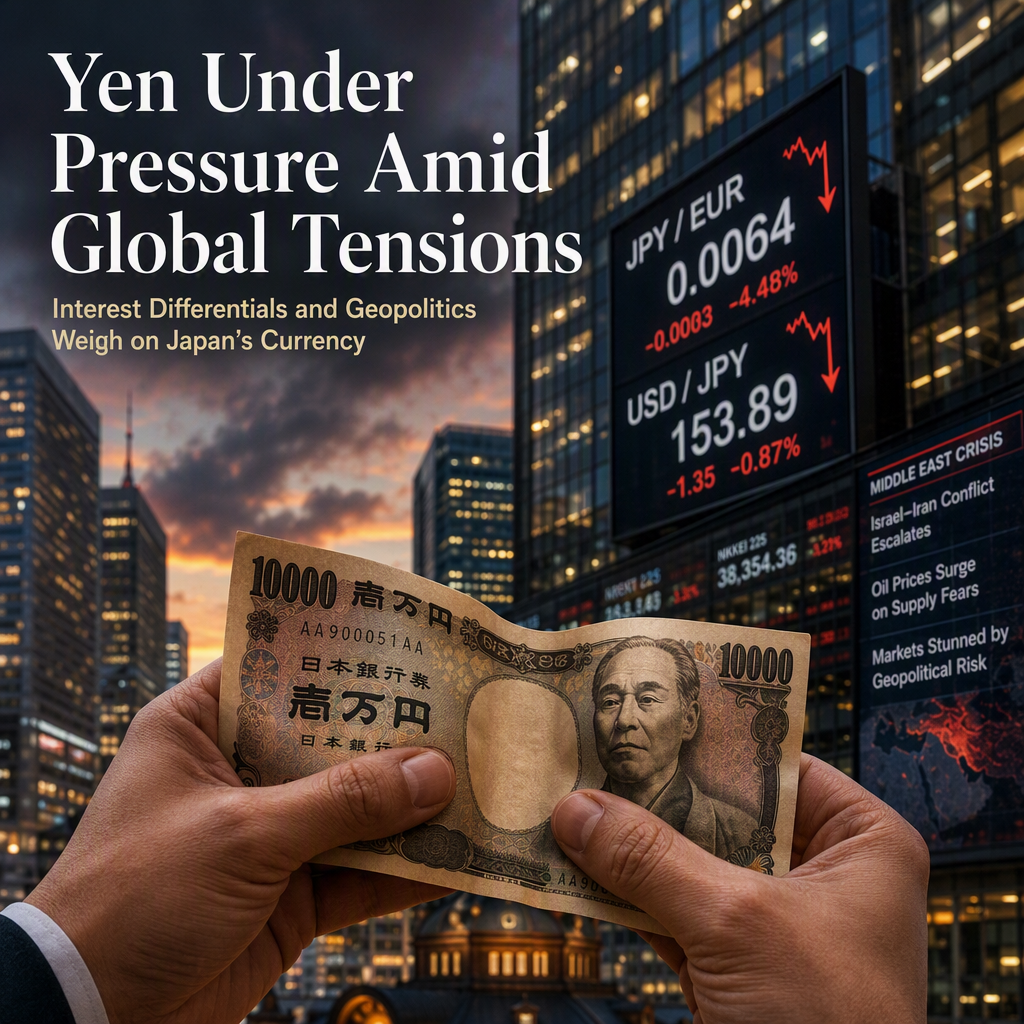
The Japanese Yen (JPY) traded largely steady against the Euro (EUR) around 185.70 on Monday, with its appreciation potential limited despite firmer Japanese inflation data and rising expectations for a Bank of Japan (BoJ) rate hike in September [1]. Japan’s National Consumer Price Index (CPI) rose 1.9% year-over-year in July, up from 1.6% in June, marking the fastest pace so far this year, while core inflation accelerated to 1.8% from 1.6% [1]. Markets are now pricing in an 82% chance of a BoJ rate hike in September, a significant increase from 23% before the July policy meeting [1]. Attention is turning to a speech by BoJ Deputy Governor Ryozo Himino on Thursday, which could further influence rate hike expectations [1].
Despite these supportive factors, the Yen remains under pressure due to the wide interest rate differential between Japan and other major economies, which continues to encourage carry trades, and ongoing concerns about Japan’s fiscal position [1][3]. Additionally, risks related to the Middle East conflict and potential disruptions in the Strait of Hormuz are weighing on the currency [1]. The USD/JPY pair rallied over 75 pips to trade around 159.25-159.30, up nearly 0.25% for the day, as the US Dollar (USD) strengthened on safe-haven demand amid escalating US-Iran tensions and expectations of further US Federal Reserve (Fed) tightening in 2026 [3].
On the Euro side, expectations of tighter monetary policy from the European Central Bank (ECB) are providing support, with markets pricing in a 95% chance of an ECB rate hike in September [1]. Deutsche Bank strategists believe localized energy shocks are keeping the ECB on track for one last September hike, though they caution that recent core goods inflation may be a one-off [1]. The Euro also holds near three-month highs against the USD, despite minor losses, as investors await details on new US sanctions against Iran, which could further increase geopolitical tensions [2].
Market sentiment remains cautious, with traders closely watching upcoming US Personal Consumption Expenditures (PCE) Price Index data and Fed Chair Kevin Warsh's speech at the Jackson Hole Symposium for further policy signals [2][3]. The risk of further escalation in the Middle East and the resulting war-risk premium are supporting the USD, while the Yen’s upside is capped by structural factors despite rising BoJ rate hike expectations [1][3].
CONCLUSION
Despite firmer Japanese inflation data and rising expectations for a BoJ rate hike, the Japanese Yen remains pressured by wide interest rate differentials and fiscal concerns. Geopolitical tensions and expectations of further tightening by the Fed and ECB are dominating FX market dynamics, leading to a stronger USD and a steady-to-weak JPY. Investors are focused on upcoming central bank communications and US inflation data for further direction.