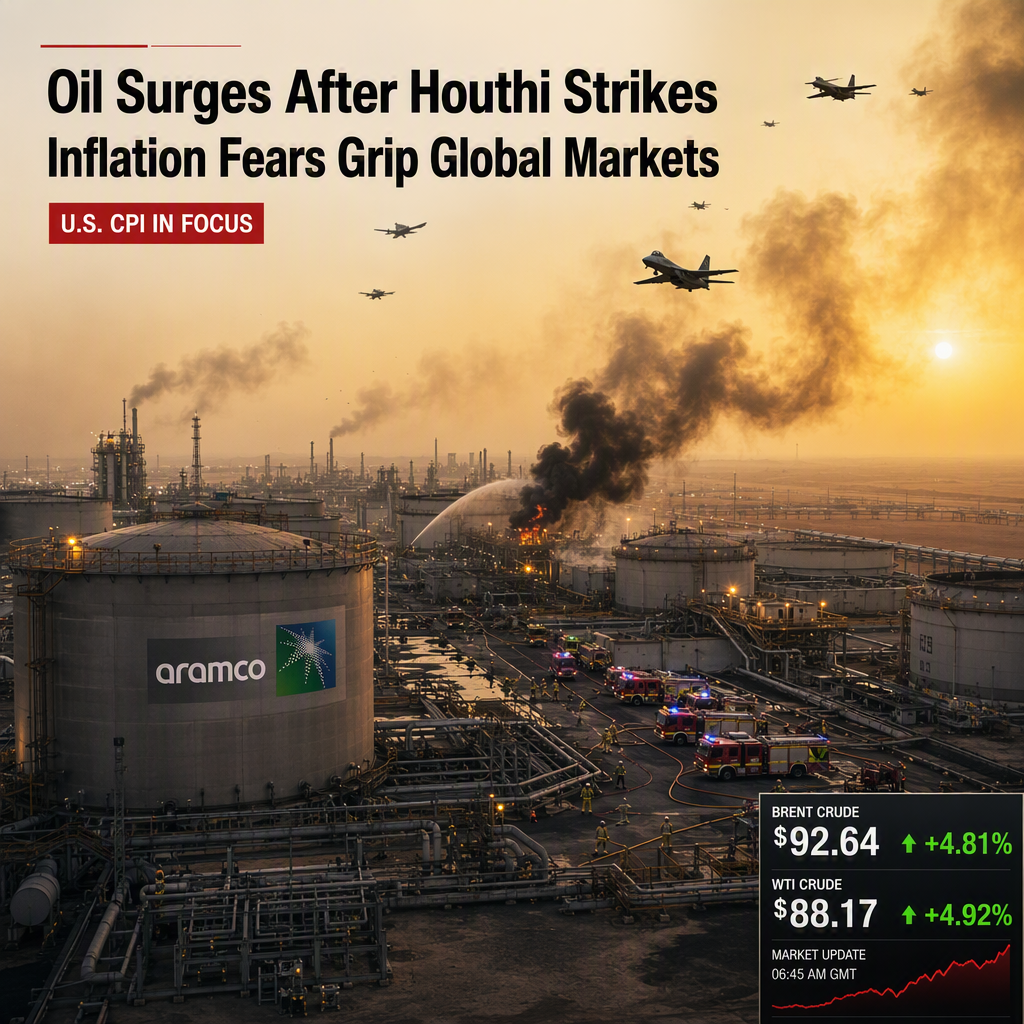
A sharp escalation in the Middle East drove a rally in oil prices on September 8, 2026, after Iran-backed Houthi forces launched a wave of drone and ballistic-missile attacks on southern Saudi Arabia. The strikes targeted Aramco energy facilities and King Khalid Air Base, injuring 73 people and prompting a temporary halt at some oil operations, according to the Saudi Energy Ministry [1]. This development revived inflation concerns just three days before a pivotal U.S. Consumer Price Index (CPI) report.
WTI crude oil led the session, rising roughly 1% to trade near $93.90 a barrel. Prices climbed through the Asian session following the attacks and briefly pushed toward $95 before easing back during the London and U.S. sessions. Later in the day, oil found renewed momentum on reports of explosions near Iran’s Kharg Island, a key export hub, further fueling supply-risk premiums in the market [1].
The surge in oil prices weighed on stocks and bonds, with the market reaction reflecting heightened geopolitical risk and inflationary pressures. The yen outperformed in currency markets, climbing to a six-month high against the dollar amid rising expectations for a Bank of Japan rate hike [1]. U.S. traders, returning from the Labor Day holiday, focused on the inflationary implications of the Middle East escalation, especially with the upcoming U.S. CPI data [1].
No specific analyst opinions or forward-looking statements were provided in the article. However, the market's response indicates that participants are closely monitoring geopolitical developments and their potential impact on inflation and central bank policy [1].
CONCLUSION
The Houthi attacks on Saudi energy infrastructure triggered a notable rally in oil prices and heightened inflation concerns across global markets. With the U.S. CPI report approaching, investors are bracing for further volatility as geopolitical risks add to inflationary pressures. The market remains sensitive to developments in the Middle East and their potential impact on energy supply and monetary policy.