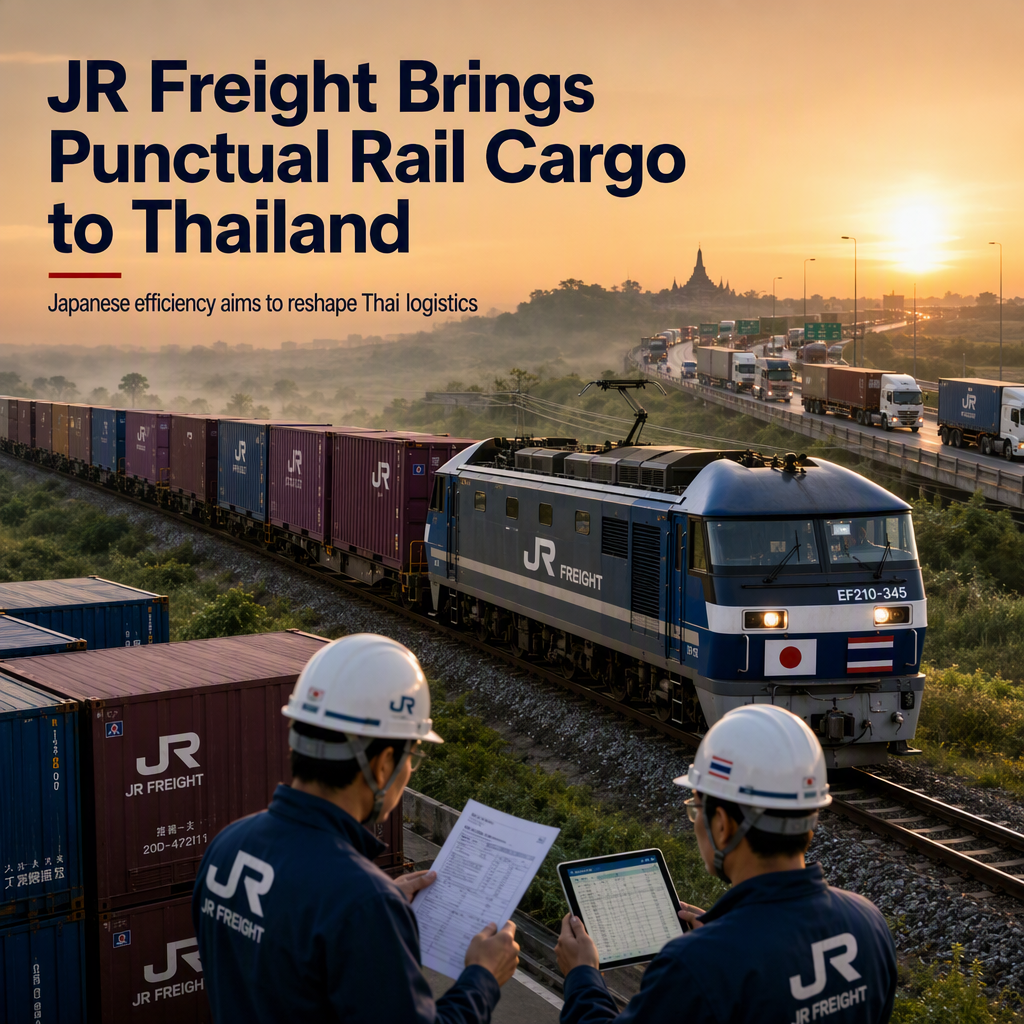
Japan Railways Group's freight unit, JR Freight, is targeting the Thai freight market by introducing scheduled, on-time rail cargo services in a sector currently dominated by trucking [1]. The company aims to position rail transport as a viable alternative to road freight, focusing on improving efficiency and reliability for businesses operating in Thailand [1]. This initiative is part of broader efforts to diversify Thailand's logistics sector, which has historically relied on trucks for the majority of domestic freight movement [1].
JR Freight plans to leverage Japanese-style scheduled train services to attract manufacturers and logistics firms seeking more predictable delivery times and potentially lower costs compared to traditional road transport [1]. Industry analysts cited in the article highlight the significant potential for rail to capture market share, particularly for bulk goods and long-distance shipments, due to reliable scheduling and reduced exposure to road congestion [1].
A JR Freight representative stated, "We're confident that the Japanese approach to punctuality and operational efficiency can bring real value to Thai logistics" [1]. However, no financial figures or detailed market share projections have been disclosed at this stage [1]. The article notes that initial investment and infrastructure adjustments may be necessary for the project to succeed [1].
While the market implications are seen as positive, with the potential to modernize and diversify Thailand's transport infrastructure, the article does not mention any immediate market reactions or specific analyst forecasts beyond the general optimism for rail's prospects in the Thai market [1].
CONCLUSION
JR Freight's entry into the Thai freight market with scheduled rail services marks a strategic move to diversify and modernize the country's logistics sector. While the initiative is viewed positively for its potential to improve efficiency and reliability, concrete financial details and market share projections remain undisclosed. The success of this venture will depend on infrastructure investments and the ability to attract logistics firms seeking alternatives to road transport.