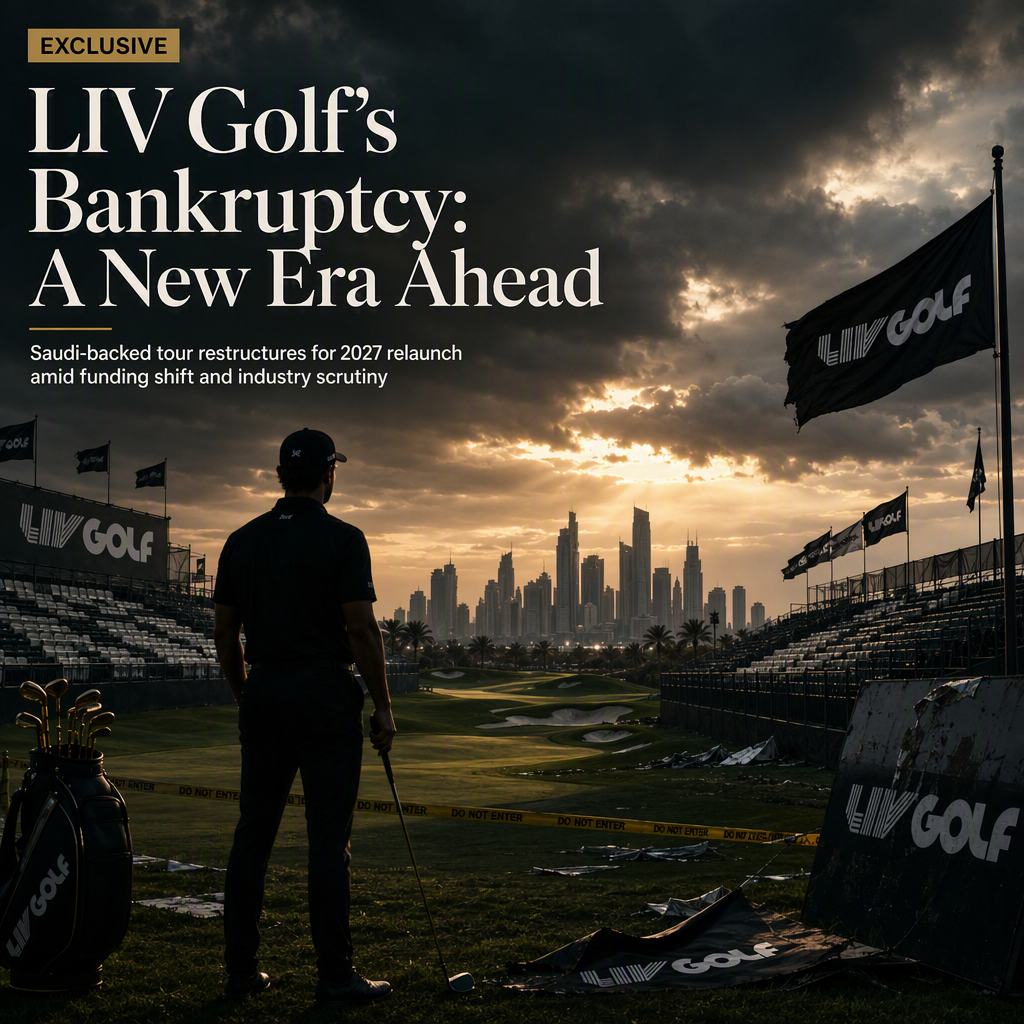
LIV Golf, the Saudi-backed professional golf tour, filed for Chapter 11 bankruptcy protection in U.S. bankruptcy court in New Jersey on Tuesday as it seeks to restructure and relaunch in early 2027 [1]. The tour, which launched in 2021 with significant financial support from Saudi Arabia's Public Investment Fund (PIF), had aimed to rival the PGA Tour but struggled to gain traction with its unique format and failed to finalize a proposed 2023 merger with the PGA Tour [1].
LIV Golf CEO Scott O’Neil stated that the bankruptcy process would provide the structure and time needed to pursue a 'landmark transaction' and begin a new era focused on fans, an innovative player-first ownership model, and integration into the global golf ecosystem [1]. O’Neil expressed optimism about the tour’s future, but acknowledged significant work remains in the coming months [1].
The tour’s financial difficulties intensified after the PIF, which reportedly invested $5 billion, announced a shift in investment strategy from rapid growth to sustained value creation, leading to the withdrawal of funding and the cancellation of LIV’s season-ending championship in August in Michigan [1]. In August, O’Neil claimed a new lead investor had been secured, but did not disclose the identity [1]. As part of the bankruptcy filing, LIV announced plans to restart with the help of BC Partners and secured a $49.6 million debtor-in-possession loan from the PIF to maintain operations during bankruptcy proceedings [1].
LIV’s bankruptcy filing listed its golfers as the largest creditors, with Jon Rahm ($7.47 million), Bryson DeChambeau ($5.76 million), Dustin Johnson ($5.48 million), and Cameron Smith ($4.85 million) holding the largest claims [1]. The company estimated its assets at between $100 million and $500 million, and its liabilities between $500 million and $1 billion [1].
The tour has faced criticism since its inception for being an example of 'sportswashing,' with Saudi Arabia using high-profile sports investments to improve its global image and influence [1].
CONCLUSION
LIV Golf’s bankruptcy filing marks a significant turning point for the Saudi-backed tour, reflecting financial and strategic challenges after the withdrawal of major funding. The company’s plans to relaunch in 2027 with new investment partners and a restructured model will be closely watched by the sports and financial communities. The outcome will have implications for the broader professional golf landscape and the role of sovereign wealth in sports.