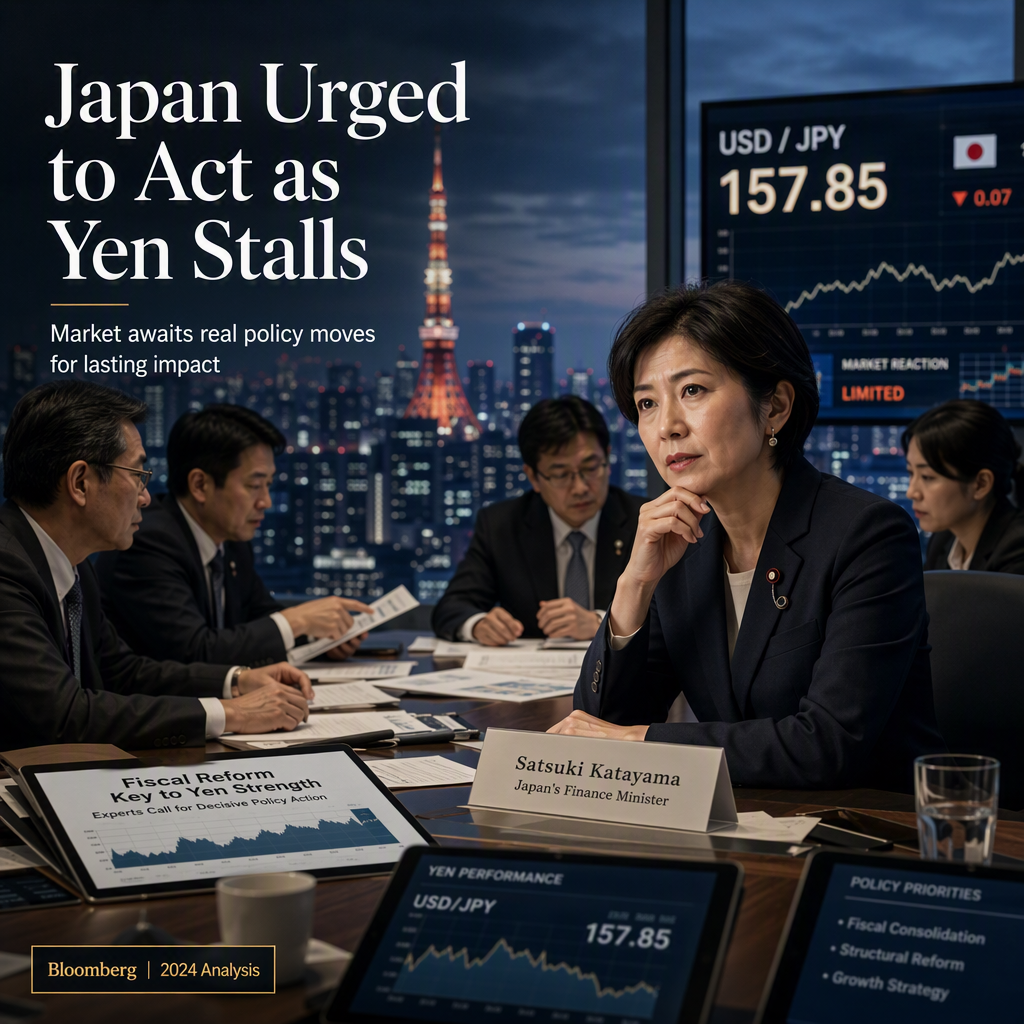
Japan's Finance Minister Satsuki Katayama stated during the European trading session on Wednesday that the government's tax policy is expected to help cool down high inflation in the country [1]. Katayama also noted that Japan has secured US backing by effectively handling policy and mentioned that defense spending is generally not finalized until December. He emphasized the importance of considering market communication more closely [1].
Despite these remarks, there was no major reaction observed in the Japanese Yen (JPY), with USD/JPY trading marginally higher near 157.85 after recovering early losses [1]. This suggests that the market did not view the comments as a significant catalyst for immediate currency movement.
BNY’s Geoff Yu provided further analysis, arguing that coordinated intervention has not significantly increased foreign exposure to the Japanese Yen. Investors remain net long JPY, but exposure is much lower than in H1 2026. Yu stressed that a durable rebuilding of JPY holdings requires credible domestic follow-through from the Bank of Japan (BoJ), fiscal consolidation, and structural reform to raise real rates and attract portfolio inflows [2]. He noted that while Japanese government bonds (JGBs) are attracting marginal demand, Japanese equities remain largely passive and under-supported [2].
Yu highlighted that coordinated intervention, including a strong volume day last Friday when both the Ministry of Finance and the U.S. Treasury Department entered markets, did not have a discernible impact on holdings. Treasury Secretary Scott Bessent acknowledged that intervention can provide 'market signals,' but ultimately Japan will need policy follow-up, such as further BoJ rate hikes, fiscal consolidation, and structural reform, to drive up the JPY’s real rates and attract greater foreign portfolio flows [2].
CONCLUSION
Both government officials and analysts agree that credible domestic policy action is needed to strengthen the Japanese Yen and attract foreign investment. While recent interventions and tax policy announcements have not triggered significant market reactions, the focus remains on structural reforms and fiscal consolidation for lasting impact. The market is awaiting concrete policy follow-through to drive renewed demand for the JPY.